
I’ve spent many a Tuesday afternoon sitting in staff meetings, nodding politely while some consultant in a slim-fit suit explains the “neurobiological revolution” of the teenage brain using a PowerPoint that costs more than my first car. They love to use ten-syllable words to describe why a Year 9 boy is currently trying to see if a highlighter works on his desk. But here is the truth: most of the academic literature on how adolescent development affects learning is written for a laboratory, not a classroom with thirty-two students and a broken radiator. We don’t need more jargon about prefrontal cortex maturation; we need to know why the kid who was a star in Year 7 is suddenly acting like your lesson is a personal insult.
I’m not here to give you a lecture on brain scans or theoretical frameworks that fall apart the moment the bell rings. Instead, I want to talk about the actual mechanics of the classroom—the stuff that works when you’re exhausted and the energy in the room is plummeting. I’ll share what I’ve learned from nineteen years of trial and error about navigating those volatile teenage shifts, focusing on practical adjustments you can make without needing a PhD or an extra three hours of planning.
Table of Contents
Prefrontal Cortex Development and the Myth of Self Regulation
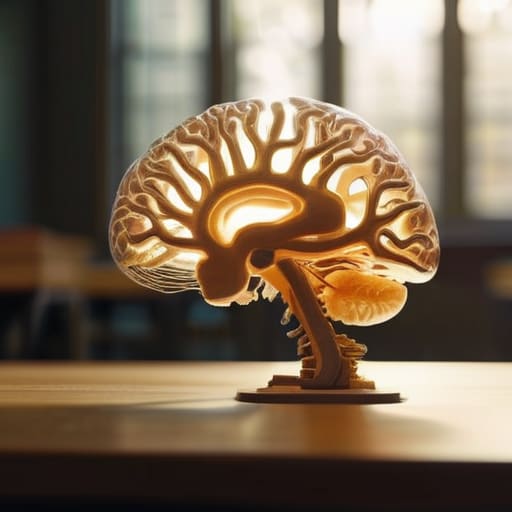
We’ve all been there: you’ve spent forty minutes crafting a brilliant, scaffolded task, only for a student to stare at you with a blank expression, or worse, decide that now is the perfect moment to engage in a heated debate about a TikTok trend. We often label this as “defiance” or “lack of effort,” but if we look at the actual biology, it’s less about a bad attitude and more about a construction site. Prefrontal cortex development is a messy, unfinished business. That part of the brain—the bit responsible for impulse control, planning, and making sensible decisions—is essentially undergoing a massive renovation while the school day is still running.
When we demand high-level self-regulation from a Year 9 student, we are effectively asking a driver to navigate a motorway in a car that hasn’t had its brakes installed yet. The cognitive changes during puberty mean their emotional centers are firing at full volume, while the brakes are still being wired up. It’s not that they won’t follow the instructions; it’s that the biological machinery required to inhibit a sudden impulse simply isn’t fully online. Expecting them to “just settle down” isn’t just optimistic; it’s biologically unrealistic.
Neuroplasticity in Teenagers a Double Edged Sword
The textbooks love to talk about neuroplasticity in teenagers as this glorious, golden window of opportunity. They make it sound like we’ve handed them a sponge that’s just waiting to soak up every bit of historical context or mathematical formula we throw at it. And, technically, they aren’t wrong. The brain is incredibly malleable right now; it is literally re-wiring itself in real-time. But here is the part the researchers often gloss over: that plasticity doesn’t just apply to the “smart” stuff. It applies to everything.
If a student spends their formative years navigating a social landscape defined by anxiety or a constant need for peer validation, their brain is just as efficiently wiring itself to prioritize survival over syntax. We see it every day—the student who is brilliant in a quiet seminar but completely shuts down when the room gets loud. We are essentially trying to build academic foundations on top of a construction site that is still actively shifting. It’s not that they can’t learn; it’s that their biology is currently prioritising social relevance over your carefully planned lesson objective.
Survival Strategies for the Teenage Brainstorm
- Stop expecting them to manage their own time; if you give a Year 9 class a “self-directed study period” without a rigid, step-by-step structure, you aren’t fostering independence, you’re just hosting a social club.
- Use the dopamine hit to your advantage by breaking lessons into smaller, high-success chunks—if they feel like they’re failing for twenty minutes straight, their adolescent brains will physically shut down and look for any distraction to escape the discomfort.
- Front-load the emotional regulation by acknowledging the room; if the energy is manic because of a full moon or a football match, don’t fight the biology, pivot the lesson to something more structured and low-stakes until the cortisol levels drop.
- Build in “low-stakes retrieval” that doesn’t feel like a threat; since their brains are wired to prioritise social survival over academic ego, a public “wrong answer” can feel like a social death sentence, so keep the testing private or collaborative.
- Leverage the social engine by using peer-to-peer learning, but don’t just let them chat—give them specific, scripted roles so that their biological urge to interact with each other is actually harnessed for the curriculum rather than working against it.
Survival Strategies for the Real Classroom
Stop expecting self-regulation as a baseline; instead, build your lesson structure to act as the external prefrontal cortex they haven’t grown yet.
Use the window of high neuroplasticity to introduce challenging concepts, but don’t mistake their heightened emotional reactivity for a lack of intelligence or defiance.
Focus on predictable routines over “innovative” engagement tactics; when their brains are navigating a hormonal storm, consistency is the only thing that lowers the cognitive load.
The Gap Between Theory and the Timetable
“We spend far too much time reading papers about the ‘malleability of the adolescent brain’ and not nearly enough time discussing why that same brain chooses to completely ignore a perfectly structured scaffold the moment the bell rings for lunch. You can understand the neurobiology all you like, but if you aren’t accounting for the fact that their impulse control is effectively offline by period five, your lesson plan is just a piece of paper in a room full of beautiful, chaotic potential.”
Ellery Mwangi-Selkirk
Beyond the Brain Scans
So, what do we actually do with all this? We’ve looked at why their impulse control is essentially non-existent and how that frantic neuroplasticity makes them both brilliant and incredibly difficult to pin down. It’s easy to read a paper on the prefrontal cortex and think we need a complete pedagogical overhaul, but in the real world, it usually comes down to something much simpler. It’s about acknowledging that self-regulation is a skill they are still building, not a character flaw they’re choosing to exhibit during your Year 9 lesson. When we stop treating their developmental chaos as a personal affront and start seeing it as biological reality, we can stop fighting the brain and start working with it.
Look, I know it’s exhausting. I know that after a long day, the last thing you want to do is “empathise with the neurobiology” of a student who just threw a pen across the room. But there is a quiet, profound power in being the one adult who doesn’t mistake their growing pains for defiance. If you can provide the structure they lack and the stability they’re currently missing, you aren’t just teaching history or maths—you are providing the scaffolding for their entire lives. It isn’t always pretty, and it certainly isn’t easy, but showing up for the mess is where the real teaching happens.

Author

Related Posts

What Changes Between Seven and Seventeen
I remember sitting in a windowless seminar room during my middle leadership training, nodding politely while a consultant in a crisp suit...
Read out all
Anxiety Occupies the Memory You Need
I remember sitting in a Year 10 assembly three years ago, watching a student—a bright, capable lad who usually had his hand...
Read out all
Some Stress Helps, Chronic Stress Does Not
I remember sitting in a Year 10 assembly three years ago, watching a student named Leo stare at a blank sheet of...
Read out all
Exercise and Cognition: Modest but Real
I was sitting in the staff room last Tuesday, staring at a pile of half-marked essays and a lukewarm cup of tea,...
Read out all
Consolidation Happens Overnight
I was sitting in a Year 9 assembly last Tuesday, watching a boy in the third row stare at a poster with...
Read out all
Practising the Bit You Are Bad at
I remember sitting in a windowless training suite back in 2014, nodding politely while a consultant in a slim-fit suit explained exactly...
Read out all