I remember sitting in a staffroom meeting ten years ago, staring at a glossy PowerPoint about “reflective practice” that suggested we should all keep meticulous, data-driven journals of every pedagogical failure. It was nonsense. The consultant presenting it clearly hadn’t spent a Tuesday afternoon trying to explain the causes of the Industrial Revolution to thirty-two teenagers who were more interested in a smuggled bag of crisps than the steam engine. Most professional development tells you that how to learn from mistakes involves expensive retraining or complex analytical frameworks, but they never account for the fact that you have forty minutes of prep time before the bell rings.
I’m not here to give you a theoretical checklist or a way to turn your failures into a spreadsheet. I want to talk about the real way we improve: by figuring out why a lesson fell apart the moment you turned your back to write on the whiteboard. I’m going to share what actually works when you’re exhausted, overstretched, and just trying to get through the week. This is about practical, messy growth that survives the reality of a crowded classroom, not the polished perfection of an inspection framework.
Table of Contents
Turning Setbacks Into Opportunities Amidst the Chaos

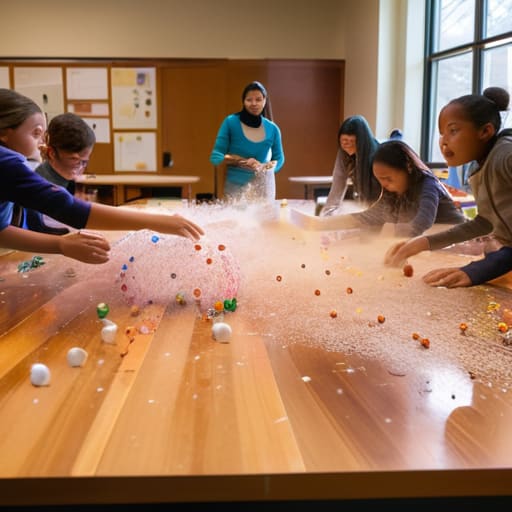
The problem with most professional development is that it treats a “setback” like a controlled laboratory experiment. They talk about growth mindset and failure as if you can just flip a switch and suddenly feel enlightened when a Year 9 lesson descends into absolute chaos. In reality, when a lesson goes sideways, you aren’t sitting there contemplating the psychology of error correction; you’re usually just wondering if you can make it to the staff room without someone asking you for a spare whiteboard pen.
But there is a way to make it work without the toxic positivity. Real resilience building strategies aren’t about smiling through the disaster; they are about the five minutes of quiet after the bell rings. Instead of spiralling into “what did I do wrong?”, I’ve learned to ask: what part of this actually broke? Was it the instructions? The seating plan? Or was it just a wet Wednesday where nobody wanted to be there? If you can isolate the variable, you’ve actually learned something. If you just blame yourself, you’ve just had a bad afternoon.
The Psychology of Error Correction in a Crowded Room
The problem with most academic literature on the psychology of error correction is that it assumes a quiet, controlled environment where students have the emotional bandwidth to sit in a circle and discuss their feelings about being wrong. In a real classroom—the one where the radiator is clanking and three kids are currently trying to see if a glue stick works on the ceiling—the fear of looking stupid is a physical weight. When a pupil gets an answer wrong, they aren’t just processing a cognitive error; they are navigating a social minefield.
If we want to actually foster growth mindset and failure as a concept, we have to stop treating mistakes like something to be scrubbed away with a whiteboard eraser. We need to normalize the “stumble.” This isn’t about some grand, lofty pedagogical shift; it’s about the small, gritty moments where you catch a student mid-panic and show them that the mistake is actually where the thinking starts. It’s about building enough psychological safety so that they don’t feel like their entire academic identity is collapsing just because they forgot the difference between a metaphor and a simile.
Five Ways to Salvage a Lesson Without Losing Your Sanity
- Stop treating a botched lesson like a personal failure and start treating it like a data point. If the kids didn’t grasp the concept, it wasn’t necessarily because your explanation was poor; it might just be that the room was too loud, the heat was too high, or they were all staring at the clock waiting for lunch. Look at the friction, not just the failure.
- Use the “Five-Minute Post-Mortem” before you even leave the building. Don’t wait for a formal observation or a departmental review to tell you what went wrong. Grab a coffee, sit down, and jot down the one specific moment the lesson drifted off the rails. If you don’t pin it down while it’s fresh, you’ll just blame “the kids” by Monday morning.
- Forget the massive, sweeping pedagogical shifts. If a specific task failed, don’t scrap your entire teaching style; just tweak the delivery. Maybe the instructions were too long, or maybe the worksheet was a wall of text that triggered their shutdown response. Small, surgical adjustments are much more sustainable than trying to reinvent yourself every Tuesday.
- Embrace the “I don’t know, let’s find out” moment. There is an immense amount of power in admitting to a class of thirty that a particular question has stumped you. It humanises you, it lowers the stakes for them to make mistakes, and it models exactly what a real scholar does when they hit a wall. It’s much better than faking it and being found out by a Year 9 who has nothing better to do.
- Audit your “quick fixes.” We all have them—the little tricks we use to regain control or bridge a gap. Some of them are brilliant, and some are just expensive distractions that don’t actually aid learning. When something goes wrong, ask yourself if your response actually helped them learn, or if it just helped you survive the next ten minutes. One of those is teaching; the other is just management.
The Survival Kit: What Actually Sticks
Stop trying to perform a forensic autopsy on every failed lesson; instead, pick one specific moment—the botched transition, the question that fell flat, or the seating arrangement that turned into a battlefield—and fix just that one thing for tomorrow.
Build a culture where “I don’t know, let’s find out” isn’t a sign of weakness but a survival tactic, because if you try to pretend you have every answer in a room of thirty teenagers, you’ll lose them before the bell rings.
Forgive yourself for the gap between the pedagogy you read about in a Sunday morning journal and the reality of a Tuesday afternoon when the copier is broken and the kids are restless; the best teachers aren’t the ones who never mess up, they’re the ones who don’t let a bad period ruin their ability to show up for the next one.
The Reality of the Post-Mortem
“We need to stop pretending that ‘learning from mistakes’ happens in a quiet, reflective vacuum during a scheduled CPD session. Real learning happens in the ten minutes after a lesson has completely fallen apart, when you’re standing there amidst the chaos, deciding whether to scrap the plan or just find a way to make the wreckage work for the next group.”
Ellery Mwangi-Selkirk
The Long View from the Staffroom
At the end of the day, learning from mistakes isn’t about some grand, pedagogical epiphany or a beautifully documented reflective journal that you’ll never have time to write. It’s much smaller and much more gritty than that. It’s about noticing that the retrieval quiz flopped because the instructions were too complex, or realizing that the lesson fell apart because you ignored the tension brewing in the back row. It’s about the small, quiet adjustments made between period three and period four. We don’t need more theoretical frameworks to tell us we’ve missed the mark; we just need the honesty to admit when a strategy has hit the floor, and the practicality to try something slightly different when the bell rings again tomorrow.
If you’re feeling like you’re constantly failing, just remember that I’ve seen a thousand “perfect” lessons crumble under the weight of a rainy Tuesday or a broken photocopier. The mistake isn’t the failure; the mistake is believing that the first attempt has to be the final word. You are working in a room that is unpredictable, loud, and occasionally exhausting, and that is exactly why perfection is a myth we can’t afford to chase. Hold onto the bits that work, forgive yourself for the bits that don’t, and just keep showing up for the kids. That is where the real teaching happens.

Author

Related Posts

Independence Needs Structure First
I remember sitting in a professional development session back in 2014, nodding politely while a consultant in a slim-fit suit explained how...
Read out all
Group Work With Individual Accountability
I remember a Tuesday afternoon in Year 9—the kind where the radiator is clanking, the rain is lashing against the windows, and...
Read out all
Peer Norms Shape Effort More Than Teachers Do
I remember sitting in a shiny, air-conditioned seminar room during a leadership training session, listening to a consultant explain the “synergistic potential...
Read out all
The Adolescent Brain and Classroom Consequences
I’ve spent many a Tuesday afternoon sitting in staff meetings, nodding politely while some consultant in a slim-fit suit explains the “neurobiological...
Read out all
What Changes Between Seven and Seventeen
I remember sitting in a windowless seminar room during my middle leadership training, nodding politely while a consultant in a crisp suit...
Read out all
Anxiety Occupies the Memory You Need
I remember sitting in a Year 10 assembly three years ago, watching a student—a bright, capable lad who usually had his hand...
Read out all