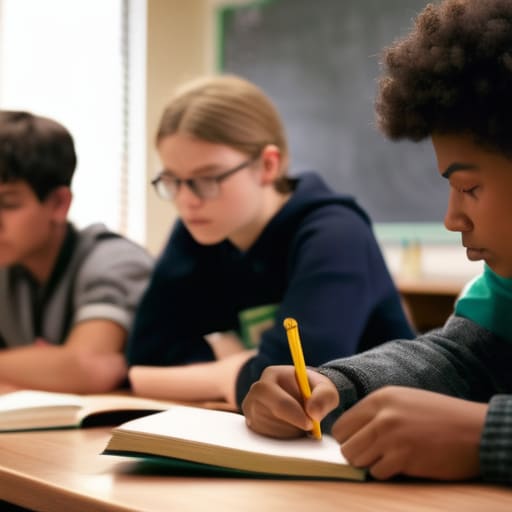
I remember sitting in a shiny, air-conditioned seminar room during a leadership training session, listening to a consultant explain the “synergistic potential of peer-led collaborative structures.” I looked around at the thirty-something trainees nodding along, and all I could think about was the Year 9 class I had to teach in twenty minutes—a room where the social hierarchy was so rigid that one wrong move could derail an entire lesson. The academic literature makes it sound like a beautiful dance of mutual growth, but in a real classroom, understanding how peers influence learning is less about “synergy” and more about surviving the social gravity of the back row. If the alpha in the group decides the task is rubbish, you might as well pack up your whiteboard pens and go home.
I’m not here to sell you on some expensive, polished framework that requires a classroom of twenty perfectly behaved scholars to work. Instead, I want to talk about what actually happens when the bell rings and the social dynamics take over. We’re going to look at the messy, unscripted reality of peer influence and how you can use it to your advantage without losing your mind or your authority.
Table of Contents
Social Learning Theory vs the Chaos of a Wet Wednesday
You’ll find plenty of academic papers on social learning theory that suggest students learn best by observing and imitating their peers. In a perfect world—the one described in those shiny university lecture halls—this looks like elegant peer modeling in education, where a high-achiever demonstrates a method and the rest of the class follows suit like a well-rehearsed choir. It sounds lovely on paper, doesn’t it?
But then you actually walk into the room. It’s 2:15 PM on a Tuesday, the heating is playing up, and the “model” you’ve selected is currently trying to see if a highlighter works on his trousers. In the reality of a secondary classroom, the social dynamics in classrooms are rarely that polite. Peer influence isn’t always a gentle transfer of knowledge; more often, it’s a subtle, high-speed negotiation of who is going to work and who is going to provide the unspoken permission for everyone else to do absolutely nothing. If you don’t account for that shift in the room, no amount of theory will save your lesson.
Why Peer Modeling in Education Beats Your Best Lesson Plan
You can spend three hours meticulously scaffolding a PowerPoint, choosing the perfect font, and mapping out every transition, but you’re still fighting an uphill battle if you haven’t accounted for the social dynamics in classrooms. I’ve seen it a hundred times: a teacher delivers a flawless explanation, only to watch the class glaze over the moment the slides change. But then, something happens when a student—someone they actually respect, or at least someone they don’t find annoying—nods, picks up a pen, and starts working. Suddenly, the energy shifts. That’s peer modeling in education doing more heavy lifting than any instructional design ever could.
It isn’t about some grand, orchestrated group activity. It’s about the quiet, organic peer-to-peer knowledge transfer that happens when one kid realizes they can actually do the task because they saw someone else struggle and then succeed. When you leverage that, you aren’t just teaching content; you’re navigating the social reality of the room. You stop being the sole source of truth and start letting the class witness each other’s competence. That is where the real learning sticks.
Five Ways to Use the Room You’ve Actually Got
- Stop fighting the social hierarchy and start using it. If the kid everyone looks to for cues decides that today is a ‘heads-down’ day, you’ve already lost. Instead, find that quiet, influential student—the one who doesn’t shout but whose opinion carries weight—and give them a subtle, low-stakes leadership role. If they buy in, the rest of the room usually follows.
- Ditch the complex ‘collaborative learning’ structures that require twenty minutes of setup and a PhD to explain. In a real classroom, peer influence works best when it’s accidental. Let them talk, but give them a specific, narrow window to do it—like a two-minute ‘check with your neighbour’—before they drift into talking about the weekend.
- Use ‘peer modeling’ for the small stuff, not the grand gestures. Don’t ask a student to stand up and deliver a lecture; ask them to show how they tackled the first three questions of a worksheet. When the rest of the class sees a peer navigating the struggle, it feels achievable. When they see you doing it, it just looks like magic or, more likely, like you’ve got all the time in the world.
- Watch out for the ‘expert’ trap. We often pair a high-achiever with a student who is struggling, thinking it’s a win-win. But in a room of thirty, that ‘expert’ often ends up doing the work for them, and the struggling student learns how to be a professional passenger. Peer influence only works if the task is designed so the ‘expert’ can’t do it alone.
- The seating plan is your most underrated tool for managing peer influence. You can’t rely on ‘grouping’ to fix everything, but you can certainly use it to break up the pockets of influence that turn a productive lesson into a social club. It’s not about punishing them; it’s about strategically placing the people who pull the energy of the room in the direction you actually need it to go.
The Reality Check: What Actually Sticks
Stop trying to out-engineer the social dynamic; you can have the most polished PowerPoint in the world, but if the “cool” kid in the middle row has decided the lesson is a waste of time, you’ve already lost. Focus on winning over the influencers, not just the high-achievers.
Use the hierarchy to your advantage by letting students lead the heavy lifting. When a peer explains a concept in the vernacular of the classroom, it bypasses the “teacher-is-talking-at-us” filter that most kids switch on by second period.
Strategic seating isn’t about preventing disruption; it’s about managing the social contagion of learning. If you can pair a student who is quietly capable with one who is drifting, you aren’t just managing behaviour—you’re letting the social pressure of the room do the teaching for you.
The Real Classroom Hierarchy
You can spend forty minutes designing a perfect scaffolded activity, but the real curriculum is being written in the whispers between the desks; if the kid everyone looks up to decides the task is beneath them, your lesson plan might as well be written in disappearing ink.
Ellery Mwangi-Selkirk
The Reality of the Room
Look, we can spend all afternoon debating the nuances of Vygotsky or trying to engineer the perfect ‘collaborative learning’ structure that looks great in a teaching manual. But if you’ve spent more than ten minutes in a real classroom, you know that the social architecture of the room usually does the heavy lifting for you. Whether it’s a student quietly correcting a peer’s misconception or the subtle shift in atmosphere when a natural leader decides to engage, the influence of the group is constantly at work. You can design the most airtight lesson plan in the world, but you aren’t just teaching twenty individuals; you are managing a living, breathing social ecosystem that will either support your goals or quietly undermine them.
So, stop trying to fight the social nature of your students and start leaning into it. You don’t need a flashy new initiative or a complex group-work framework to make this happen. Instead, focus on the small, practical things: the seating plan that pairs a confident learner with someone struggling, or the way you validate a student’s contribution so others feel safe to follow suit. It isn’t about perfection, and it certainly isn’t about controlling every single interaction. It’s about recognising the power of the collective and making sure that when the inevitable chaos of a Wednesday afternoon hits, the students are pulling each other up rather than dragging each other down.

Author

Related Posts

The Adolescent Brain and Classroom Consequences
I’ve spent many a Tuesday afternoon sitting in staff meetings, nodding politely while some consultant in a slim-fit suit explains the “neurobiological...
Read out all
What Changes Between Seven and Seventeen
I remember sitting in a windowless seminar room during my middle leadership training, nodding politely while a consultant in a crisp suit...
Read out all
Anxiety Occupies the Memory You Need
I remember sitting in a Year 10 assembly three years ago, watching a student—a bright, capable lad who usually had his hand...
Read out all
Some Stress Helps, Chronic Stress Does Not
I remember sitting in a Year 10 assembly three years ago, watching a student named Leo stare at a blank sheet of...
Read out all
Exercise and Cognition: Modest but Real
I was sitting in the staff room last Tuesday, staring at a pile of half-marked essays and a lukewarm cup of tea,...
Read out all
Consolidation Happens Overnight
I was sitting in a Year 9 assembly last Tuesday, watching a boy in the third row stare at a poster with...
Read out all