
I remember standing in a drafty changing room in mid-November, watching a frantic PE lead try to coordinate three different Year 8 classes using nothing but a broken whistle and a clipboard that had seen better decades. There is a massive, glossy gap between the theoretical way consultants explain how sport is organised in schools and the reality of a Tuesday afternoon when the netball hoops are missing and half your staff are stuck in an unpaid departmental meeting. We are constantly sold these “holistic physical literacy frameworks” that look beautiful in a PowerPoint presentation, but they tend to evaporate the moment they hit a freezing rainstorm on a muddy field.
I’m not here to give you another lofty strategic vision that requires a dedicated budget you don’t have. Instead, I want to talk about the actual mechanics of it: how to build a sustainable schedule when your staffing is precarious and your equipment is perpetually being “borrowed” by Year 11. I’ll be sharing what actually works when you’re balancing competing priorities and limited resources, focusing on the practicalities that survive the chaos of a real school week.
Table of Contents
Beyond the Physical Education Curriculum Idealism
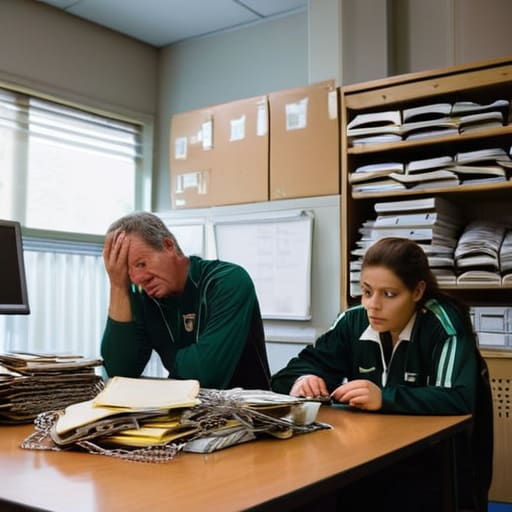
The problem with most literature on the physical education curriculum is that it assumes a frictionless environment. You read these glossy policy documents that outline a seamless integration of skill development and character building, as if you aren’t simultaneously trying to find a working pump for the footballs or negotiating with a site manager who has locked the sports hall for a faculty meeting. In theory, the school athletic department structure is a well-oiled machine designed to foster excellence; in reality, it’s often just three exhausted staff members trying to coordinate a bus that might not show up for the inter-school sports competitions.
We talk a lot about student athlete development in these high-level briefings, but that’s a luxury for schools with dedicated coaching staff and endless budgets. For the rest of us, “development” usually means making sure the Year 8s don’t accidentally injure themselves while playing a game of touch rugby on a pitch that’s essentially a marsh. We have to find the gap between the idealised framework and the chaotic reality of a Tuesday afternoon when the rain is lashing down and half the equipment is missing.
School Sports Management When Reality Hits Hard
The problem with most advice on school sports management is that it assumes you have a dedicated facility manager and a budget that isn’t being swallowed by a broken boiler. In reality, “organising sport” usually means you’re standing in a freezing car park at 3:30 PM, trying to figure out if you have enough bibs for the Year 8 boys while simultaneously checking if the minibus has enough diesel for the away fixture. It isn’t about high-level strategic planning; it’s about the logistical nightmare of coordinating three different teachers who all have different views on whether a rainy Tuesday is a valid day for football.
When you look at the actual school athletic department structure, it’s often held together by sheer willpower and a few overstretched staff members. We talk a lot about student athlete development in staff meetings, but that’s easy to say when you aren’t the one trying to manage the clash between a high-stakes math mock and the regional inter-school sports competitions. If your extracurricular sports programs are going to survive the term, they can’t rely on perfection. They have to be resilient enough to function when the equipment is lost, the referee cancels, or the weather turns predictably miserable.
Five Ways to Run Sport Without Losing Your Mind
- Stop trying to build a “holistic wellness programme” and just focus on the kit. If the PE department spends more time hunting for lost bibs and deflating footballs than actually coaching, your organisation has already failed. A simple, centralised inventory system beats any high-level strategic vision every single time.
- The “Extra-Curricular” Trap: If you’re planning clubs that require three different staff members to stay until 6:00 PM on a Tuesday, you aren’t building a culture; you’re building a burnout factory. Organise your clubs around the staff who are actually willing to stay, not the staff you think should be staying.
- Forget the “Elite Athlete” pathway for a moment and look at the middle sixty per cent. Most school sport organisation is skewed towards the kids who are already good at it. If your fixtures list only caters to the Year 10 rugby squad, you’re missing the point of school sport entirely. Organise for the kids who just want to run around without being judged.
- Manage your budget like you’re in a recession, because in many schools, you effectively are. Don’t get caught up in the shiny new tech or the expensive branded training gear. Invest in the basics—quality balls, decent nets, and enough cones to mark out a boundary that a Year 8 won’t accidentally wander through.
- Communication is the only thing that prevents the Monday morning chaos. If the timetable for the inter-school tournament isn’t in the staff briefing, on the shared drive, and—crucially—pinned to the PE office door, it doesn’t exist. If the maths teacher doesn’t know their Year 7s are leaving ten minutes early for a match, you’ve lost the battle before it’s even started.
What Actually Matters When the Bell Rings
Stop chasing the “perfect” multi-sport curriculum if your basic logistics are broken; a well-run, simple football session beats a complex, poorly supervised athletics programme every single time.
Success in school sport isn’t measured by the glossy brochures sent to governors, but by whether your staff feel supported enough to actually step onto the field without fearing a safeguarding or behaviour nightmare.
Build your sports provision around the reality of your timetable and your staff’s capacity, not the idealistic vision of a high-performance academy that your school simply isn’t designed to be.
The Gap Between the Policy and the Pitch
“We spend far too much time designing ‘holistic sports frameworks’ in air-conditioned meeting rooms, when the real job of organising school sport is simply figuring out how to get thirty Year 8s to stop arguing about a lost football long enough to actually play the game.”
Ellery Mwangi-Selkirk
The Reality of the Final Whistle
At the end of the day, organising sport in a school isn’t about perfecting a high-performance academy model or meeting every single metric in a shiny new policy document. It’s about the messy, unglamorous work of making sure the equipment is actually where it needs to be, that the timetable doesn’t collapse the moment a Year 10 student forgets their PE kit, and that the “curriculum” actually reflects the kids standing in front of you. We have to stop pretending that a perfect strategic plan survives a rainy Tuesday afternoon in a muddy field. If we focus too much on the top-down idealism of how sport should look, we end up ignoring the practical, small-scale wins that actually keep a department running—like a well-managed rotation of activities that keeps the kids engaged rather than just waiting for the bell.
I know it’s exhausting. I know the feeling of looking at a budget that hasn’t moved in three years while being told to “innovate.” But don’t let the bureaucracy or the lack of resources strip away why you started doing this in the first place. There is a specific, quiet magic in seeing a kid who usually struggles in a classroom finally find their footing on a pitch, or finding a bit of confidence in a game they thought they’d be terrible at. The systems might be broken, and the paperwork might be endless, but the impact is real. Focus on the kids, focus on the practicalities, and let the rest of the noise fade into the background.

Author

Related Posts

Enrichment That Reaches the Pupils Who Need It
I remember sitting in a windowless meeting room five years ago, staring at a glossy PowerPoint presentation that promised to revolutionise our...
Read out all
Removing Barriers Before Adding Interventions
I remember sitting in a windowless meeting room ten years ago, listening to a consultant in a slim-fit suit explain a “holistic...
Read out all
Multi-agency Work and Its Delays
I remember sitting in a windowless meeting room during a Tuesday afternoon slot—the kind where the radiator hums just loud enough to...
Read out all
Working With a Family, Not Against Them
I remember sitting in a damp staffroom during a Tuesday period five, staring at a spreadsheet of “persistent absentees” that looked more...
Read out all
The Adult Who Notices
I’ve sat through enough Ofsted-ready presentations to know that the official handbook on how form tutors support pupils is essentially a work...
Read out all
Tutor Time With a Purpose
I remember sitting in a windowless meeting room in 2014, staring at a glossy PowerPoint presentation that promised a “revolutionary, holistic approach...
Read out all