
I remember sitting in a staff meeting ten years ago, nodding politely while a consultant in a sharp suit explained how we could “engineer student agency” through a sophisticated hierarchy of gold stars and digital badges. He spoke about how intrinsic and extrinsic motivation interact as if it were a simple chemistry experiment you could perform with enough glitter and a well-designed spreadsheet. But I looked around that room and saw thirty-two tired faces in every classroom, and I knew that if a sticker is the only thing keeping a Year 9 boy from putting his head on the desk, we haven’t actually taught him anything—we’ve just rented his compliance for forty minutes.
I’m not here to give you another theoretical framework that falls apart the moment a student decides they simply don’t care. Instead, I want to talk about the messy, unglamorous reality of balancing rewards with genuine interest when you’re running behind on marking and the energy in the room is bottoming out. We’re going to look at what actually works when the fancy systems fail, focusing on how to build real engagement that survives long after the prize has been handed out.
Table of Contents
Self Determination Theory vs the Friday Afternoon Slump
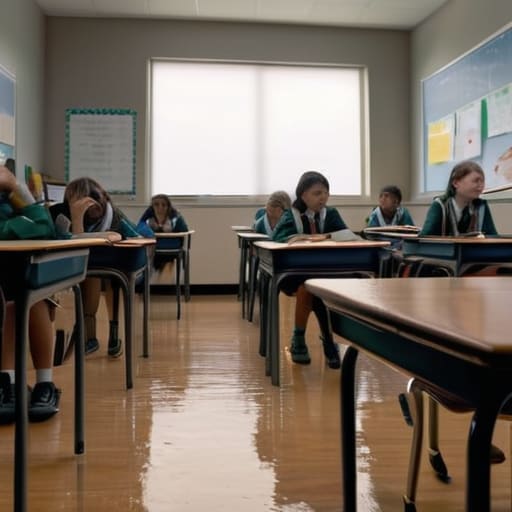
In the textbooks, Self-Determination Theory sounds lovely. It suggests that if we just provide enough autonomy, competence, and relatedness, students will naturally gravitate toward learning. It’s a beautiful, clean piece of motivational psychology that assumes a classroom functions like a laboratory. But when you’re standing in front of thirty Year 9s on a rainy Friday afternoon, and the energy in the room has hit rock bottom, that theory feels a bit thin. You aren’t managing “autonomous agents”; you are managing human beings who are tired, hungry, or simply don’t care about the Treaty of Versailles.
This is where we run into the overjustification effect. We’ve all been there: you start offering stickers, house points, or even just the promise of five minutes at the end of the lesson to get them to focus. It works for a bit, but you quickly realise you’ve accidentally trained them to stop caring about the subject and start caring only about the bribe. You aren’t building a love of history; you’re just running a high-stakes economy of tokens. The danger is that once you stop the external rewards, the learning stops too, because you’ve inadvertently signaled that the work itself has no value.
Why External Incentives Kill Autonomy When You Need It Most
Here is the reality of the sticker chart or the “house points” system: they feel like a lifeline when you’re struggling with a difficult class, but they often come at a hidden cost. There is a well-documented phenomenon called the overjustification effect, where we accidentally train students to stop caring about the subject and start caring only about the prize. If a kid finally engages with a difficult text because they want a gold star, what happens when the stars run out? They don’t suddenly become lifelong readers; they just stop reading.
We think we are building habits, but we are often just building a transactional relationship with learning. According to cognitive evaluation theory, when we lean too heavily on these external carrots, we inadvertently signal to the student that their own curiosity isn’t enough to earn respect. We are effectively telling them that the work itself has no value unless it is tethered to a reward. It’s a dangerous game to play, especially when you’re trying to foster a sense of agency in a room full of teenagers who are already being told what to do every waking hour.
Five ways to stop the tug-of-war between rewards and real learning
- Use extrinsic motivators as a bridge, not a destination. If a student is staring at a blank page because they’re overwhelmed, a small, immediate win—like a sticker or a quick verbal “nice start”—isn’t about “bribing” them; it’s about lowering the barrier to entry so they can eventually find their own momentum.
- Watch out for the ‘transactional trap.’ If you find yourself constantly negotiating (“If you do this worksheet, you can have five minutes of free time”), you aren’t teaching; you’re running a marketplace. The goal is to use the reward to get them through the door, then pivot the conversation to the work itself as quickly as possible.
- Praise the process, not the person. Telling a kid they are “smart” is a dead end—it’s an extrinsic label they have to maintain. Telling them, “I noticed how you didn’t give up on that second paragraph even when it got tricky,” links the reward to their own agency, which is the first step toward intrinsic drive.
- Don’t let the reward overshadow the ‘why.’ If the prize for finishing a task is so massive that the task itself feels like a chore to be endured, you’ve lost. The incentive should be a side note to the learning, not the main event. If they’re only working for the gold star, they’ll stop working the second you stop handing them out.
- Context is everything. On a rainy Tuesday in November, or during period five on a Friday, sometimes you just need the extrinsic stuff to keep the ship upright. Don’t feel guilty about using a reward system to manage the chaos; just be honest with yourself that it’s a tool for stability, not a substitute for a student actually caring about the subject.
The Reality Check: What to Carry Into Monday Morning
Stop trying to “manufacture” intrinsic motivation with gold stars; instead, focus on removing the friction that kills it, like confusing instructions or a seating plan that sets them up to fail.
Use extrinsic rewards as a temporary scaffold for the kids who are genuinely drowning, but don’t let them become the permanent engine of your classroom, or you’ll find yourself performing a circus act just to get them to open a textbook.
Prioritise competence over compliance—a student who actually understands the task is far more likely to engage than one who is simply terrified of losing five minutes of break time.
The Seesaw of the Classroom
“We treat intrinsic and extrinsic motivation like they’re separate departments, but in a real classroom, they’re more like a seesaw. You use the sticker or the house point to get them through the door when they’re having a rubbish day, but if you rely on that carrot for too long, you’ll find that once you stop dangling it, the whole lesson just collapses. The goal isn’t to replace the reward with ‘passion’; it’s to use the reward just long enough to help them find the footing to actually care about the work itself.”
Ellery Mwangi-Selkirk
The Reality Check
Look, we can keep debating the nuances of Self-Determination Theory until the next curriculum reform rolls around, but the reality is simpler and messier. We know that if you lean too hard on the stickers, the house points, or the threats, you aren’t building learners; you’re just training compliance machines that stop working the second you turn your back. Extrinsic motivators are a useful scaffold when the classroom is in chaos or the topic is bone-dry, but they can’t be the foundation. If we want them to actually care about the history of the Tudors or the mechanics of a cell, we have to use those external hooks to eventually bridge the gap toward something that feels personal to them.
At the end of the day, teaching isn’t about perfect psychological alignment; it’s about making it through the lesson with a room full of humans who feel slightly more capable than when they walked in. Don’t beat yourself up if you have to use a reward to get them through a difficult Tuesday. Just make sure you aren’t letting the rewards become the only reason they show up. The goal is to move from “I’m doing this because I have to” to “I’m doing this because I can.” It’s a slow, frustrating, and often invisible process, but that is where the real teaching happens.

Author

Related Posts

Group Work With Individual Accountability
I remember a Tuesday afternoon in Year 9—the kind where the radiator is clanking, the rain is lashing against the windows, and...
Read out all
Peer Norms Shape Effort More Than Teachers Do
I remember sitting in a shiny, air-conditioned seminar room during a leadership training session, listening to a consultant explain the “synergistic potential...
Read out all
The Adolescent Brain and Classroom Consequences
I’ve spent many a Tuesday afternoon sitting in staff meetings, nodding politely while some consultant in a slim-fit suit explains the “neurobiological...
Read out all
What Changes Between Seven and Seventeen
I remember sitting in a windowless seminar room during my middle leadership training, nodding politely while a consultant in a crisp suit...
Read out all
Anxiety Occupies the Memory You Need
I remember sitting in a Year 10 assembly three years ago, watching a student—a bright, capable lad who usually had his hand...
Read out all
Some Stress Helps, Chronic Stress Does Not
I remember sitting in a Year 10 assembly three years ago, watching a student named Leo stare at a blank sheet of...
Read out all