
I was sitting in a departmental meeting three years ago, staring at a glossy, twenty-page training manual that promised a “revolutionary, multi-tiered assessment ecosystem.” It was beautiful, expensive, and utterly useless. It spoke about data granularity and longitudinal tracking as if we weren’t all currently fighting to keep thirty Year 9s from throwing glue sticks at each other. The manual made it sound like how practice testing should be designed involves complex software and hours of meticulous calibration, but anyone who has actually stood in front of a classroom knows that’s a lie. If a testing strategy requires a PhD and a week of prep to implement, it’s not a strategy; it’s a luxury we simply cannot afford.
I’m not here to sell you on more pedagogical jargon or expensive “gold standard” frameworks that fall apart the moment the Wi-Fi drops. Instead, I want to talk about what actually works when you’re tired, short on time, and just trying to make sure the kids actually remember something by Friday. I’m going to show you how to build practice tests that are robust enough to work but simple enough to actually use. We’re going to strip away the hype and focus on the mechanics that survive a wet Wednesday.
Table of Contents
Retrieval Practice Principles That Actually Survive a Wet Wednesday
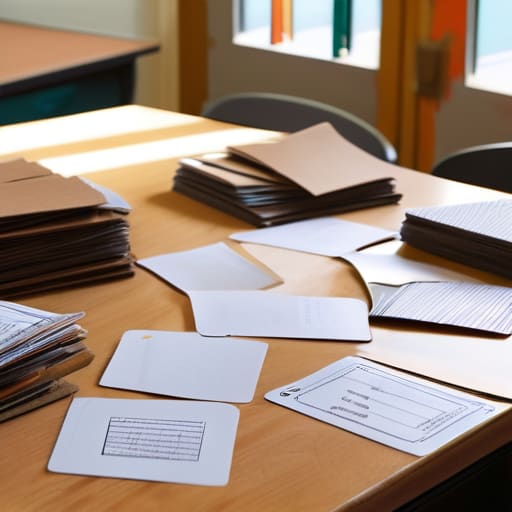
The problem with most advice on retrieval practice is that it assumes you have the luxury of a quiet classroom and a pristine set of resources. In reality, you’re often staring at a Year 9 class that’s restless, a heating system that’s failed, and a pile of marking that makes you want to quit. If your retrieval strategy requires twenty minutes of calm, focused individual work, it’s not a strategy—it’s a fantasy. Real retrieval practice principles have to be rugged. They need to be something you can throw at the front of the room the moment the bell rings, something that works even when the engagement is low and the noise level is rising.
I’ve learned that the most effective way to manage cognitive load in testing is to keep it brutally simple. Don’t go hunting for complex, multi-layered questions that require a PhD to decipher. Instead, use low-stakes, high-frequency prompts: three questions on the board, written in thick marker, that require nothing more than a scrap of paper and a brain. If the task is too heavy, they won’t engage; if it’s too light, they won’t learn. You need that sweet spot of productive struggle that doesn’t require you to play the role of a technician just to get the lesson moving.
Managing Cognitive Load in Testing When Theyre Already Exhausted
Here is the reality of period five on a Friday: your students aren’t just tired; they are cognitively bankrupt. If you try to hit them with a sprawling, multi-layered assessment that requires them to juggle three different concepts at once, you aren’t testing their knowledge—you’re just testing their ability to panic. When we talk about cognitive load in testing, we often get bogged down in academic jargon, but in a real classroom, it’s much simpler. If the format of the test itself is confusing, they have no mental bandwidth left to actually retrieve the information you spent all week teaching.
To make this work, you have to strip the friction away. This is where formative assessment design becomes your best friend. Instead of a daunting ten-question quiz that feels like a mountain, try a few sharp, isolated bursts. Keep the instructions dead simple and the layout clean. You want them focusing entirely on the content, not on trying to decipher what a poorly worded question is actually asking for. If the test feels like a chore before they’ve even read the first line, you’ve already lost them.
Five ways to design tests without losing your mind (or theirs)
- Stop aiming for the ‘perfect’ question. If you’re spending forty minutes crafting a beautifully nuanced multiple-choice question for a single lesson, you’ve already lost. Design questions that are ‘good enough’ to trigger the memory, but quick enough to produce so you aren’t sitting at your desk at 8:00 PM on a Tuesday.
- Prioritise the ‘big ideas’ over the trivia. I’ve seen too many teachers design retrieval tests that are just a scavenger hunt for tiny, insignificant facts. If they can remember the date of a minor treaty but can’t explain why the war started, you’ve wasted their cognitive energy. Test the concepts that actually matter when they sit their real exams.
- Mix it up, but don’t make it a maze. Interleaving—mixing different topics together—is great in theory, but if you throw five unrelated concepts at a class that’s already struggling to stay awake, they’ll just shut down. Start with a bit of familiarity to build momentum, then throw in the curveball.
- Use the feedback as a diagnostic, not a lecture. A practice test is useless if it’s just a pile of red ink. Design your questions so you can see at a glance where the misconception lies. If half the room misses the same question, don’t bother marking the individual errors; just address the gap with the whole group tomorrow.
- Keep the format consistent so the format isn’t the hurdle. If every single practice test uses a different layout, different terminology, or a different way of answering, you aren’t testing their knowledge; you’re testing their ability to navigate your whims. Make the mechanics of the test invisible so the subject matter can actually come through.
The Friday Afternoon Reality Check
Stop building elaborate, multi-stage testing frameworks; if a retrieval task requires more than two minutes of setup when you’re staring at a pile of marking, it’s a luxury you don’t have.
Prioritise the “low-stakes” in low-stakes testing—if the kids are too terrified of the consequences to actually think, you aren’t testing their knowledge, you’re just testing their anxiety.
Design for the tired student, not the ideal student; use short, sharp, and predictable formats that don’t require a massive amount of mental energy just to understand what the question is asking.
The Myth of the Perfect Test
If your practice testing design requires a PhD to administer and forty minutes of quiet contemplation from the students, you haven’t designed a learning tool; you’ve designed a luxury. Real testing has to work when the room is loud, the kids are restless, and you’ve only got ten minutes before the bell rings to tell them what they actually know.
Ellery Mwangi-Selkirk
The Reality Check
At the end of the day, designing practice tests isn’t about finding the most sophisticated way to map Bloom’s Taxonomy or implementing some high-concept retrieval framework that requires forty minutes of prep. It’s about making sure that when you hand out those slips of paper, they actually do the heavy lifting for the students without breaking you in the process. Keep it focused, keep the cognitive load manageable, and for heaven’s sake, make sure it actually tests what they need to know rather than just what’s easiest to grade. If a testing strategy requires you to be a superhero just to get through the lesson, it’s a bad strategy. We need tools that work when we are tired, when the printer is jammed, and when the classroom energy is at an all-time low.
I know it feels like we are constantly being told to do more with less, chasing the latest “evidence-based” shiny object that promises to fix everything. But don’t let the noise drown out the reality of your classroom. You don’t need a perfect, data-driven testing suite to make an impact; you just need to provide those small, consistent moments where students can prove to themselves that they actually know something. Trust your gut, lean into the simple methods that have stood the test of time, and remember that the best teaching happens in the messy middle, not in the polished theories. You’re doing the hard work, and that’s what matters.

Author

Related Posts

A Classroom Where Being Wrong Is Safe
I remember sitting in a staffroom meeting ten years ago, staring at a glossy PowerPoint about “reflective practice” that suggested we should...
Read out all
Independence Needs Structure First
I remember sitting in a professional development session back in 2014, nodding politely while a consultant in a slim-fit suit explained how...
Read out all
Group Work With Individual Accountability
I remember a Tuesday afternoon in Year 9—the kind where the radiator is clanking, the rain is lashing against the windows, and...
Read out all
Peer Norms Shape Effort More Than Teachers Do
I remember sitting in a shiny, air-conditioned seminar room during a leadership training session, listening to a consultant explain the “synergistic potential...
Read out all
The Adolescent Brain and Classroom Consequences
I’ve spent many a Tuesday afternoon sitting in staff meetings, nodding politely while some consultant in a slim-fit suit explains the “neurobiological...
Read out all
What Changes Between Seven and Seventeen
I remember sitting in a windowless seminar room during my middle leadership training, nodding politely while a consultant in a crisp suit...
Read out all