
I remember sitting in a windowless meeting room in 2014, staring at a twenty-page laminated document that promised to “revolutionise student engagement through tiered restorative justice frameworks.” The Senior Leadership Team was beaming, convinced they’d solved it. But I knew, even then, that a policy designed in a quiet office with a fresh pot of coffee has no idea how behaviour policies should work when you’re standing in a corridor at 3:15 PM with a broken printer, a leaking ceiling, and a Year 9 student who has decided that today is the day they test every single boundary you possess. Most policies are just expensive paperweights that fall apart the moment they hit the reality of a crowded classroom.
I’m not here to give you another theoretical framework or a list of buzzwords to include in your next appraisal. Instead, I want to talk about the grit of it: the stuff that actually holds a room together when things go sideways. I’ll be sharing what I’ve learned from nineteen years of trial, error, and the occasional departmental meltdown about the practicalities of consistency, the myth of the “quick fix,” and why a policy is only as good as the support it gives the person actually standing at the front of the room.
Table of Contents
Standardized Response Procedures for the Chaos of a Wet Wednesday
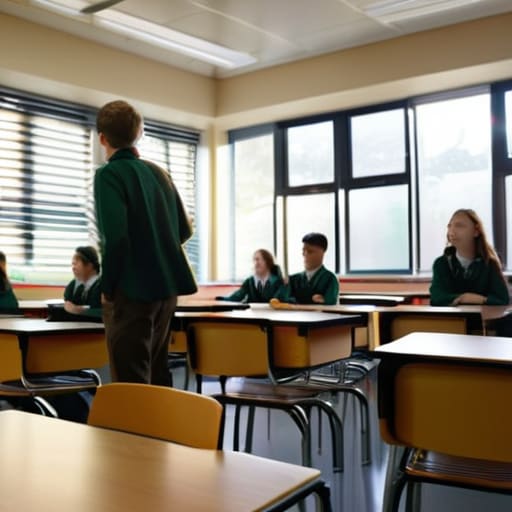
The problem with most school-wide disciplinary action protocols is that they are written by people who haven’t stood in a corridor during a lesson change since 2012. They look great in a staff handbook—neat little flowcharts of escalating consequences—but they tend to evaporate the moment you’re facing a Year 9 class that has decided, collectively, that they simply do not care about your lesson plan. A policy shouldn’t be a complex legal document; it needs to be a set of standardized response procedures that you can execute without having to pause your teaching for five minutes to consult a manual.
When the chaos hits, you don’t need a lecture on theory; you need a predictable rhythm. If the response to a disruption is inconsistent, the kids will sniff that out in seconds, and the whole room will tilt. True proactive behavior management isn’t about having a massive toolkit of fancy tricks; it’s about the quiet, relentless consistency of your baseline. It’s about knowing exactly what your move is when the noise level spikes, so you can settle the room and get back to the actual business of teaching before the momentum is lost entirely.
Why Your Classroom Management Frameworks Fail During Period Four
The problem with most classroom management frameworks is that they are designed by people who haven’t stood in a corridor at 3:15 PM in mid-November. They look brilliant in a staff handbook—clean, logical, and step-by-step. But by period four, when the room is stuffy, the kids are restless, and you’ve already had three students ask to go to the toilet for the fourth time, those theoretical frameworks tend to evaporate. You aren’t looking for a nuanced psychological debate; you’re looking for a way to stop the boy in the back from throwing a pen at the ceiling.
When you’re exhausted, you don’t have the mental bandwidth to implement complex behavioral intervention plans or navigate a labyrinth of subtle warnings. Most policies fail because they require too much cognitive load from the teacher at the exact moment when your own reserves are lowest. If a policy requires you to be a saint, a detective, and a judge all within a single ten-minute window, it isn’t a tool—it’s a burden. We need systems that work when we are tired, not just when we are at our best.
Five ways to stop a policy from being a piece of paper in a drawer
- Design for the tired version of yourself. If your behaviour policy requires a ten-minute calm deliberation and a nuanced restorative conversation every time a Year 9 student refuses to put their phone away, you’ve already lost. A real policy needs to work when you’ve had four hours of sleep and the heating has gone off.
- Prioritise the ‘low-level’ over the ‘high-drama’. We spend all our time training people on how to handle the kid throwing a chair, but the policy that actually saves your sanity is the one that tells you exactly what to do when thirty kids are whispering just loud enough to stop you from teaching.
- Make sure the consequences are predictable, not punitive. Kids don’t actually need us to be “tough”; they need us to be consistent. If the policy says a warning leads to a move, then the move has to happen every single time. If you skip it once because you’re “in a good mood,” the policy is dead.
- Stop pretending the seating plan is a secondary concern. A decent behaviour policy shouldn’t just be about what happens when things go wrong; it should be about the proactive stuff, like how we use seating to prevent the friction before it even starts.
- Build in a “sanity check” for the staffroom. If a policy feels like it’s being handed down from a leadership team that hasn’t stepped foot in a corridor since 2014, it won’t work. A policy is only as good as the collective willingness of the people in the trenches to actually use it when the chaos hits.
The Survival Kit: What Actually Sticks
Stop looking for a policy that solves everything; look for one that works when you’re tired, the copier is broken, and the Year 9s are restless.
Consistency isn’t about being a drill sergeant; it’s about making sure the kids know exactly what happens next so you don’t have to waste your breath explaining it every single time.
If a management strategy requires twenty minutes of setup or a perfectly calm atmosphere to function, it isn’t a strategy—it’s a luxury you can’t afford.
The Litmus Test for Policy
“A behaviour policy isn’t a document you keep in a folder for an inspector to admire; it’s a survival mechanism. If it requires you to be a saint, a superhero, or a person with infinite patience just to get through a Tuesday afternoon, then it isn’t a policy—it’s a fantasy.”
Ellery Mwangi-Selkirk
The Reality Check
At the end of the day, a behaviour policy shouldn’t be a glossy document sitting in a binder in the Deputy Head’s office; it needs to be the thing that actually holds the floor when the atmosphere in the room shifts from productive to volatile. We’ve talked about why those rigid, top-down frameworks crumble during period four and why you need a response that is predictable enough to be automatic, yet flexible enough to handle the sheer unpredictability of thirty teenagers. If your policy requires a ten-minute debate or a complex escalation ladder just to get a student to put a phone away, it isn’t a policy—it’s a recipe for exhaustion. A real policy is about creating a baseline of safety and consistency so that you can actually get back to the reason we all showed up in the first place: teaching.
I know it feels like we are just constantly managing fires, especially when the initiatives change every two years and leave us more tired than when we started. But don’t let the noise of the next “big reform” convince you that what you do in the trenches doesn’t matter. The most effective way to implement any policy is through the small, quiet moments of relentless consistency that happen when no one is watching. You aren’t just enforcing rules; you are building a predictable world for kids who often live in very unpredictable ones. Hold your ground, trust your instincts, and remember that the best classroom management is simply being the person who stays steady when everything else is spinning out.

Author

Related Posts

A Library With Someone Running It
I remember sitting in a departmental meeting ten years ago, listening to a consultant drone on about “digital literacy hubs” and “multi-modal...
Read out all
Keeping Arts on the Timetable
I remember sitting in a budget meeting back in 2014, listening to a consultant in a slim-fit suit explain how we could...
Read out all
Participation Versus Competition in School Sport
I remember standing in a drafty changing room in mid-November, watching a frantic PE lead try to coordinate three different Year 8...
Read out all
Enrichment That Reaches the Pupils Who Need It
I remember sitting in a windowless meeting room five years ago, staring at a glossy PowerPoint presentation that promised to revolutionise our...
Read out all
Removing Barriers Before Adding Interventions
I remember sitting in a windowless meeting room ten years ago, listening to a consultant in a slim-fit suit explain a “holistic...
Read out all
Multi-agency Work and Its Delays
I remember sitting in a windowless meeting room during a Tuesday afternoon slot—the kind where the radiator hums just loud enough to...
Read out all