
I’ve sat through enough professional development sessions to know the drill: a polished consultant stands at the front of a room, slides deck in hand, promising that a “complete guide to spaced practice” is the magic wand that will fix your students’ cognitive load issues. They make it sound like a delicate architectural feat, something requiring meticulous scheduling and high-tech tracking software. But let’s be honest—most of those guides are written for a classroom that doesn’t exist, one where you have nothing to do but sit and watch children ponder their long-term memory. In the real world, you’re trying to implement these theories while dodging a broken photocopier and wondering why the Year 9s are staring at you like you’re speaking ancient Greek.
I’m not here to give you a theoretical lecture that falls apart the moment a wet Wednesday hits. Instead, I want to talk about what this actually looks like when you’re exhausted and short on time. We’re going to strip away the academic jargon and look at how you can actually weave spacing into your lessons without adding three hours to your Sunday night workload. This isn’t about perfection; it’s about practicality that survives the chaos of a real school day.
Table of Contents
- Distributed Practice vs Massed Practice Surviving the Friday Afternoon Slum
- Forgetting Curve Optimization Without Losing Your Mind
- Five Ways to Actually Do Spaced Practice Without Adding Three More Hours to Your Sunday
- The Reality Check: What Actually Sticks
- The Reality of Retrieval
- The Reality Check
Distributed Practice vs Massed Practice Surviving the Friday Afternoon Slum
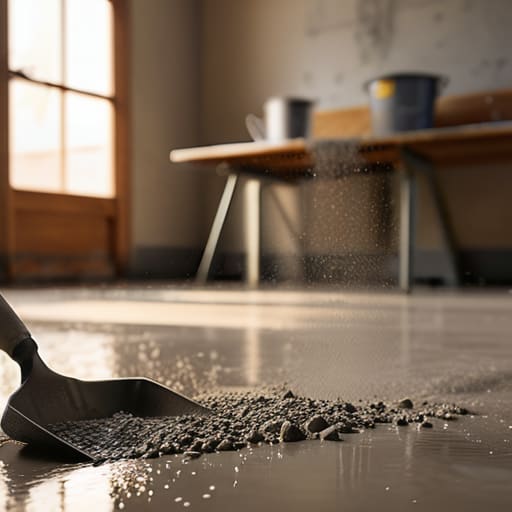
Look, we’ve all been there. It’s a Friday afternoon, the radiator is clanking, and you’ve got a topic to cover that’s twice as long as the period allows. The temptation is to just cram it all in—what the academics call massed practice. You spend forty minutes hammering one concept into their heads, hoping it sticks like wet cement. But massed practice is a lie we tell ourselves to feel productive; it’s essentially just a temporary illusion of competence that evaporates the moment they hit the school gates.
The reality of distributed practice vs massed practice is much more forgiving, provided you have the stomach for it. Instead of one massive, exhausting heave, you’re looking at breaking that content into smaller, digestible chunks spread across the week. It’s about leaning into the cognitive science of learning to work with their brains rather than against them. If you can find even five minutes at the start of Tuesday’s lesson to revisit what you did on Monday, you’re already doing more for their long-term memory than any expensive, one-off “intensive” workshop ever could.
Forgetting Curve Optimization Without Losing Your Mind
Now, let’s talk about the elephant in the room: the “forgetting curve.” If you’ve spent any time reading the more academic side of the cognitive science of learning, you’ll know the theory—the idea that information leaks out of a student’s brain like water through a sieve unless we intervene. But when you’re standing in a Year 9 classroom and half the class is staring at you with blank expressions, forgetting curve optimization sounds less like a scientific goal and more like an expensive way to describe a headache.
The trick isn’t to build some complex, digital spaced repetition system that requires forty minutes of setup every lesson. That’s how you end up burnt out by November. Instead, think of it as tactical timing. You aren’t trying to reinvent their brains; you’re just catching the information right before it slips away. It’s about finding those optimal review intervals—maybe it’s a quick five-minute recap three days after a topic, rather than a massive, exhausting revision session the night before the exam. We want to nudge the memory just as it’s starting to fade, without adding another mountain of marking to your Friday night pile.
Five Ways to Actually Do Spaced Practice Without Adding Three More Hours to Your Sunday
- Stop trying to design bespoke retrieval booklets. If you’re already drowning in marking, don’t make it harder on yourself. Just take the three most important questions from last Tuesday’s lesson and throw them onto the board for a five-minute starter next Thursday. It’s not fancy, but it works, and it doesn’t require a mountain of photocopying.
- Use the “low-stakes” rule to your advantage. Spaced practice fails when it feels like a pop quiz that determines their grade. If the kids feel the panic rising, they stop thinking and start performing. Keep it casual—mini-whiteboards are your best friend here because they allow for quick, messy, and immediate feedback without the weight of a formal assessment.
- Don’t wait for the “perfect” interval. The theory says there’s a specific mathematical sweet spot for when to revisit information, but in a real classroom, the schedule usually dictates the spacing. If you can’t get to a topic in ten days, do it in fourteen. A slightly imperfect gap is infinitely better than a perfect gap that never actually happens because you’re stuck teaching a unit on the Industrial Revolution.
- Mix it up so they can’t coast. If you only space out questions from the same topic, they’ll start to recognise the pattern rather than the knowledge. Interleave your questions. Throw a question from three weeks ago into a set of questions from last week. It forces their brains to actually work to retrieve the information, rather than just riding the momentum of the current topic.
- Focus on the “big ideas,” not the trivia. You don’t have the time or the cognitive load to space out every single date and name in the syllabus. Pick the core concepts—the ones they absolutely need to understand to make sense of the next unit—and anchor those. If they get the foundation right through spaced repetition, the smaller details tend to stick much more easily.
The Reality Check: What Actually Sticks
Stop trying to engineer the perfect schedule; just aim to revisit a concept three times across three different weeks, even if it’s just a five-minute low-stakes quiz at the start of a lesson.
Spaced practice isn’t an extra burden on your planning; it’s a way to stop the cycle of re-teaching the same thing every fortnight because the kids forgot it the moment the unit ended.
If you’re drowning in marking, don’t worry about deep-dive retrieval sheets—use the verbal check-ins and the “do now” activities you’re already doing to see what’s actually stayed in their heads.
The Reality of Retrieval
“Spaced practice isn’t about finding some perfect, mathematically precise window to revisit a concept; it’s about the grit of revisiting a topic just as the students are starting to lose interest, ensuring the knowledge actually sticks when they leave your room and head into a world that doesn’t care about their GCSEs.”
Ellery Mwangi-Selkirk
The Reality Check
Look, we’ve covered a lot of ground here, from the theoretical difference between massed and distributed practice to the practical nightmare of trying to time your reviews when the curriculum is moving faster than you can breathe. If you take nothing else away, remember that spaced practice isn’t about finding a perfect, mathematically precise moment to revisit a topic; it’s about breaking the cycle of cramming and forgetting. It’s about those small, slightly annoying interventions—the low-stakes quiz, the quick retrieval starter, the “remember when we did this last month?” question—that actually build long-term memory. You don’t need a complex spreadsheet to do this; you just need to stop treating every new topic like it exists in a vacuum.
I know what you’re thinking: “Ellery, I haven’t even finished my coffee, let alone redesigned my entire scheme of work.” And you’re right. You shouldn’t. Don’t try to overhaul everything by Monday morning. Just pick one thing. One small gap in their knowledge that you can revisit next week, and then the week after that. Teaching is a marathon run through a series of increasingly difficult obstacles, and some days, just getting the core concepts to stick is a massive win. The good ideas are the ones that survive the chaos, and spaced practice is one of them. Stick with it; the kids will notice, even if they don’t say it.

Author

Related Posts

The Complete Guide to School Funding
I remember sitting in a windowless meeting room back in 2014, staring at a glossy, laminated booklet that promised a “complete guide...
Read out all
The Complete Guide to Pupil Premium
I remember sitting in a windowless meeting room during a Tuesday afternoon briefing, watching a consultant in a slim-fit suit present what...
Read out all
The Complete Guide to Exclusions
If you search for a “complete guide to exclusions” online, you’ll mostly find two things: dry, soul-crushing legal documents written by people...
Read out all
The Complete Guide to School Attendance
I remember sitting in a windowless briefing room in 2014, listening to a consultant in a slim-fit suit explain why our school...
Read out all
The Complete Guide to Safeguarding in Schools
If you search for a “complete guide to safeguarding” online, you’ll mostly find fifty-page PDFs written by people who haven’t stepped foot...
Read out all
The Complete Guide to School Governance
If you pick up any “complete guide to school governance” from a major educational consultancy, you’ll likely find fifty pages of dense,...
Read out all