
If you pick up any “complete guide to school governance” from a major educational consultancy, you’ll likely find fifty pages of dense, theoretical frameworks designed by people who haven’t stepped foot in a corridor since the nineties. They’ll talk about “strategic oversight” and “robust accountability structures” as if you’re running a FTSE 100 company rather than a building filled with teenagers, crumbling budgets, and exhausted staff. It’s all very impressive on a slide deck, but it’s utterly useless when you’re sitting in a boardroom at 7:00 PM, trying to figure out if a new policy is actually going to help the kids or just add another layer of pointless paperwork to a teacher’s already overflowing desk.
I’m not here to sell you on a textbook model that only works in a vacuum. Instead, I want to give you the version of this guide that actually survives contact with reality. We’re going to strip away the jargon and look at what effective governance looks like when the roof is leaking and the morale is low. This is about finding the balance between being a supportive partner to the Head and being the critical friend the school actually needs to thrive.
Table of Contents
- Why Educational Leadership Frameworks Fail in Real World Chaos
- Navigating School Board Responsibilities When the Crisis Hits
- Five Ways to Govern Without Losing Your Soul (or Your Sanity)
- Survival Lessons for the School Board
- The Gap Between Policy and the Playground
- The View from the Boardroom (and the Classroom)
Why Educational Leadership Frameworks Fail in Real World Chaos
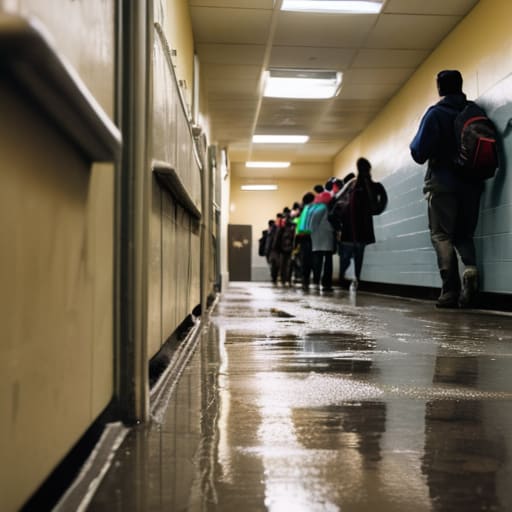
The problem with most educational leadership frameworks is that they are designed in quiet, air-conditioned offices by people who haven’t stepped foot in a corridor during a rainy Tuesday morning in years. They look beautiful on a slide deck—all neat arrows and interconnected circles—but they assume a level of stability that simply doesn’t exist. They treat a school like a well-oiled machine, rather than a living, breathing organism that might be dealing with a sudden spike in staff absence or a broken heating system all in the same hour.
When you actually look at school board responsibilities, you realise the gap between theory and practice is massive. You can have all the governance accountability measures in the world on paper, but if they don’t account for the sheer exhaustion of the staff, they aren’t helping; they’re just adding more paperwork to a pile that’s already too high. Real, effective school oversight isn’t about ticking boxes to satisfy a spreadsheet; it’s about understanding the fragile ecosystem of a school and knowing when a policy is actually helping or just creating more noise.
Navigating School Board Responsibilities When the Crisis Hits
When a crisis hits—whether it’s a sudden budget shortfall, a safeguarding lapse, or a local authority intervention—the glossy binders of educational leadership frameworks usually end up gathering dust in the corner of the boardroom. In those moments, the theoretical models of “strategic school management” feel incredibly thin. You aren’t managing a textbook; you are managing people who are scared, exhausted, and looking to you for stability. The real test of school board responsibilities isn’t how well you follow a pre-set agenda, but how quickly you can distinguish between a systemic failure and a single bad day in a single classroom.
In the heat of it, don’t get bogged down in the performative side of governance accountability measures. It is very easy to spend three hours debating the minutiae of a policy document while the actual fire is burning elsewhere. Instead, focus on the questions that actually matter: Do the staff feel supported? Do we have the resources to fix the root cause? Effective oversight isn’t about being a watchdog that barks at every minor mistake; it’s about providing the steady hand that keeps the school’s mission from drifting when the weather turns foul.
Five Ways to Govern Without Losing Your Soul (or Your Sanity)
- Stop chasing the ‘Gold Standard’ and start looking at the floor. A framework might look beautiful in a glossy annual report, but if the governors don’t know whether the heating actually works in the Year 9 block or if the staffroom feels like a combat zone, the framework is a lie. Real governance starts with knowing the temperature of the building, not just the data on the spreadsheet.
- Learn to distinguish between ‘strategic oversight’ and ‘micromanagement’—it’s a fine line, and most boards trip over it. There is nothing more soul-destroying for a Headteacher than a board of governors spending forty minutes debating the font size on a newsletter instead of asking why the literacy figures are dipping in Key Stage 3. If you’re looking at the weeds, you aren’t looking at the horizon.
- Treat the budget like a finite resource, not a mathematical abstraction. When a new government initiative is announced, don’t just nod and agree; ask the hard question: “What are we stopping so that we can afford this?” You cannot keep adding layers of ‘excellence’ to a school without something else eventually breaking.
- Build a bridge to the classroom, even if it feels awkward. You don’t need to be a teacher to govern, but you do need to understand the reality of a Tuesday afternoon in November. If your policies only work in a vacuum of perfect behaviour and unlimited resources, they aren’t policies—they’re fantasies. Ask the Head what happens when the ‘ideal scenario’ meets a wet Wednesday.
- Prioritise the people, not just the processes. You can have the most robust compliance audit in the country, but if your staff are burnt out and your recruitment is a revolving door, the school is failing. Governance is about ensuring the environment is stable enough for the professionals in the classrooms to actually do the job they were trained to do.
Survival Lessons for the School Board
Stop chasing the “perfect” strategic framework and start asking if the decisions you’re making actually make a teacher’s Tuesday morning easier.
Governance isn’t about policing compliance from a distance; it’s about understanding the difference between a school that is following policy and a school that is actually functioning.
Real leadership happens in the gap between the official handbook and the reality of a shrinking budget—focus on stability and support rather than chasing the latest educational trend.
The Gap Between Policy and the Playground
“A complete guide to school governance shouldn’t be a collection of polished frameworks designed for a boardroom in a vacuum; it needs to be a survival manual for when the budget is fraying, the staff are burnt out, and the theoretical models from the handbook meet the messy, unpredictable reality of a Tuesday morning in a struggling school.”
Ellery Mwangi-Selkirk
The View from the Boardroom (and the Classroom)
At the end of the day, effective school governance isn’t about mastering the latest compliance checklist or perfecting a theoretical framework that looks lovely in a prospectus. It’s about understanding that every decision made in a sterile boardroom eventually trickles down to a Year 9 classroom on a rainy Tuesday morning. We’ve talked about why leadership models often crumble under pressure and how to keep your head when the crisis hits, but the core remains the same: you are there to provide a stable foundation so that the people actually doing the teaching can do it. If your governance strategy doesn’t account for human exhaustion and shrinking budgets, it isn’t a strategy—it’s a fantasy.
If you take nothing else from this, remember that the best governors are those who maintain a healthy scepticism of “silver bullet” initiatives and instead focus on the quiet, consistent support of their staff. You don’t need to be an expert in every pedagogical nuance, but you do need to be the person who ensures the school has the resources, the stability, and the sanity to function. It’s a heavy lift, and it’s often thankless work, but when you get it right, you create the space for real learning to happen. Hold the line, stay grounded in reality, and trust the people in the trenches.

Author

Related Posts

The Complete Guide to School Funding
I remember sitting in a windowless meeting room back in 2014, staring at a glossy, laminated booklet that promised a “complete guide...
Read out all
The Complete Guide to Pupil Premium
I remember sitting in a windowless meeting room during a Tuesday afternoon briefing, watching a consultant in a slim-fit suit present what...
Read out all
The Complete Guide to Exclusions
If you search for a “complete guide to exclusions” online, you’ll mostly find two things: dry, soul-crushing legal documents written by people...
Read out all
The Complete Guide to School Attendance
I remember sitting in a windowless briefing room in 2014, listening to a consultant in a slim-fit suit explain why our school...
Read out all
The Complete Guide to Safeguarding in Schools
If you search for a “complete guide to safeguarding” online, you’ll mostly find fifty-page PDFs written by people who haven’t stepped foot...
Read out all
The Complete Guide to School Improvement
I remember sitting in a windowless meeting room in 2014, staring at a glossy, twenty-page binder that promised to be the “complete...
Read out all