
I remember sitting in a windowless meeting room during a Tuesday evening briefing, staring at a sixty-page strategic document that promised to “revolutionise student outcomes through streamlined oversight.” The air was stale, the coffee was lukewarm, and I remember thinking that if anyone in that room actually stepped into a Year 9 corridor during a rainy break, they wouldn’t recognise a single thing written on those pages. Most people think understanding how school governance operates is about mastering complex legal frameworks and high-level accountability metrics. In reality, it’s often just a group of well-meaning people in suits making decisions that completely fall apart the moment they hit the reality of a crowded staffroom or a broken heating system.
I’m not here to give you the polished, boardroom version of the truth. My promise to you is much simpler: I’m going to strip away the jargon and tell you what governance actually looks like when it’s working for teachers and failing them. We’ll look at the gap between the official policy and the actual impact on the classroom, focusing on what matters to the people doing the heavy lifting.
Table of Contents
- Governance vs Management in Education Where the Friction Starts
- Navigating Academic Accountability Frameworks When Things Go Wrong
- Survival Tips for When the Boardroom Meets the Classroom
- The Reality Check: What Actually Matters
- The Gap Between the Boardroom and the Classroom
- The View from the Staffroom Door
Governance vs Management in Education Where the Friction Starts
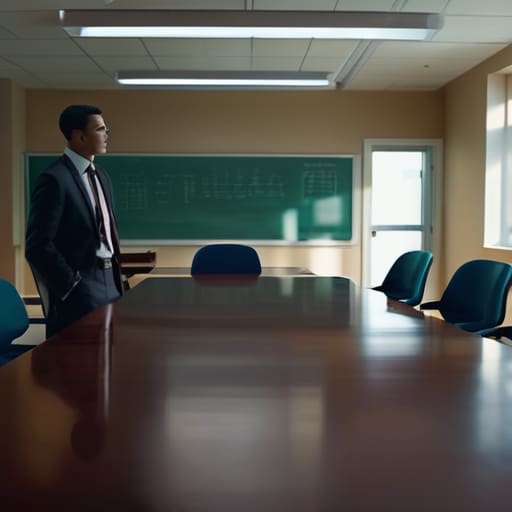
The trouble usually starts when the people setting the “strategic vision” forget that a vision doesn’t actually teach a child to read or solve a quadratic equation. In theory, the distinction between governance and management is clean: the board handles the big picture, and the leadership handles the day-to-day. In practice, however, the line gets blurred by people who have never stood in a corridor during a transition period. When school board responsibilities start creeping into the minutiae of how a department is run, or how a specific marking policy is implemented, you don’t get better results—you just get a leadership team that feels micromanaged and a board that feels disconnected.
This friction is where the most exhausting kind of “initiative fatigue” begins. You see it when educational leadership structures are used to push through top-down mandates that look brilliant on a spreadsheet but crumble the moment they hit a classroom with thirty-two restless teenagers. Real governance should be about providing the resources and the guardrails to let teachers actually teach; instead, it often feels like a series of hurdles designed to satisfy an academic accountability framework rather than a practical need for the school.
Navigating Academic Accountability Frameworks When Things Go Wrong
When an academic accountability framework starts to buckle, the view from the boardroom is rarely the same as the view from the staffroom. From the top, a dip in progress looks like a data point on a spreadsheet that needs a corrective strategy. On the ground, it usually means a department is drowning in broken processes or a curriculum change was rushed through without checking if the staff had the capacity to actually deliver it. The problem is that academic accountability frameworks are often designed to measure outcomes, but they are remarkably poor at measuring the conditions required to achieve them.
This is where the disconnect becomes dangerous. If the school board responsibilities are focused solely on the ‘what’—the grades, the metrics, the targets—they miss the ‘how’. When things go wrong, the instinct is often to tighten the screws, adding more layers of oversight or more frequent reporting. But in my experience, you can’t audit your way out of a systemic failure. Real accountability isn’t about more paperwork; it’s about ensuring that the people making the decisions actually understand the human cost of the policies they are enforcing.
Survival Tips for When the Boardroom Meets the Classroom
- Stop treating the Governor’s report like a sacred text. If the data says every child is making exceptional progress, but you’re standing in a corridor in November watching Year 9 crumble under the weight of a new curriculum, trust the corridor. Governance is meant to be a reality check, not a performance for the inspectors.
- Distinguish between ‘strategic oversight’ and ‘micromanagement’ immediately. If a governor is spending forty minutes of a meeting debating the exact shade of blue used in the new homework booklets, they aren’t governing; they’re interfering. Good governance asks if the school is safe and learning; bad governance asks why the staff room smells like burnt toast.
- Ask the question that actually matters: “How will this decision feel to a teacher on a Friday afternoon?” Most policies look brilliant on a spreadsheet in a quiet office, but they fall apart when they hit a classroom with thirty kids, two of whom are currently trying to dismantle a desk. If a policy doesn’t account for human fatigue, it isn’t a policy—it’s a fantasy.
- Demand transparency over ‘polish’. I’ve sat through enough meetings where the leadership team presents a perfectly smooth narrative of success. I’d much rather a governor asks, “What is the one thing currently keeping the Headteacher awake at night?” That’s where the real governance happens—in the gaps between the official reports.
- Remember that accountability isn’t a weapon, it’s a safety net. The goal of a governing body shouldn’t be to find someone to blame when a metric slips; it should be to ensure the school has the resources and the stability to fix the problem before it becomes a crisis. Governance is about building a foundation, not just conducting an autopsy.
The Reality Check: What Actually Matters
Stop confusing oversight with interference; a board that spends its time debating the colour of a new display board is a board that has lost sight of the fact that the teachers are drowning.
Accountability frameworks are only as good as the data they represent, and if that data doesn’t account for the sheer, grinding exhaustion of a staff room in November, it isn’t telling the truth.
Real governance isn’t about polished strategic visions—it’s about ensuring the people making the rules actually understand what happens when a lesson plan meets a room of thirty kids on a rainy Friday afternoon.
The Gap Between the Boardroom and the Classroom
“Governance often feels like a group of people trying to design a high-performance engine while they’ve never actually had to drive the car through a snowstorm on a Monday morning. They focus on the polish of the policy, but true governance is found in whether those policies actually hold up when a teacher is staring at a broken boiler and a classroom of thirty kids who haven’t eaten breakfast.”
Ellery Mwangi-Selkirk
The View from the Staffroom Door
At the end of the day, governance isn’t some abstract mechanism of spreadsheets and strategic pillars; it is the invisible scaffolding that either holds a school up or lets the weight of it crush the people inside. We’ve looked at how the friction between management and oversight can stall progress, and how accountability frameworks often feel like they’re designed to find fault rather than find solutions. If the governors are too far removed from the reality of a Tuesday morning with thirty-two teenagers and a broken photocopier, then the policy they pass is little more than expensive fiction. Real governance works when it recognises that the most important decisions aren’t made in a boardroom, but are felt in the exhaustion of the staff and the engagement of the pupils.
To those of you navigating these structures—whether you’re a headteacher trying to protect your team or a governor trying to make a genuine difference—don’t lose heart. It is easy to become cynical when the “big picture” feels disconnected from the classroom, but the work still matters. The goal isn’t to achieve a perfect audit or a flawless inspection; it is to create a stable, sensible environment where teachers can actually teach and children can actually learn. Keep pushing for the practical over the performative. If we can bridge that gap between the high-level strategy and the reality of the classroom, we might finally build schools that work for the people who actually inhabit them.

Author

Related Posts

Telling a Parent Something They Do Not Want to Hear
I remember sitting in a departmental meeting ten years ago, staring at a glossy, twenty-page slide deck about “holistic stakeholder engagement frameworks.”...
Read out all
Which Parental Involvement Actually Helps
I remember sitting in a staff meeting ten years ago, listening to a consultant in a sharp suit explain how we needed...
Read out all
Educating a Child at Home Legally
I spent two decades in secondary schools watching “revolutionary” policy frameworks arrive in glossy binders, only to see them crumble the moment...
Read out all
Teaching Rshe Confidently
I remember sitting in a windowless training room ten years ago, staring at a glossy PowerPoint presentation that promised a “revolutionary, multi-tiered...
Read out all
Mental Health Support in a School Setting
I remember sitting in a staff briefing three years ago, staring at a glossy, laminated flowchart that promised a “revolutionary new framework”...
Read out all
Making a Referral and Recording It
I remember sitting in a windowless meeting room in 2014, staring at a thirty-page safeguarding manual that felt more like a legal...
Read out all