
I remember sitting in a windowless meeting room during my third year as Head of Department, staring at a glossy, twenty-page slide deck about “synergistic pedagogical leadership.” The presenter was talking about high-level strategic alignment, but all I could think about was the Year 9 history teacher in the next room who was currently drowning in marking and trying to figure out why her new seating plan had just triggered a classroom revolt. We are constantly told that middle leadership is about driving data and implementing sweeping curriculum shifts, but that’s not how how middle leaders make a difference actually works in a school that has a budget of zero and a staff room full of exhausted professionals.
I’m not here to give you another theoretical framework that falls apart the moment a teacher has a bad Tuesday. Instead, I want to talk about the quiet, practical stuff that actually keeps a department running. I’ll be sharing what I’ve learned from nineteen years in the thick of it: how to support a colleague when they’re at their breaking point, why protecting your team’s time is more important than any shiny new initiative, and the reality of leading people who are just trying to survive until Friday afternoon.
Table of Contents
Bridging the Gap Between Senior Leaders and Staff
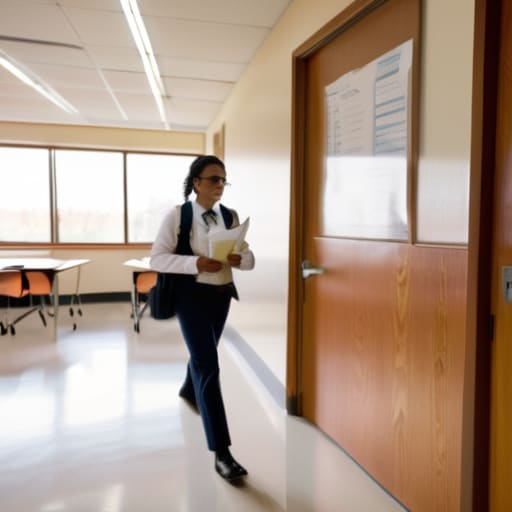
The problem with most school hierarchies is that they feel like two different planets. Up in the SLT office, everything is about “strategic vision,” “KPIs,” and “long-term sustainability.” Down in the department, it’s about whether the photocopier is working and why Year 9 is currently acting like they’ve never heard of a chair. If you aren’t careful, you end up acting as a mere messenger—a human conduit for directives that feel entirely disconnected from the reality of a Tuesday afternoon.
True bridging the gap between senior leaders and staff isn’t about being a polite middleman; it’s about translation. You have to take those lofty, often poorly phrased strategic goals and turn them into something that actually makes sense when a teacher is staring at thirty-two tired faces. It’s about protecting your team from the “initiative of the month” while simultaneously explaining to the Headteacher why a certain policy is going to crash and burn in a practical setting. When you get this right, you aren’t just passing on orders; you are protecting the sanity of your department while ensuring that the school’s broader goals don’t just remain ink on a document.
Driving Quality Through Departmental Oversight
Now, let’s talk about the actual mechanics of the job. When we talk about driving quality through departmental oversight, the temptation is to turn into a glorified compliance officer. You sit there with a clipboard, ticking boxes on whether the lesson plan is formatted correctly or if the learning objectives are visible on the board. But if you’ve spent more than a week in a secondary school, you know that’s a hollow way to lead. A checklist doesn’t tell you if a Year 9 student is actually grasping the concept of feudalism or if they’re just staring blankly at a PowerPoint.
Real oversight isn’t about policing; it’s about being the person who notices when the department is starting to fray at the edges. It’s about effective departmental leadership that looks like a quick, informal chat in the corridor to see why a colleague’s marking has slipped, rather than a formal performance review. You aren’t looking for perfection—perfection doesn’t exist in a room of thirty teenagers on a rainy Thursday. You are looking for the small, consistent wins that actually move the needle for the kids.
Five ways to actually lead when the bells are ringing
- Protect your team from the ‘initiative creep’. When a new directive comes down from the SLT, your job isn’t to pass it on like a hot potato; it’s to filter it. Ask yourself: “Does this actually help a teacher in a Year 9 lesson on a rainy Thursday, or is it just more paperwork?” If it’s the latter, find a way to implement it that doesn’t break your staff.
- Prioritise people over spreadsheets. You can spend hours staring at data trackers and progress maps, but that won’t stop a teacher from burning out. Make time for the ‘corridor conversations’. Knowing that Sarah is struggling because her Year 11s are particularly restless is infinitely more valuable than seeing a red cell on a spreadsheet.
- Model the ‘good enough’ standard. There is a toxic pressure to be perfect, which leads to exhausted teachers and hollowed-out departments. Show your staff that a well-planned, solid lesson is better than a performative, over-engineered one that leaves them too tired to teach the next day.
- Use your observations for support, not surveillance. Nobody likes feeling watched by the person who holds their performance review. When you walk into a room, don’t just look for what’s wrong; look for the small, quiet wins. If you only ever show up when things are falling apart, your staff will spend their lives hiding the cracks from you.
- Be the shield, not the megaphone. Middle leadership is often a thankless buffer zone. You have to translate the high-level, often lofty language of senior leadership into something that actually makes sense in a department meeting. If you can’t explain why a change matters to the person standing at the front of a classroom, then you haven’t finished translating it yet.
The Real Work of a Middle Leader
Stop being a conduit for every shiny new initiative from the SLT; your job is to act as a filter, deciding which ideas are actually worth a teacher’s precious Sunday afternoon and which ones can be politely binned.
Oversight isn’t about catching people out with a clipboard; it’s about noticing when a colleague is drowning and helping them fix the one thing in their lesson that actually matters, rather than obsessing over whether their PowerPoint font is correct.
True departmental impact isn’t measured by how well you follow a framework, but by whether your staff feel supported enough to actually teach when the classroom gets chaotic and the lesson plan goes out the window.
The Real Measure of Leadership
“A middle leader’s true impact isn’t measured by how many spreadsheets they complete or how many shiny new initiatives they launch; it’s measured by whether their teachers feel they have the permission—and the practical breathing room—to actually teach when the day inevitably goes sideways.”
Ellery Mwangi-Selkirk
The View from the Middle
At the end of the day, middle leadership isn’t about perfecting a spreadsheet or ensuring every lesson plan follows a specific, mandated template. It’s about being the buffer. It’s about translating the high-level, often lofty ambitions of the Senior Leadership Team into something that actually makes sense when a teacher is staring at a room of thirty kids who haven’t even found their pens yet. We’ve talked about bridging that communication gap and maintaining oversight that actually helps rather than just polices; but ultimately, your impact is measured by whether your department feels supported enough to actually teach. If your leadership style only works when the sun is shining and the data is perfect, it won’t survive a wet Wednesday in November.
So, if you’re feeling the weight of it—the squeeze between the expectations from above and the reality on the ground—just remember why you took the role in the first place. It wasn’t for the extra meetings or the administrative headache; it was because you saw something in your subject or your colleagues that was worth protecting. Focus on the small, practical wins that keep a department breathing. When you prioritise the human reality of the classroom over the shiny new initiative, you aren’t just managing a department; you are building a culture where teaching can actually happen. That is where the real difference is made.

Author

Related Posts

A Library With Someone Running It
I remember sitting in a departmental meeting ten years ago, listening to a consultant drone on about “digital literacy hubs” and “multi-modal...
Read out all
Keeping Arts on the Timetable
I remember sitting in a budget meeting back in 2014, listening to a consultant in a slim-fit suit explain how we could...
Read out all
Participation Versus Competition in School Sport
I remember standing in a drafty changing room in mid-November, watching a frantic PE lead try to coordinate three different Year 8...
Read out all
Enrichment That Reaches the Pupils Who Need It
I remember sitting in a windowless meeting room five years ago, staring at a glossy PowerPoint presentation that promised to revolutionise our...
Read out all
Removing Barriers Before Adding Interventions
I remember sitting in a windowless meeting room ten years ago, listening to a consultant in a slim-fit suit explain a “holistic...
Read out all
Multi-agency Work and Its Delays
I remember sitting in a windowless meeting room during a Tuesday afternoon slot—the kind where the radiator hums just loud enough to...
Read out all