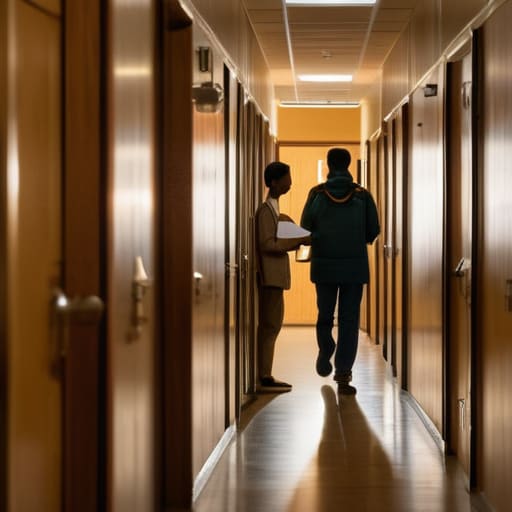
I remember standing in a drafty coach bay at 6:00 AM, clutching a lukewarm coffee and staring at a thirty-page “Strategic Enrichment Framework” that a consultant had sold the school for four figures. It was full of lofty language about holistic development and cross-curricular synergy, but it didn’t mention the fact that three Year 9s had already lost their bus passes and the dietary requirements spreadsheet was a complete mess. Most of the professional guidance out there on how residential trips are managed is written by people who have never had to negotiate with a teenager who refuses to wear waterproofs in a torrential downpour. They focus on the glossy outcomes, while ignoring the actual, gritty reality of the logistics.
I’m not here to give you a theoretical lecture on pedagogical benefits. Instead, I want to talk about what actually happens when the paperwork hits the real world. I’ll be sharing the practical, unvarnished truth about how residential trips are managed when you’re short-staffed, sleep-deprived, and dealing with a budget that’s shrinking by the hour. We’re going to look at the essential survival tactics—from the risk assessments that actually matter to the triage methods for when things inevitably go sideways—so you can focus on the kids rather than just surviving the bus ride.
Table of Contents
The Truth About Risk Assessment for School Trips
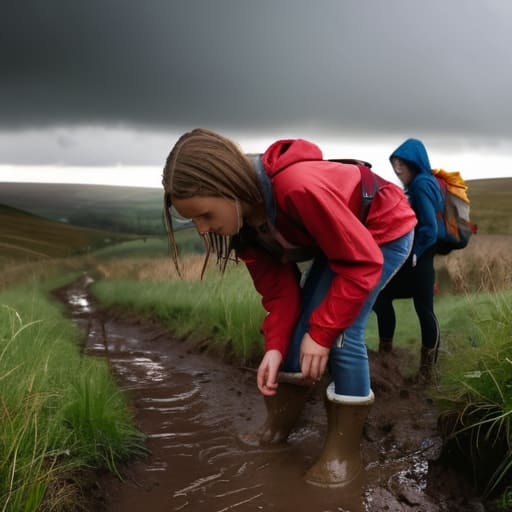
We’ve all been there: sitting in a windowless meeting room, staring at a spreadsheet that claims a trip to the Peak District is “low risk” because we’ve ticked a box. But let’s be honest, a risk assessment for school trips isn’t really about the paperwork; it’s about the gap between the document and the reality of thirty Year 9s in a muddy field. The official version assumes every student follows instructions perfectly and every piece of equipment works. The real version is about anticipating the moment the rain starts, the bus is forty minutes late, and half the group has forgotten their coat.
The trick is to stop treating it like a compliance exercise and start using it as a survival guide. I’ve learned that the most important part of your planning isn’t the grand itinerary, but the granular details of your safeguarding protocols for excursions. You need to know exactly who is responsible for which pocket of students and where the nearest phone signal drops out. If your plan relies on everything going according to the brochure, you haven’t actually planned for anything at all.
Mastering Travel Logistics for Large Groups Without Losing Your Mind
Once you’ve wrestled with the paperwork, you hit the real beast: the actual movement of human beings from point A to point B. Most handbooks treat travel logistics for large groups as a simple matter of booking a coach and checking a spreadsheet, but they don’t account for the thirty-two teenagers who suddenly decide they’ve lost their left shoe the moment you step onto the platform. You quickly learn that movement is the highest-risk period of any excursion. It isn’t just about the timetable; it’s about the friction of reality.
To survive, you need more than a vague plan; you need a rigid system for student supervision ratios that doesn’t fall apart the second a student wanders toward a gift shop. I’ve found that the best way to manage this is to stop treating the group as one massive entity and start thinking in smaller, manageable “pods.” If you haven’t established clear, non-negotiable check-in points at every transition, you aren’t planning—you’re just hoping for the best. Hope is not a viable strategy when you’re standing in a crowded station with a group of Year 9s.
Five Survival Rules for When the Bus Finally Pulls Away
- Build a ‘Shadow’ Team. Don’t try to be the hero who manages the budget, the risk assessment, and the lost pupil all at once. Identify two or three reliable colleagues—the ones who don’t panic when it starts pouring—and delegate specific, bounded territories to them. If one person is the ‘Medical Lead’ and another is the ‘Timetable Keeper’, you can actually breathe for five minutes.
- The Paperwork Buffer. Never, under any circumstances, plan a trip that relies on a single digital file or a working Wi-Fi signal in the middle of the Peak District. Print everything. The permission slips, the emergency contact numbers, the dietary requirements—if it isn’t on a physical piece of paper in a folder you can hold, it doesn’t exist.
- Over-Prepare the ‘What Ifs’. Most trip planning focuses on the ‘what’—what we’re seeing, what we’re eating. Real management is about the ‘what if’. What if the coach breaks down? What if the venue cancels? What if a student refuses to leave the hotel? Having a mental (or written) Plan B for these specific scenarios is what separates a successful trip from a departmental crisis.
- The ‘Buffer Hour’ Rule. If the itinerary says you leave the museum at 2:00 PM, you actually leave at 1:30 PM. In my experience, things always take longer than the glossy brochure suggests—mostly because children are remarkably efficient at finding new and creative ways to be slow. Build dead time into every single day to absorb the inevitable delays.
- Manage the Staff, Not Just the Pupils. A trip is only as stable as the adults running it. If the staff are exhausted, hungry, and feeling unsupported, the pupils will sense it immediately. Ensure your team has clear boundaries, scheduled breaks, and—most importantly—the knowledge that if something goes sideways, they aren’t facing the fallout alone.
The Survival Kit: What Actually Matters When the Bus Leaves
Stop trying to plan for a perfect scenario; instead, plan for the inevitable chaos by building in massive buffers for travel time, meal breaks, and the inevitable lost permission slip.
Prioritise clear, realistic communication with your team over fancy itineraries—everyone needs to know exactly who is responsible for what when a student decides they’ve suddenly lost their coat in a different postcode.
Focus your energy on the practicalities that keep the trip safe and sane, rather than getting bogged down in the administrative paperwork that looks good in a folder but does nothing when you’re standing in the rain at a service station.
The Reality of the Itinerary
“The official itinerary will tell you that Tuesday morning is for ‘collaborative outdoor learning,’ but anyone who has actually managed a trip knows that Tuesday morning is really just a frantic exercise in making sure thirty teenagers have found their left shoes and that the breakfast buffet hasn’t descended into total anarchy.”
Ellery Mwangi-Selkirk
The Reality of the Return
At the end of the day, managing a residential trip isn’t about achieving some flawless, textbook execution of a logistical plan. It’s about the messy, unglamorous work of balancing a risk assessment that actually makes sense with a bus schedule that doesn’t fall apart the moment a single tyre goes flat. We’ve talked about the paperwork, the transport, and the constant, low-level anxiety of keeping thirty teenagers accounted for in a public space. But if you can get the foundations of safety and logistics sorted without losing your sanity, you’ve already won half the battle. You don’t need a perfect trip; you just need one where the chaos is contained enough to let the actual learning happen.
I know how much weight sits on your shoulders when you’re the one responsible for every child’s safety away from the school gates. It is exhausting, and it is often thankless work. But there is a specific kind of magic that happens when a student who struggles in a stuffy classroom suddenly finds their feet on a mountain path or in a museum. Those moments aren’t found in the glossy brochures, but in the gaps between the logistics. Hold onto that. Despite the paperwork and the sleepless nights, the impact of these experiences is often what stays with a child long after they’ve forgotten the specific dates of the trip. Just keep going; you’re doing the real work.

Author

Related Posts

A Library With Someone Running It
I remember sitting in a departmental meeting ten years ago, listening to a consultant drone on about “digital literacy hubs” and “multi-modal...
Read out all
Keeping Arts on the Timetable
I remember sitting in a budget meeting back in 2014, listening to a consultant in a slim-fit suit explain how we could...
Read out all
Participation Versus Competition in School Sport
I remember standing in a drafty changing room in mid-November, watching a frantic PE lead try to coordinate three different Year 8...
Read out all
Enrichment That Reaches the Pupils Who Need It
I remember sitting in a windowless meeting room five years ago, staring at a glossy PowerPoint presentation that promised to revolutionise our...
Read out all
Removing Barriers Before Adding Interventions
I remember sitting in a windowless meeting room ten years ago, listening to a consultant in a slim-fit suit explain a “holistic...
Read out all
Multi-agency Work and Its Delays
I remember sitting in a windowless meeting room during a Tuesday afternoon slot—the kind where the radiator hums just loud enough to...
Read out all