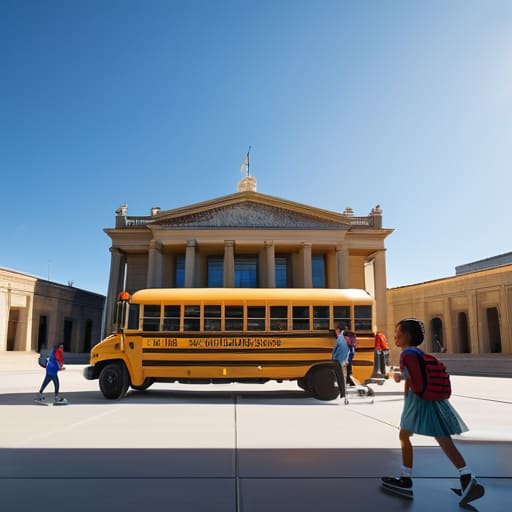
I remember standing in the middle of a drafty museum courtyard in 2008, clutching a damp clipboard and watching thirty Year 9s descend into what I can only describe as controlled anarchy. I had followed the official handbook to the letter, but the handbook hadn’t accounted for the sudden downpour, the broken coach engine, or the fact that half my group had forgotten their lunch money. If you’re looking for a glossy, theoretical “complete guide to school trips” that promises seamless learning outcomes and perfectly curated educational moments, you’ve come to the wrong place. Those guides are written by people who haven’t had to chase a runaway student through a gift shop while trying to keep a headcount.
Instead, I’m going to give you the version that actually works when things go sideways. This isn’t about the pedagogical theory of experiential learning; it’s about the unvarnished reality of logistics, risk assessments, and keeping your sanity intact. I’ll share the practicalities that matter—like how to manage the paperwork without drowning, and why your contingency plan is more important than your itinerary. This is a guide for the real classroom, designed to help you survive the day and actually enjoy seeing your students learn something outside of a four-walled room.
Table of Contents
- Mastering Itinerary Development for Schools Without Losing Sleep
- School Trip Budget Management for When the Funding Vanishes
- The Survival Guide: Five Real-World Rules for the Trip Itself
- The Reality Check: What Actually Matters When You’re Standing in a Bus Park
- The Reality of the Risk Assessment
- The Reality of the Return Journey
Mastering Itinerary Development for Schools Without Losing Sleep
When you start looking at itinerary development for schools, the glossy brochures make it look like a seamless transition from the classroom to a museum. In reality, an itinerary is less of a schedule and more of a negotiation with chaos. I’ve learned the hard way that you cannot simply book a bus for 9:00 AM and assume the world will align. You have to build in “buffer time”—which is teacher-speak for the fifteen minutes it takes to find the one student who forgot their coat and the ten minutes spent arguing with a driver about the drop-off point.
If you want to avoid the midnight panic, your planning needs to be ruthlessly practical. Don’t just map out the learning objectives; map out the toilets, the lunch spots, and the exact moment the energy levels will crash. This is where educational excursion planning meets the grim reality of human nature. You aren’t just managing a curriculum; you are managing a moving target of thirty teenagers. A successful itinerary isn’t the one that hits every single landmark, but the one that doesn’t collapse when the first bus is delayed by twenty minutes.
School Trip Budget Management for When the Funding Vanishes
Then there is the money. Or, more accurately, the disappearing act that occurs whenever you try to pin down a realistic figure for school trip budget management. On paper, the department head tells you to “find a way to make it work,” which is professional shorthand for “find a way to make it work without asking the school for a single penny.” You start with a spreadsheet that looks optimistic, but then the reality of coach hire prices hits you like a cold shower in a drafty corridor. Suddenly, that museum entry fee isn’t the problem; it’s the fact that the bus company has just announced a surcharge for every mile outside the county lines.
You quickly learn that the most important part of educational excursion planning isn’t the destination, but the buffer you build for the inevitable “hidden” costs. If you don’t account for the extra staff member required to maintain your chaperone to student ratios, or the emergency fund for the kid who loses their lunch money halfway through the afternoon, your budget will be in the red before you’ve even printed the permission slips. My advice? Always assume everything will cost 15% more than the quote says it will. It’s not being cynical; it’s just being a teacher who has survived a few years of reality.
The Survival Guide: Five Real-World Rules for the Trip Itself
- The “Buffer Hour” Rule: Whatever time you think it will take to get thirty teenagers from the bus to the museum entrance, double it. In my experience, you aren’t just accounting for walking time; you are accounting for the kid who forgot their lunch, the teacher who can’t find the permission slips, and the inevitable three-minute standoff over a shoelace.
- The Ratio Reality Check: Forget the theoretical ideal numbers in the handbook. When you’re standing in a crowded gallery on a Tuesday morning, the only thing that matters is your “eyes-on” ratio. If you have six students who can’t sit still for ten seconds, you need an extra pair of hands, regardless of what the official risk assessment says is “sufficient.”
- The Communication Chain (That Actually Works): Don’t rely on a complex app or a shared spreadsheet that requires 4G in a stone basement. Use a WhatsApp group for the staff, keep a physical list of emergency contacts in your pocket (not your bag), and make sure every student knows exactly which adult they belong to at any given moment.
- The “Plan B” for Weather and Mood: I have learned the hard way that a rainy Tuesday doesn’t just change the itinerary; it changes the temperament of the entire group. Always have a “dry” alternative or a low-stakes indoor activity ready for when the outdoor excursion inevitably hits a wall of wind and rain.
- The Post-Trip Decompression: The trip isn’t over when you get back to the school gates. Give yourself—and your colleagues—permission to not be “on” for the first period back. If you try to jump straight into a high-stakes lesson after a day of managing chaos, you’ll be exhausted by lunch, and your students will feel the fallout.
The Reality Check: What Actually Matters When You’re Standing in a Bus Park
Prioritise the “unsexy” logistics—risk assessments, dietary requirements, and permission slips—over the educational “wow factor,” because a brilliant museum workshop is worthless if half the class is missing or someone is having an allergic reaction.
Build a massive buffer into your timeline; if you think it will take twenty minutes to get thirty teenagers onto a coach, plan for forty, because the reality of school trips is always governed by the slowest moving student and the most complicated lock on a bus door.
Don’t try to do everything; pick one core learning objective and one memorable experience, because trying to squeeze a full curriculum into a single afternoon is a recipe for teacher burnout and a classroom of exhausted, uncooperative children.
The Reality of the Risk Assessment
“A school trip isn’t a pedagogical triumph or a curated learning journey; it is a frantic, high-stakes exercise in logistics where your primary goal is ensuring thirty teenagers don’t vanish into a museum gift shop or end up stranded at a bus depot because a single permission slip went missing in the bottom of a blazer pocket.”
Ellery Mwangi-Selkirk
The Reality of the Return Journey
Look, we’ve covered the heavy lifting: the logistical nightmare of the itinerary, the constant, shifting goalposts of the budget, and the sheer mental load of keeping thirty teenagers from wandering into traffic. It’s a lot. If you try to execute every single one of these steps with the precision of a Swiss watch, you’re going to burn out before you even reach the coach depot. The truth is, the plan will inevitably fray at the edges. A bus will be late, a student will lose their lunch money, or the museum will suddenly decide they’re closed for an emergency meeting. But if you have the foundational structures in place—the budget accounted for and a realistic schedule—you can handle the chaos. Focus on the non-negotiables and let the minor hiccups go.
At the end of the day, when you’re sitting on that bus on the way back, exhausted and smelling faintly of damp coats and cheap vending machine crisps, remember why we bother. We don’t do this for the paperwork or the perfect spreadsheet; we do it because for a few hours, the classroom walls vanish. You see that one kid, the one who usually sits in the back and stares at the floor, suddenly leaning forward to ask a question because they’ve actually seen the history we’ve been talking about. That spark is worth every bit of the stress. The chaos is temporary, but the impact is real.

Author

Related Posts

The Complete Guide to School Funding
I remember sitting in a windowless meeting room back in 2014, staring at a glossy, laminated booklet that promised a “complete guide...
Read out all
The Complete Guide to Pupil Premium
I remember sitting in a windowless meeting room during a Tuesday afternoon briefing, watching a consultant in a slim-fit suit present what...
Read out all
The Complete Guide to Exclusions
If you search for a “complete guide to exclusions” online, you’ll mostly find two things: dry, soul-crushing legal documents written by people...
Read out all
The Complete Guide to School Attendance
I remember sitting in a windowless briefing room in 2014, listening to a consultant in a slim-fit suit explain why our school...
Read out all
The Complete Guide to Safeguarding in Schools
If you search for a “complete guide to safeguarding” online, you’ll mostly find fifty-page PDFs written by people who haven’t stepped foot...
Read out all
The Complete Guide to School Governance
If you pick up any “complete guide to school governance” from a major educational consultancy, you’ll likely find fifty pages of dense,...
Read out all