
I remember sitting in a staff meeting ten years ago, staring at a glossy, twenty-page handout promised to be the “complete guide to behaviour management.” It was full of colourful diagrams and lofty talk about “nurturing emotional intelligence,” but as I looked around the room, I saw nothing but exhausted faces and half-empty coffee mugs. None of those trainers had ever stood in a Year 9 corridor at 3:15 PM on a rainy Tuesday, trying to de-escalate a shouting match while the radiator hissed and the lesson plan sat forgotten on the desk. Most of these manuals are written for a perfect, vacuum-sealed classroom that simply does not exist.
I’m not here to sell you on a magic wand or a complex psychological framework that requires three years of postgraduate study to implement. Instead, I want to talk about the stuff that actually survives contact with a room full of thirty restless teenagers. We’re going to look at the small, gritty realities: why your seating plan is your strongest weapon, how to hold the line without losing your soul, and what to do when the “proven” strategies fail you. This isn’t theory; it’s survival for the room you’re actually in.
Table of Contents
Setting Clear Expectations When Youre Already Running Late
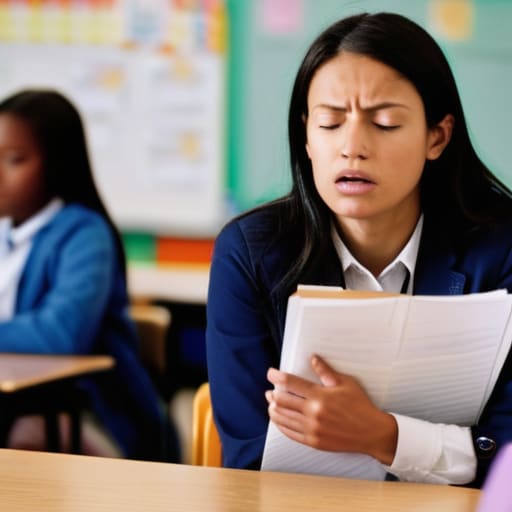
We’ve all been there. You’re five minutes late because the photocopier decided to stage a protest, or you’ve just spent ten minutes dealing with a corridor incident, and you walk into the room feeling like you’re already behind the eight ball. The temptation is to rush straight into the content—to power through the slide deck as if sheer academic momentum will somehow mask the chaos. It won’t. In fact, that’s exactly when the cracks appear.
If you don’t take sixty seconds to ground the room, you’ve already lost the battle. Setting clear expectations isn’t about a grand, theatrical display of authority; it’s about the quiet, firm reassurance that you are still the one steering the ship. Even if you’re flustered, don’t skip the basics. Stand at the front, wait for the settling, and explicitly state what the next twenty minutes look like. When you skip this because you’re “pressed for time,” you aren’t saving time—you’re just inviting a slow-motion car crash of distractions that will take much longer to fix later.
Classroom Management Strategies That Survive a Wet Wednesday
Look, I’ve sat through enough CPD sessions to know that most “innovative” classroom management strategies are designed by people who haven’t stepped foot in a secondary corridor since the nineties. They talk about complex behavioural intervention plans as if you have forty minutes to sit down and map out every possible trigger. In reality, when it’s raining, the buses are late, and the Year 9s are vibrating with a collective sense of chaos, you don’t need a manual; you need something that actually holds.
The stuff that survives a wet Wednesday isn’t about grand gestures. It’s about the small, almost invisible things. It’s using low-level de-escalation methods—a quiet word at a desk rather than a shouted command from the front—that keeps a situation from boiling over. It’s also about knowing when to lean into positive reinforcement techniques that don’t feel patronising. If you catch a student who is usually a nightmare actually picking up a pen, acknowledge it quietly. Don’t make a scene, just let them know you saw it. That’s the real work.
The Survival Kit: Five Things That Actually Hold a Room Together
- The Seating Plan is Your Only Real Lever. I know, the theorists love to talk about “collaborative learning zones,” but if you’ve got three students who feed off each other’s chaos, your priority isn’t pedagogy—it’s physics. Move them. Don’t make it a grand event or a lecture; just make it the new reality of the room. A strategic seating plan is the invisible scaffolding that keeps the lesson from collapsing before you’ve even opened a textbook.
- Stop the “Performative Discipline” Trap. There is nothing more exhausting than getting into a power struggle with a Year 9 who has nothing to lose. If you find yourself shouting over a student just to prove you’re in charge, you’ve already lost the room. Use the quiet correction, the look, or the post-lesson chat. Save your big guns for the moments that actually matter, rather than wasting your authority on every minor hiccup.
- Routines are the Antidote to Decision Fatigue. By period five, your brain is fried. If you have to decide how students enter the room, how they hand in books, and how they ask to go to the toilet every single day, you will fail. Build these into the furniture of the classroom. When the “how” of the room is automatic, you actually have the mental bandwidth left to focus on the “what” of the lesson.
- Low-Stakes Consistency Beats High-Stakes Drama. You don’t need a dramatic confrontation to manage behaviour; you need a predictable environment. If you say you’re going to collect the phones, collect the phones. If you say there’s a consequence, follow through. It’s not about being a tyrant; it’s about being a person whose word actually means something in that room.
- The “Check-In” Before the “Check-Down.” Before you dive into the content or start policing the noise, take ten seconds to scan the room. How many pupils are actually present, mentally and physically? Sometimes, a quick “Right, settle down, let’s go” is more effective than a five-minute lecture on respect. Acknowledge the energy in the room before you try to fight it.
The Bottom Line for Your Next Lesson
Forget the complex psychological models; focus on the small, predictable routines that stop the chaos before it starts.
If a strategy requires you to be “on” for sixty minutes straight without a second to breathe, it isn’t a strategy—it’s a recipe for burnout.
Prioritise the atmosphere of the room over the perfection of your lesson plan; a calm, slightly messy lesson is always better than a structured one that’s lost the class.
The Myth of the Perfect Plan
“You can spend all Sunday perfecting a behaviour management manual, but that manual won’t mean a damn thing when you’re staring at thirty-two teenagers on a rainy Tuesday afternoon and the seating plan has already gone out the window. Real management isn’t about the grand theories you read in a seminar; it’s about the small, quiet decisions you make in the three seconds after a student decides to test you.”
Ellery Mwangi-Selkirk
The Reality of the Long Game
Look, we’ve covered a lot of ground, from the granular importance of a well-placed seating plan to the blunt reality of setting expectations when you’re already five minutes behind schedule. If you take nothing else away, remember that behaviour management isn’t about a magic toolkit or a revolutionary new framework handed down from some ivory tower; it’s about the predictability of your response and the strength of your presence in the room. It’s about those small, unglamorous wins—the quiet correction, the steady gaze, the refusal to let a minor disruption turn into a classroom takeover. Most of the “expert” advice you’ll read online assumes a level of perfection that simply does not exist in a real secondary school.
As you head into your next lesson, don’t feel like you have to implement every theory perfectly. Some days, success is simply keeping the room calm enough to get through the core content. Some days, it’s just surviving until the bell rings without losing your temper. Teaching is an exhausting, beautiful, and often thankless grind, but the relationships you build through consistent, fair management are what actually matter. Focus on the human beings in front of you, not the data points or the inspection frameworks. You’re doing the hard work in the rooms that actually matter, and that is enough.

Author

Related Posts

The Complete Guide to School Funding
I remember sitting in a windowless meeting room back in 2014, staring at a glossy, laminated booklet that promised a “complete guide...
Read out all
The Complete Guide to Pupil Premium
I remember sitting in a windowless meeting room during a Tuesday afternoon briefing, watching a consultant in a slim-fit suit present what...
Read out all
The Complete Guide to Exclusions
If you search for a “complete guide to exclusions” online, you’ll mostly find two things: dry, soul-crushing legal documents written by people...
Read out all
The Complete Guide to School Attendance
I remember sitting in a windowless briefing room in 2014, listening to a consultant in a slim-fit suit explain why our school...
Read out all
The Complete Guide to Safeguarding in Schools
If you search for a “complete guide to safeguarding” online, you’ll mostly find fifty-page PDFs written by people who haven’t stepped foot...
Read out all
The Complete Guide to School Governance
If you pick up any “complete guide to school governance” from a major educational consultancy, you’ll likely find fifty pages of dense,...
Read out all