
I remember sitting in a windowless departmental meeting ten years ago, nodding politely while a consultant in a slim-fit suit explained a new, multi-layered hierarchy designed to “streamline pedagogical delivery.” He had a glossy PowerPoint and a vocabulary that cost more than my car, but as I looked around the room at my colleagues, I saw the same thing: exhaustion. We were being told that the way how education systems are structured was the key to unlocking student potential, yet the more layers of middle management they added, the more the actual teaching felt like it was being suffocated by administrative sludge.
I’m not here to sell you on another theoretical blueprint or a shiny new organizational chart that looks great in a government white paper. My promise is simpler: I want to talk about what happens when those structures actually hit the classroom. We’re going to look at the gap between the official diagrams and the messy, human reality of a school building. I’ll tell you which structural changes actually support a teacher in the trenches and which ones are just expensive distractions designed by people who haven’t stepped foot in a Year 9 classroom since the nineties.
Table of Contents
- The K 12 Education Framework and Its Rigid Realities
- Navigating the Levels of Formal Schooling Without Losing Your Mind
- Surviving the Machine: 5 Ways to Navigate the System Without Burning Out
- The Reality Check: What Actually Matters When the Bell Rings
- The Architecture of Disconnect
- The View from the Staffroom Window
The K 12 Education Framework and Its Rigid Realities
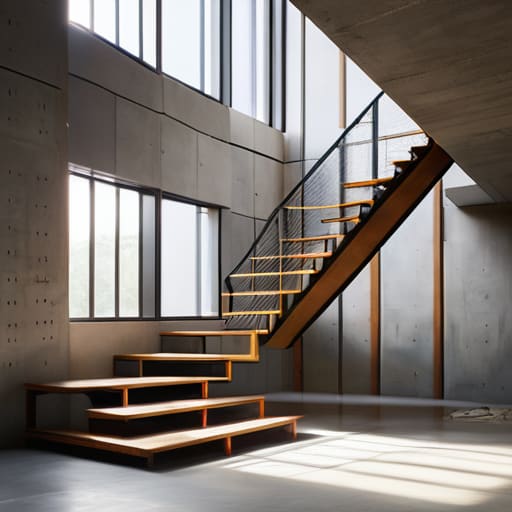
We’re often taught to view the K-12 education framework as this seamless, logical ladder. On paper, it’s a tidy progression: primary, secondary, then the leap into higher education pathways or vocational training models. It looks like a well-oiled machine designed to move a child from learning their ABCs to mastering calculus. But if you’ve ever sat in a departmental meeting where the curriculum for Year 7 doesn’t actually align with what they learned in Year 6, you know that “seamless” is a bit of a myth.
In reality, these academic progression stages often feel less like a ladder and more like a series of disconnected islands. We talk about the educational hierarchy explained in textbooks as if every student is moving at the same pace, fueled by the same resources. But the truth is, the framework is often too rigid to account for the human element. We try to force diverse, unpredictable learners into these standardised boxes, forgetting that a system designed for efficiency isn’t always designed for actual learning.
Navigating the Levels of Formal Schooling Without Losing Your Mind
When you look at a diagram of the levels of formal schooling, it looks like a clean, ascending staircase. It suggests a logical, rhythmic progression where each step builds perfectly upon the last. But if you’ve ever stood in a Year 7 classroom during the first week of September, you know that staircase is often more of a crumbling cliff face. We talk about “academic progression stages” as if they are seamless transitions, but in reality, they are often massive, jarring leaps where students are expected to suddenly pivot from guided play to independent analysis without any real bridge between the two.
The truth is that the K-12 education framework is often more about administrative convenience than pedagogical logic. We sort children into buckets—Primary, Secondary, Key Stage 3, 4, and so on—primarily so the funding and the exams can be tracked. It’s easy to get lost in the bureaucracy of it all, trying to satisfy the requirements of a system that feels increasingly disconnected from the actual humans sitting in the desks. You have to learn to stop looking at the theoretical ladder and start focusing on the actual gaps between those steps, because that is where your students are actually living.
Surviving the Machine: 5 Ways to Navigate the System Without Burning Out
- Stop treating the policy manual like a bible. Most of the structural mandates handed down from the central office are designed by people who haven’t stepped foot in a classroom since the nineties. Read them so you know what’s coming, but don’t let them dictate your soul; focus on the small, practical tweaks that actually help the kids in front of you.
- Learn the hierarchy, but don’t get lost in it. There’s a massive difference between how the school is organised on an official chart and how it actually functions when the heating breaks or the budget gets slashed. Identify the people who actually get things done—the ones who know where the spare keys are and how to fix the photocopier—and build your real support network there.
- Guard your autonomy within the curriculum. The system loves a “standardised” approach because it’s easy to measure, but a rigid curriculum is a blunt instrument. Find the small gaps in the structure where you can inject your own personality and context; that’s where the actual learning happens, not in the scripted lesson plans.
- Don’t mistake “administrative structure” for “learning structure.” Just because a department is organised into neat little folders and weekly meetings doesn’t mean the students are actually progressing. Always ask yourself if the way the school is organised is serving the classroom, or if the classroom is just being forced to serve the paperwork.
- Accept the “Good Enough” principle for the bureaucracy. You can spend hours trying to perfect your documentation to meet every structural requirement, or you can do it well enough to stay off the radar and spend that energy on your actual teaching. In a system this big, perfectionism is just a fast track to exhaustion.
The Reality Check: What Actually Matters When the Bell Rings
Structure is often a theoretical ideal designed by people who haven’t stepped foot in a corridor for a decade; your job isn’t to perfect the system, but to find the small, functional gaps where you can actually reach your students.
Don’t get lost in the hierarchy of formal schooling; while the departments and frameworks exist on paper, the real “structure” of a school is the invisible web of relationships and the sheer, stubborn grit of the staff who keep the lights on.
Efficiency beats elegance every single time—if a systemic requirement or a new organizational layer doesn’t make your Tuesday afternoon slightly more manageable, it’s likely just more noise you don’t have the capacity to filter.
The Architecture of Disconnect
“We spend a staggering amount of time designing these magnificent, multi-layered educational frameworks in air-conditioned offices, but a system is only as good as its ability to survive a Year 9 lesson when the heating has failed and the seating plan has just gone out the window. If a structure doesn’t account for the friction of a real classroom, it isn’t a framework—it’s just a very expensive piece of fiction.”
Ellery Mwangi-Selkirk
The View from the Staffroom Window
At the end of the day, we have to acknowledge that these massive, hierarchical structures—from the high-level policy shifts down to the rigid K-12 frameworks—are often designed by people who haven’t stepped foot in a classroom for a decade. We’ve looked at how the layers of formal schooling create a system that is supposed to provide order, but often just provides more paperwork. We’ve seen how the rigid tiers of the curriculum can feel like a cage rather than a ladder. But here is the truth: the structure is just the scaffolding. It is the skeleton of the building, but it isn’t the life inside it. You can understand every level of the system and still find that the most important work happens in the gaps between the official mandates.
So, as you navigate these layers, don’t let the weight of the institution crush your actual purpose. The systems will change; new frameworks will be announced every few years like they’re the second coming of pedagogical enlightenment, and the bureaucracy will always be there. But the system doesn’t teach the children—you do. When the structural complexity feels overwhelming, just look at the faces in the room. Focus on the human connection that no policy document can mandate. The structure might define your day, but your resilience defines their future.

Author

Related Posts

Telling a Parent Something They Do Not Want to Hear
I remember sitting in a departmental meeting ten years ago, staring at a glossy, twenty-page slide deck about “holistic stakeholder engagement frameworks.”...
Read out all
Which Parental Involvement Actually Helps
I remember sitting in a staff meeting ten years ago, listening to a consultant in a sharp suit explain how we needed...
Read out all
Educating a Child at Home Legally
I spent two decades in secondary schools watching “revolutionary” policy frameworks arrive in glossy binders, only to see them crumble the moment...
Read out all
Teaching Rshe Confidently
I remember sitting in a windowless training room ten years ago, staring at a glossy PowerPoint presentation that promised a “revolutionary, multi-tiered...
Read out all
Mental Health Support in a School Setting
I remember sitting in a staff briefing three years ago, staring at a glossy, laminated flowchart that promised a “revolutionary new framework”...
Read out all
Making a Referral and Recording It
I remember sitting in a windowless meeting room in 2014, staring at a thirty-page safeguarding manual that felt more like a legal...
Read out all