
I remember sitting in a windowless meeting room in 2014, staring at a spreadsheet that supposedly mapped every facet of my department’s “impact.” The consultant at the front of the room was talking about data-driven precision, but all I could think about was the Year 9 class in Room 4 who had spent the last twenty minutes throwing glue sticks at each other. There is a massive, gaping chasm between the glossy binders produced by leadership teams and the reality of how school accountability works when you’re actually standing in front of thirty kids on a Friday afternoon. We’ve been sold this idea that if we just tick enough boxes and colour-code enough spreadsheets, we’ll somehow capture the magic of learning, but most of it is just performance art for people who haven’t stepped foot in a classroom for a decade.
I’m not here to give you a lecture on Ofsted frameworks or the latest white paper nonsense. Instead, I want to talk about what accountability actually looks like when you’re exhausted, understaffed, and trying to make a difference. I’m going to strip away the jargon and tell you how the systems actually function—and more importantly, how to survive them without losing your soul.
Table of Contents
Why Educational Standards and Metrics Often Miss the Mark
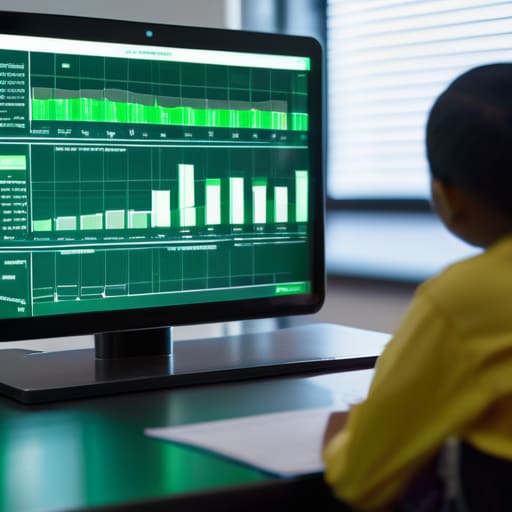
The problem with most educational standards and metrics is that they are designed by people who haven’t stood at the front of a classroom since the nineties. They look at a spreadsheet and see a series of elegant, climbing lines, but they don’t see the thirty kids in the back row who are only “achieving” because they’ve been drilled into submission. We’ve become obsessed with student achievement data analysis as if it’s a holy text, forgetting that a data point doesn’t tell you why a child suddenly stopped engaging in November, or how much cognitive load a specific assessment actually placed on a struggling learner.
When we lean too heavily on these indicators, we end up teaching to the metric rather than the human being. We see it every year: a new wave of academic quality assurance arrives, promising to “raise the bar,” only to find that the bar has just become a hurdle that everyone is tripping over. It turns the job into a performance of compliance rather than a practice of pedagogy. We spend more time preparing the evidence of learning for an external auditor than we do actually fostering the curiosity that makes learning stick.
The Brutal Truth Behind School Performance Indicators
We’ve all seen the spreadsheets. They arrive in your inbox like a heavy, digital fog, filled with colorful charts that supposedly map out the progress of every child in your care. But here is the thing about school performance indicators: they are incredibly good at measuring what is easy to count, and incredibly bad at measuring what actually matters. You can track a student’s ability to tick a multiple-choice box with surgical precision, but that data rarely tells you if that same student has gained the confidence to argue a point or the resilience to fail and try again.
When we lean too heavily on student achievement data analysis, we start teaching to the metric rather than the human being. I’ve sat in too many department meetings where we spent forty minutes dissecting a decimal point in a mock exam result, while completely ignoring the fact that half the class was too hungry or too anxious to engage with the content in the first place. We treat these numbers as objective truth, but they are often just a snapshot of how well a child can perform under pressure on a single, high-stakes afternoon.
Surviving the Metrics: What Actually Matters When the Data Hits the Fan
- Stop chasing the ‘perfect’ data point for the leadership team. If you’re spending your Sunday night tweaking a spreadsheet to make a single cohort’s progress look slightly less catastrophic, you’re losing the plot. Focus on the small, messy wins in your classroom—the kid who finally stopped putting their head on the desk—because those are the only metrics that won’t leave you burnt out by November.
- Learn to speak ‘Ofsted’ without losing your soul. When the accountability people come knocking, they want to see the systems, not the miracles. They want to see that your marking isn’t just a pile of red ink, but a way of knowing where the gaps are. Don’t try to hide the chaos; just show them the scaffolding you’ve built to manage it.
- Prioritise the ‘unmeasurable’ stuff. Accountability frameworks are obsessed with what can be counted, but they rarely count the stability a consistent teacher provides. If your seating plan is working and the classroom is a safe space for a kid who has nothing else, you are succeeding, even if the standardized test scores haven’t caught up yet.
- Use the data to protect your time, not to increase your workload. If a new tracking system is being handed down that takes more time to input than it does to actually teach, push back. Use the metrics to identify which groups are struggling, but don’t let the ‘accountability’ become a reason to stop actually teaching.
- Remember that the metrics are a snapshot, not the whole film. A bad term of data doesn’t mean you’re a bad teacher, and a great term doesn’t mean you’ve solved systemic poverty. Treat the accountability cycle like the weather: it’s something you have to plan for and navigate, but it isn’t the permanent climate of your career.
The Reality Check: What Actually Matters
Stop chasing the “gold standard” metrics designed by people who haven’t stood in a corridor during a lesson changeover; if a data point doesn’t help you understand why a specific group of kids is stalling, it’s just noise.
Accountability shouldn’t be a performance for inspectors, but a way to see if our teaching is actually landing—even if that means the “perfect” data looks a bit messy on paper.
Real progress isn’t found in a spreadsheet of standardized scores, but in the small, quiet wins you see in the classroom when a student finally connects two ideas that previously made no sense to them.
The Metric Trap
“We’ve become obsessed with measuring the temperature of the room while ignoring the fact that half the radiator is broken and the windows are wide open. You can track every data point from progress eight-formers to attendance percentages, but if those metrics don’t account for the exhausted teacher and the kid who hasn’t eaten since breakfast, you aren’t measuring education—you’re just measuring how well we’ve learned to perform for a spreadsheet.”
Ellery Mwangi-Selkirk
The Real Metric of Success
At the end of the day, we have to stop pretending that a spreadsheet can capture the nuance of a classroom. We’ve seen how the metrics fail us—how they prioritise the shiny, measurable data points while ignoring the messy, unquantifiable work of building a child’s confidence or managing a difficult social dynamic in the back row. Accountability shouldn’t be a top-down exercise in checking boxes or hitting arbitrary targets set by people who haven’t stood in front of a restless Year 9 class in a decade. If we keep chasing the statistical ghost of perfection, we will continue to burn out the very people tasked with delivering it. True accountability isn’t about meeting a national average; it’s about the integrity of the teaching that happens when no one is watching.
So, when the next big reform arrives or the data looks a bit thin, don’t let it shake your sense of what matters. The systems will always be imperfect, and the frameworks will always be shifting, but the impact you have on those thirty faces in front of you is the only thing that is truly real. Focus on the small, quiet wins—the student who finally understands a concept after three tries, or the one who finally feels safe enough to speak up. That is where the real work lives. Hold onto that, because that is the only standard that actually survives the contact with reality.

Author

Related Posts

Telling a Parent Something They Do Not Want to Hear
I remember sitting in a departmental meeting ten years ago, staring at a glossy, twenty-page slide deck about “holistic stakeholder engagement frameworks.”...
Read out all
Which Parental Involvement Actually Helps
I remember sitting in a staff meeting ten years ago, listening to a consultant in a sharp suit explain how we needed...
Read out all
Educating a Child at Home Legally
I spent two decades in secondary schools watching “revolutionary” policy frameworks arrive in glossy binders, only to see them crumble the moment...
Read out all
Teaching Rshe Confidently
I remember sitting in a windowless training room ten years ago, staring at a glossy PowerPoint presentation that promised a “revolutionary, multi-tiered...
Read out all
Mental Health Support in a School Setting
I remember sitting in a staff briefing three years ago, staring at a glossy, laminated flowchart that promised a “revolutionary new framework”...
Read out all
Making a Referral and Recording It
I remember sitting in a windowless meeting room in 2014, staring at a thirty-page safeguarding manual that felt more like a legal...
Read out all