
I remember sitting in a department meeting three years ago, staring at a stack of glossy, laminated prospectuses that looked more like travel brochures for a holiday no teenager actually wants to take. We were supposed to be guiding Year 11s through the monumental shift of their lives, yet all we had were these polished, sanitised versions of reality. When students ask me how post 16 options compare, they aren’t looking for a breakdown of entry requirements or a list of prestigious sixth form amenities; they want to know if they’re going to be lost in a sea of thirty kids in a drafty lecture hall, or if they’ll actually get to do the thing they’ve signed up for.
The truth is, the brochures rarely mention the reality of a Tuesday afternoon in a FE college or the sheer pressure of an A-Level seminar. In this piece, I’m stripping away the marketing fluff to give you a proper look at the landscape. I won’t give you the “idealised student” version of these pathways; instead, I’ll tell you what these routes actually feel like for the kids I’ve seen thrive and the ones who hit a wall. This is the unvarnished reality of the choices ahead.
Table of Contents
Sixth Form Colleges
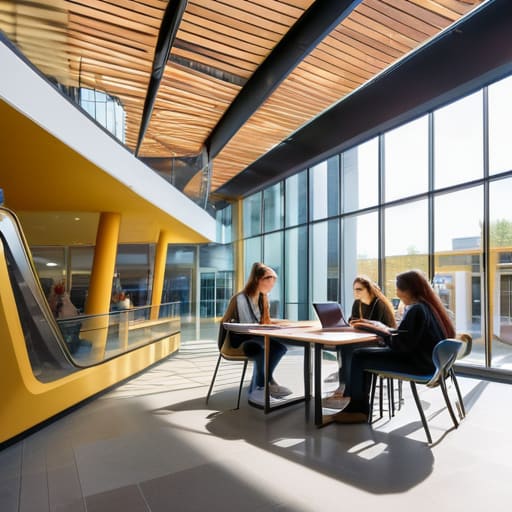
Sixth form colleges are large, specialist institutions that focus exclusively on the two-year window between GCSEs and university or higher apprenticeships. Their core mechanism is a high-density academic environment designed to bridge the gap between the structured world of secondary school and the total independence of adulthood. When you look at how post 16 options compare, these colleges stand out because they offer a vast breadth of subjects that most smaller schools simply cannot justify running.
But let’s be honest about what that actually looks like on a Tuesday morning. It isn’t just about having thirty different A-Level combinations; it’s about the sudden, jarring shift in atmosphere when a student walks through those doors. You aren’t just teaching a kid who needs to find their lost PE kit; you’re guiding a young adult who is suddenly responsible for their own timetable and their own motivation. It is an incredible opportunity for the right student, but for the one who still needs a bit of scaffolding to stay on track, that freedom can feel a lot like being thrown into the deep end without a life jacket.
Further Education Colleges
Further education (FE) colleges are multi-functional hubs that provide a mix of vocational training, technical qualifications, and academic pathways. Their primary mechanism is the integration of practical, industry-led learning with traditional classroom study, aiming to provide a direct route into specific careers. In the broader context of how post 16 options compare, FE colleges are the heavy lifters of the skills economy, offering everything from Level 2 certificates to full degrees.
In the real world—the one where we actually have to prepare kids for jobs—these colleges are often where the most meaningful engagement happens. I’ve seen students who were completely “checked out” in a standard school setting suddenly come alive when they are handed a welding torch or a professional catering kit. There is something fundamentally different about learning a craft in a space that smells like sawdust and engine oil rather than floor wax and old textbooks. It’s less about the polished academic theory and more about the tangible reality of what it means to actually do a job.
Comparison of Post-16 Educational Pathways
| Feature | A-Levels | T-Levels | Apprenticeships |
|---|---|---|---|
| Primary Focus | Academic & Theoretical | Vocational & Technical | Work-Based Learning |
| Assessment Method | Exams & Coursework | Exams & Practical Projects | On-the-job & End-point Assessment |
| Duration | 2 Years | 2 Years | 1–5 Years |
| Best For | University Preparation | Technical Careers | Immediate Employment |
| Cost | Free (State-funded) | Free (State-funded) | Paid (Earn while you learn) |
| Setting | School/College | College/Technical Center | Workplace/Employer |
Academic vs Vocational Pathways Beyond the Textbook
The reason we get stuck on this debate is that we often treat “academic” and “vocational” like they’re two different species. In the staffroom, there’s this lingering, quiet assumption that one is for the “thinkers” and the other is for the “doers.” But when you’re actually sitting across from a Year 11 student who is staring blankly at a careers booklet, that distinction feels incredibly thin. The real question isn’t which path is harder, but which kind of cognitive load they are actually prepared to carry.
The academic route is a marathon of abstraction. You’re asking them to hold complex, invisible concepts in their heads and manipulate them on paper—it’s heavy, theoretical lifting that requires a specific kind of stamina. On the flip side, vocational pathways trade that abstraction for immediate, tangible application. They aren’t just reading about mechanics or healthcare; they are proving they can do it in real-time. It shifts the challenge from “Can you write this essay?” to “Can you solve this problem while the clock is ticking?”
If we are measuring purely on how well a student engages with the mechanics of learning, the vocational route often wins. It provides the context that many of my students desperately need to stop them from drifting off mid-lesson.
Sixth Form vs College Choosing Your Actual Environment
You can have the most brilliant subject specialist in the country, but if the student feels like a ghost in the hallway, they won’t learn a thing. When we talk about post-16 options, we often obsess over A-Level vs BTEC specifications, but we gloss over the physicality of the place. The environment dictates the temperament of the room, and for a seventeen-year-old, that setting is often more influential than the curriculum itself.
Sixth forms tend to be an extension of the school ecosystem—structured, familiar, and heavily supervised. It’s a safety net, which is great for some, but for others, it can feel like being trapped in a slightly more expensive version of Year 11. Colleges, conversely, are a bit of a shock to the system. They operate on a model of adult autonomy; you’re expected to manage your own time and navigate a much larger, more anonymous landscape.
The practical implication is simple: sixth form offers a scaffolded transition, while college offers a trial run of real life. If a student needs that constant touchpoint of a tutor who knows their name, sixth form wins. But if they need to learn how to exist without a bell telling them where to be, college is the better bet.
Verdict: Sixth Form for stability; College for independence.
The Reality Check: Three Things to Remember When the Dust Settles
Forget the “prestige” of the pathway; focus on the student’s temperament. A bright kid who can’t sit still for forty minutes of lecture-style learning will struggle in a traditional Sixth Form, no matter how many A*s they predicted. Sometimes the “less academic” route is actually the more rigorous one for the person doing the work.
Environment is everything, and it’s rarely about the facilities. A student needs to know if they are walking into a place that feels like an extension of school—with the same bells, the same corridors, and the same expectations—or a place that treats them like an adult with a commute and a schedule. That distinction makes or breaks their motivation by November.
There is no such thing as a “safe” choice, only a “suitable” one. Every path has its own version of a wet Wednesday where things go wrong. The goal isn’t to find the perfect curriculum, but to find the one where the student’s specific way of learning can actually survive the pressure of exam season.
The Myth of the "Perfect" Path
“We spend far too much time trying to find the ‘best’ route, as if there’s a golden ticket hidden in a prospectus. In reality, the best option isn’t the one that looks most impressive on a UCAS application; it’s the one that won’t make a student want to walk out of the classroom halfway through the first term because the environment doesn’t fit how they actually learn.”
Ellery Mwangi-Selkirk
The Reality Check
So, where does that leave us? We’ve looked at the glossy distinction between academic rigor and vocational skill, and we’ve weighed the sheltered, structured corridors of a sixth form against the somewhat more chaotic, independent atmosphere of a college. If you’re looking for a single, perfect answer that works for every student, you won’t find it here because that pathway doesn’t exist. The “best” option isn’t the one with the highest prestige or the most modern facilities; it’s the one that aligns with how a specific young person actually learns when the pressure is on. Whether they need the scaffolding of a school environment or the autonomy of a college campus, the goal remains the same: finding a place where they won’t just survive the next two years, but actually engage with the work.
If you are a student staring at these choices, or a parent trying to navigate the noise, my advice is to ignore the statistics for a moment and look at the person. Don’t choose a route because it sounds impressive at a dinner party; choose it because it fits the reality of their strengths and their temperament. We spend so much time worrying about the “correct” next step that we forget these are just transitions, not life sentences. Trust your gut, do the groundwork, and remember that success is rarely about the institution—it is about the resilience of the individual walking through the door.

Author

Related Posts

Which Parental Involvement Actually Helps
I remember sitting in a staff meeting ten years ago, listening to a consultant in a sharp suit explain how we needed...
Read out all
Educating a Child at Home Legally
I spent two decades in secondary schools watching “revolutionary” policy frameworks arrive in glossy binders, only to see them crumble the moment...
Read out all
Teaching Rshe Confidently
I remember sitting in a windowless training room ten years ago, staring at a glossy PowerPoint presentation that promised a “revolutionary, multi-tiered...
Read out all
Mental Health Support in a School Setting
I remember sitting in a staff briefing three years ago, staring at a glossy, laminated flowchart that promised a “revolutionary new framework”...
Read out all
Making a Referral and Recording It
I remember sitting in a windowless meeting room in 2014, staring at a thirty-page safeguarding manual that felt more like a legal...
Read out all
Safeguarding Duties Every Adult Holds
If you ask the consultants or the people who write the glossy, hundred-page compliance handbooks, they’ll tell you that safeguarding is a...
Read out all