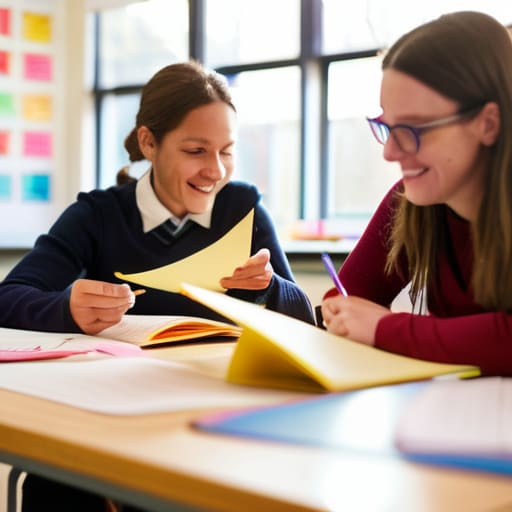
I remember sitting in the staffroom during my third year as Head of Department, staring at a thirty-page observation rubric that felt more like a legal document than a teaching tool. It was designed to measure everything from the exact timestamp of a “check for understanding” to the specific brand of interactive whiteboard used, completely ignoring the fact that there were thirty-two restless Year 9s in the room and a radiator that had been clanking since 1994. We spend so much time chasing these performative, polished metrics that we lose sight of what actually matters. If we are going to talk about how lesson observations should work, we need to stop pretending they are about checking boxes on a spreadsheet and start admitting they are about actual teaching.
I’m not here to give you a checklist of pedagogical buzzwords that will crumble the moment a student decides to test a boundary. Instead, I want to talk about observations that survive the reality of a Tuesday afternoon when the printer has jammed and your energy is flagging. I promise to share what a useful observation looks like when it’s stripped of the theatre—focusing on the small, messy shifts in learning that actually move the needle for your students.
Table of Contents
Evaluative vs Developmental Observation Choosing Reality Over Rituals

We’ve all been there: sitting in the back of a room, clipboard in hand, feeling like a judge rather than a colleague. That’s the trap of evaluative vs developmental observation. One is a performance review designed to tick a box for the SLT; the other is a conversation about how we actually get things done. When an observation is purely evaluative, the teacher spends forty minutes performing a version of themselves that doesn’t exist—the “perfect” version that only appears when the department head is watching. It’s exhausting, it’s performative, and frankly, it tells us nothing about the real work.
If we want to actually improve, we need to pivot toward professional development through observation that acknowledges the messiness of a real classroom. This isn’t about catching someone out on a missed transition or a slightly chaotic starter. It’s about looking at the subtle stuff: how a teacher adjusts their questioning when they see a sea of blank stares, or how they manage the low-level disruption that inevitably bubbles up during period five. We need to move away from the autopsy of a lesson and toward constructive teacher feedback loops that actually help us grow when we’re tired, rushed, and human.
Classroom Observation Best Practices for the Real World
If we’re talking about classroom observation best practices, we have to stop pretending they are about catching people out. In a real school, the best kind of observation isn’t a solo performance for a senior leader; it’s part of a peer observation model where you actually trust the person walking through the door. I’ve always found that if you’re only being watched once a term by a man in a suit with a clipboard, you aren’t being supported—you’re being audited. Real growth happens when you let a colleague in to see how you actually handle the transition from a botched starter to the main activity, or how you manage that one specific student who decides today is the day to test every boundary.
We need to move toward constructive teacher feedback loops that actually respect your time. I don’t need a three-page document detailing my “learning objectives”; I need a five-minute chat in the corridor about whether my questioning actually reached the kids in the back row. Professional development through observation shouldn’t feel like an extra burden on an already overflowing plate; it should feel like a sanity check from someone who knows exactly how hard Period 5 can be.
Five Ways to Stop Observations from Being a Total Performance
- Stop looking for the “perfect” lesson. If an observer walks in and sees twenty-eight kids sitting in silent, rapt attention, they haven’t seen a real classroom; they’ve seen a staged production. Real observation should look for how you handle the friction—the kid who refuses to open their book, the sudden distraction, or the moment a concept fails to land. That’s where the actual teaching happens.
- Prioritise the “middle” of the lesson over the “start.” Everyone obsesses over the starter activity or the flashy PowerPoint hook, but I’ve always found that the real meat of the lesson is in the messy middle. Is the teacher actually checking for understanding when the kids are halfway through a task, or are they just hovering by the desk and waiting for the bell?
- Feedback must be a conversation, not a post-it note. There is nothing more demoralising than receiving a printed list of “Areas for Development” that feels like it was written by someone who hasn’t stepped foot in a classroom since the nineties. A decent observation ends with a chat in the corridor or the staffroom where you can actually say, “Look, I know that went sideways, here’s why.”
- Focus on the pupils, not just the teacher. Before I even look at what a teacher is doing, I want to know how many pupils are actually engaged. If the teacher is delivering a brilliant, high-level lecture but half the class is staring blankly at the wall or doodling, the lesson isn’t working. An observation should measure the impact on the learners, not just the performance of the person at the front.
- Make it low-stakes and frequent. If the only time someone watches you teach is when it’s tied to a formal performance management review, you’ll spend three days preparing a “show” and zero days actually improving. The best professional growth comes from the quick, informal drop-ins—the kind where a colleague pops in for ten minutes just to see how a new seating plan is settling.
The Reality Check: What to Carry Out of the Room
Stop looking for the “perfect” lesson and start looking for the “resilient” one; a teacher who can pivot when a planned activity falls flat is worth ten who can only deliver a scripted slide deck.
Ditch the checklist-driven autopsy of a single forty-minute window in favour of looking at the patterns—how does the teaching hold up on a Friday afternoon, or when the class is particularly restless?
If the feedback doesn’t give a busy, tired teacher something they can actually implement tomorrow without spending three hours on prep, then the observation has failed its only real purpose.
The Myth of the Polished Lesson
“If an observation only tells you how a teacher performs when they’ve spent four hours prepping a ‘perfect’ lesson and the kids are behaving, it hasn’t told you anything at all. I don’t care about the rehearsed brilliance; I want to see how the teaching holds up when the printer has jammed, the seating plan is falling apart, and it’s the last period on a rainy Friday.”
Ellery Mwangi-Selkirk
Moving Beyond the Performance
At the end of the day, we have to stop treating observations like a high-stakes theatre production where everyone is just waiting for the curtain to fall. If we want them to actually mean something, we need to shift the focus away from those polished, textbook-perfect moments and toward the messy, granular reality of what is actually happening in the room. That means choosing developmental dialogue over rigid checklists, prioritising the way a teacher handles a sudden disruption over how many colourful slides they have on the board, and recognising that true professional growth happens in the small, quiet adjustments made between periods, not in a single, artificial snapshot of a lesson.
I know how exhausting it is to feel like you are constantly being judged by a standard that doesn’t account for the thirty kids staring at you in a humid classroom on a Friday afternoon. But if we can strip away the performative nonsense and return to the core of why we do this—to actually help one another get better at the craft—then we might actually find some value in the process. We don’t need more inspectors; we need more colleagues who actually care about the work. Let’s aim for observations that don’t just tick a box for the leadership team, but actually survive contact with a wet Wednesday and leave us all a little more capable than we were before.

Author

Related Posts
Improving One Thing at a Time
I was sitting in a middle leadership training seminar last Tuesday—one of those sessions where the presenter has a polished PowerPoint and...
Read out all
You Teach What You Understand Deeply
I remember sitting in a shiny, air-conditioned training suite during my third year of teaching, listening to a consultant explain a new...
Read out all
Teaching Outside Your Specialism
I remember sitting in a windowless departmental meeting ten years ago, staring at a glossy, twenty-page “Curriculum Implementation Guide” that promised a...
Read out all
Cover Work That Is Not a Wasted Hour
I remember standing in the department office at 7:45 AM, staring at a stack of “comprehensive” cover booklets that had been printed...
Read out all
Deploying a Ta So They Are Not a Spare Adult
I remember sitting in a department meeting fifteen years ago, listening to a consultant explain how we could “optimise human capital” by...
Read out all
Homework With a Purpose or Not at All
I remember sitting in a department meeting ten years ago, staring at a glossy, twenty-page training manual that promised a “revolutionary paradigm...
Read out all