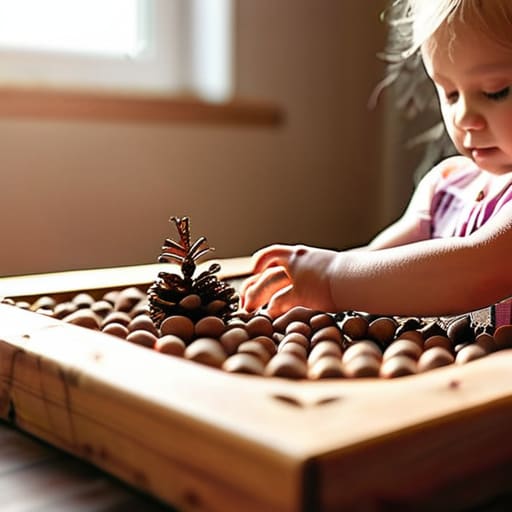
I spent twenty minutes yesterday reading a glossy, high-budget brochure about “holistic developmental frameworks” that seemed to suggest children learn best when they are surrounded by bespoke, sensory-rich wooden toys and perfectly curated calm zones. It was lovely, really, if you ignore the fact that most of us are trying to figure out how early years education works while a three-year-old is currently trying to eat a glue stick and another is having a meltdown because their blue jumper is “too loud.” There is a massive, widening gap between the polished theories sold in training seminars and the actual, messy reality of a classroom that is short-staffed and over-stimulated.
I’m not here to sell you on a new brand of expensive plastic or a complicated pedagogical trend that will be replaced by next year’s inspection framework. Instead, I want to talk about the stuff that actually sticks when the chaos hits. I’m going to pull back the curtain on what truly matters—from the way a simple routine can settle a room to why certain “evidence-based” methods fail the moment you’re down to minimum staffing levels. This is about what works in the real world, not the one in the textbooks.
Table of Contents
- Forget the Eyfs Framework Explained What Actually Sticks
- Why Childhood Development Stages Matter When Things Go Wrong
- The Survival Guide: Five things that actually matter when the theory hits the floor
- The Reality Check: What to Actually Carry With You
- The myth of the perfect lesson plan
- The Reality Check
Forget the Eyfs Framework Explained What Actually Sticks
If you spend too much time reading an EYFS framework explained in some glossy, government-approved handbook, you’ll start to believe that learning is a series of neat, linear checkboxes. It isn’t. In the real world—the one where you’re trying to manage a sudden meltdown while simultaneously prepping a snack—the framework is less a roadmap and more a very expensive suggestion. The theory says we are tracking specific childhood development stages with precision, but in a room full of four-year-olds, progress looks a lot messier than a spreadsheet suggests.
What actually sticks isn’t the ability to recite the statutory requirements; it’s understanding the learning through play benefits that happen when you stop trying to force a “lesson” and just let them be. You can plan the most sophisticated activity for cognitive development, but if the kids are more interested in how a puddle feels under their boots, the puddle is where the real teaching is happening. Real early childhood pedagogy isn’t about hitting every milestone by Tuesday; it’s about having the sense to know when to ditch the plan and lean into the chaos.
Why Childhood Development Stages Matter When Things Go Wrong
The problem with most training on childhood development stages is that it’s presented as a neat, linear ladder. You read a chapter, you tick a box, and you assume that’s it. But in a room with fifteen three-year-olds, development doesn’t look like a staircase; it looks like a series of sudden, unpredictable leaps followed by long, messy plateaus. When a child is having a meltdown because their tower fell over, or when two toddlers are fighting over a single plastic shovel, you aren’t thinking about theoretical milestones. You’re just trying to survive the next ten minutes.
Understanding these stages matters because it changes how you react when things go sideways. If you view a child’s outburst through the lens of social and emotional learning rather than just “bad behaviour,” the entire energy of the room shifts. You stop trying to force a child to sit still for a structured activity they aren’t neurologically ready for, and you start looking at what they actually need. It’s the difference between fighting the reality of the classroom and actually working within it.
The Survival Guide: Five things that actually matter when the theory hits the floor
- Stop chasing the perfect “learning environment” and start watching the kids. You can spend three hours arranging wooden blocks and sensory bins to look like a Pinterest board, but if you aren’t sitting on the floor noticing which child is actually engaging and which one is just hiding in the corner, you’re just decorating. Real education happens in the observation, not the aesthetics.
- Routine is your best friend, even when it feels repetitive. The frameworks talk about “flexible learning,” but for a three-year-old, flexibility feels like chaos. They need to know that after snack comes the story, and after the story comes the tidy-up. That predictability is what lowers their cortisol so they can actually start learning something.
- Forget the fancy terminology; focus on the “why” behind the meltdown. When a child has a massive outburst, it’s rarely about being “naughty”—it’s usually a developmental gap. They haven’t developed the language to say they’re frustrated, so they use their bodies instead. If you treat it as a behavioural issue rather than a communication gap, you’ve already lost the battle.
- Scaffolding isn’t a buzzword; it’s just being a decent human. It’s about knowing exactly when to step in and help a child build that tower, and exactly when to step back so they can experience the frustration of it falling over. If you do too much, they learn nothing; if you do too little, they give up. Finding that middle ground is the hardest part of the job.
- Prioritise the relationship over the lesson plan. You can have the most brilliantly planned sensory activity in the world, but if that child doesn’t feel safe or seen by you, they aren’t going to learn a damn thing. In the early years, the bond is the vehicle for everything else. If the relationship isn’t there, the pedagogy is just noise.
The Reality Check: What to Actually Carry With You
Stop chasing the perfect, scripted lesson plan; in a room full of toddlers, your ability to read the energy and pivot when a sensory meltdown hits is worth more than any pre-packaged activity.
Frameworks are just maps, not the terrain—use the EYFS to guide your observations, but don’t let the paperwork swallow the actual time you should be spending noticing how a child is actually progressing.
Development isn’t a straight line or a checklist to be ticked off by Friday afternoon; it’s a messy, non-linear process, and your job is to provide the stability for them to stumble through it safely.
The myth of the perfect lesson plan
We spend far too much time obsessing over whether a child has met a specific developmental milestone on a Tuesday morning, when the real work of early years education is simply being the steady adult in the room when the chaos hits. You can have the most pedagogically sound activity in the world, but if you haven’t built the trust to manage a meltdown or the presence to command a room of thirty toddlers, that framework is just expensive paper.
Ellery Mwangi-Selkirk
The Reality Check
Look, we can spend all day debating the nuances of the EYFS or dissecting every developmental milestone until we’re blue in the face, but at the end of the day, the theory is just a map. It isn’t the actual terrain. We’ve talked about why the framework often feels like a heavy coat that doesn’t quite fit, and why understanding those developmental stages is your best tool when a classroom turns into a whirlwind of unpredictable energy. The truth is, education in the early years isn’t about ticking boxes or perfectly aligning every activity with a statutory requirement; it’s about recognising the human being in front of you and having the flexibility to pivot when the plan inevitably meets reality.
If you’re feeling overwhelmed by the sheer volume of expectations placed on you, remember that you are doing the hardest, most essential work there is. You aren’t just managing a room; you are building the foundation upon which every future learner will stand. Don’t let the paperwork or the latest “must-do” initiative convince you that you aren’t making a difference. The most profound learning often happens in the messy, unscripted moments that no inspector or textbook could ever capture. Just keep showing up, stay grounded in what actually works for those children, and trust that the quiet wins are the ones that truly matter.

Author

Related Posts

Telling a Parent Something They Do Not Want to Hear
I remember sitting in a departmental meeting ten years ago, staring at a glossy, twenty-page slide deck about “holistic stakeholder engagement frameworks.”...
Read out all
Which Parental Involvement Actually Helps
I remember sitting in a staff meeting ten years ago, listening to a consultant in a sharp suit explain how we needed...
Read out all
Educating a Child at Home Legally
I spent two decades in secondary schools watching “revolutionary” policy frameworks arrive in glossy binders, only to see them crumble the moment...
Read out all
Teaching Rshe Confidently
I remember sitting in a windowless training room ten years ago, staring at a glossy PowerPoint presentation that promised a “revolutionary, multi-tiered...
Read out all
Mental Health Support in a School Setting
I remember sitting in a staff briefing three years ago, staring at a glossy, laminated flowchart that promised a “revolutionary new framework”...
Read out all
Making a Referral and Recording It
I remember sitting in a windowless meeting room in 2014, staring at a thirty-page safeguarding manual that felt more like a legal...
Read out all