
If you’ve spent more than twenty minutes on Pinterest or browsing through those glossy, “innovative” teaching blogs, you’ve probably been sold a version of a complete guide to classroom routines that involves colour-coded bins, elaborate hand signals, and enough transition timers to run a NASA control room. It’s all very pretty, isn’t it? But let me ask you something: how many pupils are actually in the room when you’re trying to implement that “revolutionary” five-step entry procedure? Most of these guides are written for a classroom that exists only in a vacuum—one where the kids are eager, the tech never fails, and you aren’t currently staring at a pile of marking that’s already three weeks overdue.
I’m not here to give you a list of idealistic rituals that fall apart the moment a student decides to test a boundary on a Friday afternoon. Instead, I want to talk about the unsexy stuff that actually keeps the lights on. I’m going to share what a complete guide to classroom routines looks like when you’re tired, when the behaviour is challenging, and when you only have thirty seconds to get thirty teenagers to settle. We’re going to focus on the small, sturdy habits that actually survive contact with reality, because if a routine doesn’t work when you’re exhausted, it isn’t a routine—it’s just extra work.
Table of Contents
Establishing Classroom Procedures That Wont Crumble by Period Four
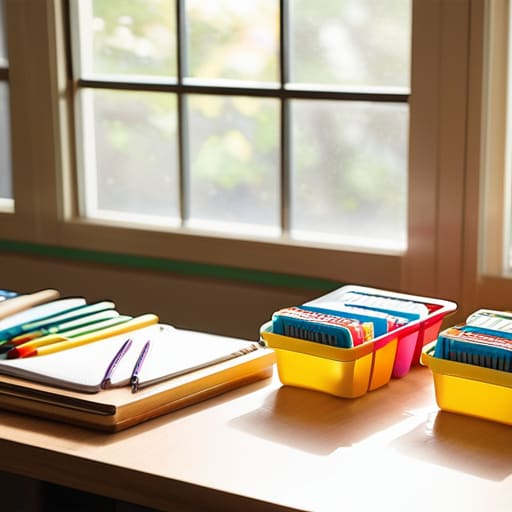
The problem with most manuals on establishing classroom procedures is that they assume your students arrive in a state of quiet readiness. They don’t. By period four, the novelty of the new term has worn thin, the heating is acting up, and the energy in the room is either frantic or lethargic. If your routine relies on you being a drill sergeant, you’ll be burnt out by November. Instead, focus on automating the friction points. Don’t just tell them to get their books out; have a system for organizing classroom materials that requires zero verbal instruction from you. If they have to ask where the highlighters are, you’ve already lost the momentum of the lesson.
True classroom management strategies aren’t about grand gestures or complex reward charts that require constant policing. They are about the small, boring things—like how a student enters the room or how they hand in a piece of work. You need effective transition techniques that feel like second nature, not a performance. If you can move them from a starter activity to independent work without having to raise your voice once, you’ve won. That’s the kind of routine that actually survives the mid-afternoon slump.
Organizing Classroom Materials Before the Chaos Hits
We’ve all been there: you’ve spent forty minutes meticulously prepping a slide deck, only to have the entire lesson derail because you’re hunting for a stapler or a specific set of textbooks while thirty teenagers watch you with varying degrees of predatory interest. This is where most “expert” advice fails. They tell you to have everything ready, but they don’t tell you how to manage the friction of a physical space. Organizing classroom materials isn’t about having a Pinterest-perfect desk; it’s about reducing the number of times you have to stop talking to perform a scavenger hunt.
If you want to actually maintain your authority, you need to treat your resources like a pit crew treats a Formula 1 car. Everything—from the spare pens to the photocopied worksheets—needs a fixed, predictable home. When you integrate these physical systems into your broader classroom management strategies, you aren’t just tidying up; you are removing the “dead air” where bad decisions happen. If a student can grab a highlighter without asking you for permission, you’ve just saved yourself a micro-interaction that could have easily spiralled into a debate about why they aren’t working.
Five Things That Actually Work When You’re Running on Fumes
- Stop obsessing over the ‘perfect’ starter activity. If your entry routine doesn’t involve students knowing exactly where to look and what to do the second they cross the threshold, you’ve already lost the first ten minutes of your lesson to managing noise.
- The seating plan isn’t a disciplinary tool; it’s your primary defensive strategy. Don’t just group them by ability—group them by who survives being sat next to whom. A well-placed student can do more for your classroom flow than any scripted behavior policy.
- Make your transitions silent or scripted, not shouted. If you find yourself raising your voice to get through a quick equipment change, your routine has failed. Find a non-verbal cue—a hand signal, a specific clap, or even just standing in a particular spot—and stick to it until it’s muscle memory.
- Build in a ‘reset’ procedure for when things go sideways. Every teacher has that one lesson where the energy turns sour halfway through. You need a pre-planned way to stop, clear the air, and restart the routine without it feeling like a personal confrontation with thirty teenagers.
- Don’t try to implement five new routines in one week. You’ll burn yourself out and the kids will spot the inconsistency a mile away. Pick one—just one—and drill it until it’s boring. Boring is good. Boring is predictable. And predictable is what keeps a classroom from descending into chaos.
The Reality Check: Three Things to Take Away
Routines aren’t about perfection or following a manual; they are about survival. If a procedure requires you to be “on” every single second just to keep the peace, it’s a bad procedure. Build systems that work even when you’re tired, distracted, or dealing with a broken photocopier.
Don’t mistake “activity” for “order.” A fancy starter or a beautifully designed worksheet doesn’t matter if the transition into the room is a shambles. Focus your energy on the first three minutes and the way materials move through the desks; that’s where the real battle is won or lost.
Test your routines against a “Wet Wednesday” standard. If your plan for handing out books or collecting work relies on every student being attentive and cooperative, it will fail by Period 4. A routine is only as good as its ability to function when the energy in the room is low and the behaviour is testing you.
The Myth of the Perfect Routine
“We spend far too much time reading manuals about ‘seamless transitions’ written by people who haven’t stood in a room of thirty teenagers on a Friday afternoon. A real routine isn’t a polished performance; it’s the invisible scaffolding that keeps the room from falling apart when you’re too tired to fight every single minor disruption.”
Ellery Mwangi-Selkirk
The Reality of the Long Game
At the end of the day, routines aren’t about achieving some polished, cinematic version of teaching that looks good in an inspection folder. They are about survival. We’ve talked about everything from the logistics of handing out books to the subtle art of managing a seating plan that actually works. If you get the procedures right—the small, unglamorous bits like how a pen is passed or how a student asks for a toilet break—you aren’t just being “organized.” You are reclaiming cognitive load for yourself and your students. You are building a scaffold that holds the room together when the weather is miserable, the kids are restless, and your own energy is hitting a wall. It’s about creating a predictable environment so that when you actually get to the teaching, you aren’t fighting the room just to be heard.
Don’t let the pressure to be perfect paralyze you. You will have days where the routine breaks, where a brilliantly planned procedure falls apart because of one bad mood or a sudden fire drill, and that is perfectly fine. The goal isn’t a flawless performance; it’s about building resilience into the structure of your day. Focus on the small wins that make your life easier, and let the rest of the “educational best practices” fade into the background. You are doing a difficult job in a complicated system, and if your routines allow you to spend ten more minutes actually talking to your students instead of managing their stationery, you’ve already won.

Author

Related Posts

The Complete Guide to School Funding
I remember sitting in a windowless meeting room back in 2014, staring at a glossy, laminated booklet that promised a “complete guide...
Read out all
The Complete Guide to Pupil Premium
I remember sitting in a windowless meeting room during a Tuesday afternoon briefing, watching a consultant in a slim-fit suit present what...
Read out all
The Complete Guide to Exclusions
If you search for a “complete guide to exclusions” online, you’ll mostly find two things: dry, soul-crushing legal documents written by people...
Read out all
The Complete Guide to School Attendance
I remember sitting in a windowless briefing room in 2014, listening to a consultant in a slim-fit suit explain why our school...
Read out all
The Complete Guide to Safeguarding in Schools
If you search for a “complete guide to safeguarding” online, you’ll mostly find fifty-page PDFs written by people who haven’t stepped foot...
Read out all
The Complete Guide to School Governance
If you pick up any “complete guide to school governance” from a major educational consultancy, you’ll likely find fifty pages of dense,...
Read out all