
I remember standing in a corridor during a mid-winter fire drill, clutching a stack of half-marked essays and trying to prevent a Year 10 boy from using a heavy fire door as a makeshift skateboard. In that moment, I wasn’t thinking about the glossy, thirty-page compliance binder sitting in the staff room; I was thinking about the sheer, chaotic reality of how health and safety works in schools when you have thirty-two teenagers in a narrow stairwell. Most of the official guidance feels like it was written by someone who has never actually stepped foot inside a secondary school during a rainy Tuesday afternoon.
I’m not here to recite the legal statutes or lecture you on the importance of risk assessment forms that nobody actually reads. Instead, I want to talk about the practicality of survival. I’m going to share what actually keeps a classroom safe when you’re running on four hours of sleep and a lukewarm coffee. We’re going to look at the difference between “paper safety” and the real-world vigilance required to manage a room full of unpredictable humans without losing your mind—or your job.
Table of Contents
- Classroom Hazard Management for the Exhausted Teacher
- Navigating School Safeguarding Policies Without Losing Your Mind
- The Survival Guide: Five Ways to Keep Everyone Safe Without Losing Your Sanity
- The Survivalist’s Checklist
- The Gap Between the Policy and the Period Five Reality
- The Reality of the Risk Register
Classroom Hazard Management for the Exhausted Teacher
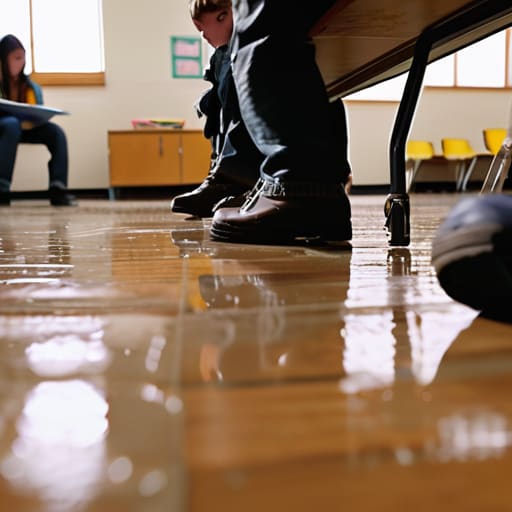
Look, I know what the compliance folder says. It’s a glossy, thirty-page document that assumes you have the mental bandwidth of a Zen monk. But when you’re staring down a Year 8 class on a rainy Tuesday, classroom hazard management isn’t about filling out a risk assessment for a stapler; it’s about the practical reality of a room full of moving bodies, heavy bags, and a floor that’s perpetually sticky. It’s about noticing that the window latch in Room 4 is temperamental before a child decides to test it, or realizing that the science lab trolley has a dodgy wheel that’s a one-way ticket to a broken toe.
The truth is, most of our staff health and safety responsibilities get swallowed up by the sheer exhaustion of the job. You aren’t looking for grand systemic failures; you’re looking for the trip hazard under the radiator or the way the seating plan might inadvertently create a bottleneck during an exit. We don’t need more theoretical frameworks; we need to know how to keep the room safe when our primary focus is simply trying to get through the lesson without a meltdown.
Navigating School Safeguarding Policies Without Losing Your Mind
Then there’s the safeguarding paperwork. I know, I know—the mere mention of it makes your eyes glaze over. We’re handed these massive binders of school safeguarding policies that feel like they were written by a legal team who has never actually stepped foot in a corridor during a lesson changeover. It feels less like protecting children and more like a frantic attempt at educational setting compliance that leaves you drowning in digital forms and “click-to-agree” checkboxes.
The reality is that safeguarding isn’t about being a legal expert; it’s about that gut feeling you get when a student’s tone shifts slightly on a Tuesday afternoon. The system wants you to be a bureaucrat, but the job requires you to be a human being. You don’t need to memorise the entire statutory guidance to be effective, but you do need to know exactly who to call when things go sideways. Don’t let the mountain of admin distract you from the actual duty of care that sits at the heart of it all. Just learn the three most important names in your building and the one specific way to report a concern without it getting lost in an inbox.
The Survival Guide: Five Ways to Keep Everyone Safe Without Losing Your Sanity
- Don’t get bogged down in the theoretical ‘what-ifs’ of the staff handbook; focus on the physical reality of your room. Is that heavy display board actually bolted to the wall, or is it held up by hope and a bit of Blu Tack? If a Year 8 decides to use it as a climbing frame, you want to know it’s staying put.
- The ‘Paper Trail’ isn’t just bureaucracy; it’s your shield. When you spot a frayed cable or a broken chair, don’t just mutter about it and move on—log it. In the eyes of the school, if it isn’t written down in the official system, that hazard doesn’t exist until the moment someone actually trips over it.
- Safeguarding isn’t about being a detective; it’s about being a witness. You don’t need to solve the student’s problems, you just need to spot the change in their baseline and report it immediately. If a kid who is usually loud suddenly goes quiet, or a quiet kid starts acting out, trust your gut and pass it to the DSL. Don’t try to be a hero and ‘work it out’ yourself.
- Labelling and signage might feel like a chore, but it’s the only thing standing between a controlled experiment and a chaotic mess. If you’re in a practical subject, make sure the emergency exits aren’t blocked by a mountain of half-termly textbooks. A clear path is worth more than a hundred safety posters.
- Manage the ‘Transition Chaos.’ Most accidents don’t happen during the quiet, focused part of the lesson; they happen in the thirty seconds when everyone is standing up to leave or rushing in from break. Tighten up your door protocols and seating plan discipline during these windows—that’s when the real risks live.
The Survivalist’s Checklist
Prioritise the physical reality over the paperwork; a well-placed cupboard door or a clear walkway matters far more during a chaotic lesson than whether you’ve filed your risk assessment in the perfect digital folder.
Treat safeguarding as a living practice rather than a box-ticking exercise—it’s about noticing the subtle shift in a student’s mood during a Friday afternoon period five, not just memorising the acronyms in the staff handbook.
Accept that you cannot control every variable, so focus your energy on the high-impact basics: knowing your exits, knowing your students, and knowing when to step back and breathe before a minor incident becomes a full-blown crisis.
The Gap Between the Policy and the Period Five Reality
“Health and safety in schools isn’t about the pristine, laminated flowcharts gathering dust in the staffroom folder; it’s about the split-second decision you make when a Year 8 student decides a heavy textbook is a projectile, or when you realize the science lab door won’t latch properly just as the bell rings. Real safety isn’t compliance—it’s the practical, unglamorous work of managing chaos while trying to keep your lesson on track.”
Ellery Mwangi-Selkirk
The Reality of the Risk Register
At the end of the day, health and safety in a school isn’t about the thick binders gathering dust in the staffroom or the frantic scramble to tick a box during an inspection. It’s about the small, practical things that keep the wheels from falling off: knowing which cupboard door sticks, understanding that a seating plan is actually a risk management tool, and being able to spot a brewing crisis before it hits the fan. We’ve covered the heavy stuff—safeguarding and hazard management—but the truth is that most of your day is spent navigating the grey areas where policy meets reality. You can’t prepare for every single variable, but you can build enough situational awareness to ensure that when things go sideways, you aren’t caught completely off guard.
I know it feels like just one more layer of bureaucracy piled onto an already impossible workload. But try to look at it this way: we don’t manage risk because we love paperwork; we do it because we care about the people in the room. Every time you clear a trip hazard or follow a safeguarding protocol, you are creating the stable, predictable environment that allows actual learning to happen. It’s exhausting, and it’s rarely glamorous, but it is the quiet foundation of everything we do. Keep your eyes open, trust your instincts, and remember that you are doing a much better job than the spreadsheets give you credit for.

Author

Related Posts

Participation Versus Competition in School Sport
I remember standing in a drafty changing room in mid-November, watching a frantic PE lead try to coordinate three different Year 8...
Read out all
Enrichment That Reaches the Pupils Who Need It
I remember sitting in a windowless meeting room five years ago, staring at a glossy PowerPoint presentation that promised to revolutionise our...
Read out all
Removing Barriers Before Adding Interventions
I remember sitting in a windowless meeting room ten years ago, listening to a consultant in a slim-fit suit explain a “holistic...
Read out all
Multi-agency Work and Its Delays
I remember sitting in a windowless meeting room during a Tuesday afternoon slot—the kind where the radiator hums just loud enough to...
Read out all
Working With a Family, Not Against Them
I remember sitting in a damp staffroom during a Tuesday period five, staring at a spreadsheet of “persistent absentees” that looked more...
Read out all
The Adult Who Notices
I’ve sat through enough Ofsted-ready presentations to know that the official handbook on how form tutors support pupils is essentially a work...
Read out all