
I remember sitting in a windowless meeting room in 2014, watching a consultant in a slim-fit suit present a thirty-slide deck on “transformative pedagogical shifts.” He was talking about systemic evolution as if we weren’t all currently wondering if the photocopier would survive the afternoon or if we’d ever get through the pile of Year 9 essays on our desks. That’s the problem with most professional development; it treats how to lead change in a school like a mathematical equation, ignoring the fact that schools are actually made of tired, brilliantly stressed human beings. You can’t “implement” a culture change with a glossy PDF and a mandate from the SLT; you can only navigate it through the sheer, messy reality of the staffroom.
I’m not here to give you a blueprint for a perfect, theoretical institution. Instead, I want to talk about the actual mechanics of moving a department or a whole school forward when everyone is already running on fumes. I’ll be sharing what I’ve learned from nineteen years of watching initiatives rise and fall, focusing on the small, sustainable shifts that actually stick when the initial excitement wears off. This isn’t about grand gestures; it’s about surviving the implementation without losing your best staff in the process.
Table of Contents
Managing Teacher Resistance When the Coffee Has Run Out
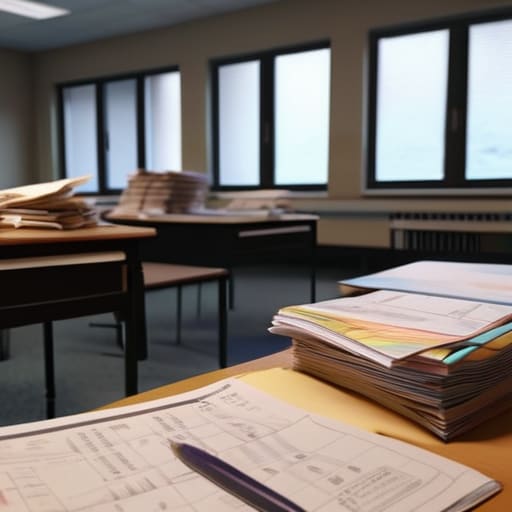
When you walk into the staff room on a Tuesday morning and see the collective slumped shoulders, you aren’t looking at “resistance to change” in the theoretical sense. You’re looking at people who have been told to adopt a new marking policy, a new data tracker, and a new way of questioning, all while the photocopier is jammed and the Year 9s are behaving like a swarm of angry wasps. If you approach this with a textbook definition of managing teacher resistance, you’ve already lost them. They don’t need a lecture on the benefits of the new initiative; they need to know that you actually see the mountain of work already sitting on their desks.
Real sustainable school reform doesn’t happen through grand speeches in an assembly hall; it happens in the quiet, messy reality of the department meeting. If you want to move people, stop talking about the “vision” for five minutes and start asking what we can take off their plates to make room for this new thing. If you add a new expectation without removing an old one, you aren’t leading—you’re just adding to the noise.
Why School Improvement Frameworks Fail on a Wet Wednesday
The problem with most school improvement frameworks is that they are designed in climate-controlled offices by people who haven’t stood in a corridor during a rainy Tuesday lunch break in a decade. They look magnificent in a PowerPoint presentation, full of flowcharts and “synergistic milestones,” but they assume a level of cognitive surplus that simply doesn’t exist in a working school. When a teacher is struggling to de-escalate a Year 9 confrontation while simultaneously trying to remember if they’ve actually fed their own kids, a new five-step pedagogical model isn’t a “growth opportunity”—it’s just more noise.
True sustainable school reform doesn’t happen through the top-down imposition of shiny new metrics; it happens in the small, messy gaps between the bells. If your strategy requires teachers to overhaul their entire planning process during a week when the photocopier is broken and half the staff are off with flu, it isn’t a strategy, it’s a fantasy. Real change isn’t about adding more to the pile; it’s about deciding what we are going to stop doing so that the things that actually matter have room to breathe.
Five ways to actually move the needle without breaking your staff
- Stop the “initiative creep” immediately. If you’re introducing a new way to track literacy, you have to tell your teachers what they can stop doing to make room for it. You cannot simply keep adding layers to a cake that is already collapsing under its own weight.
- Focus on the “micro-wins” rather than the five-year vision. A glossy strategic plan for 2028 doesn’t help a Year 9 class that’s currently out of control. Lead change by fixing the small, annoying friction points first—like making sure the photocopier actually works or streamlining the way they report behavior.
- Find your “quiet influencers.” Every staff room has them—the teachers who don’t shout in meetings but whom everyone actually listens to in the corridor. If you can win over the skeptical veteran who’s seen ten different frameworks come and go, the rest of the department will follow.
- Respect the “implementation dip.” When you introduce something new, things will get worse before they get better. If you panic and pivot the moment results dip or a lesson goes sideways, you’ll just teach your staff that new ideas are dangerous. Give them the permission to be mediocre while they’re learning.
- Audit the workload before you audit the pedagogy. Before you ask a department to trial a new retrieval practice model, look at their marking load. If they are already drowning, your “brilliant new strategy” isn’t an improvement; it’s just another thing they’ll have to fake to stay compliant.
The Survival Kit for Real-World Change
Stop selling the ‘vision’ and start solving the friction; if your new initiative adds twenty minutes to a teacher’s Sunday evening, it doesn’t matter how much research supports it—it will fail.
Prioritise the ‘small wins’ that actually clear the desk; don’t ask for a complete pedagogical overhaul when the staff room is just trying to survive the term, instead, find the one tweak that actually gives them five minutes back.
Build your change on relationships, not spreadsheets; a well-timed chat in the corridor or a genuine acknowledgement of how much work a new policy entails will do more for implementation than any glossy PowerPoint ever could.
The Myth of the Perfect Implementation
“Stop looking for the ‘perfect’ rollout plan in a leadership handbook. If your strategy for change requires teachers to have extra hours in the day or a sudden, inexplicable surge in enthusiasm, you aren’t leading; you’re just daydreaming. Real leadership is finding the one small, useful thing that actually survives the chaos of a Tuesday afternoon and making sure it stays put.”
Ellery Mwangi-Selkirk
The View from the Staff Room Door
At the end of the day, leading change isn’t about perfecting a slide deck or ensuring your new policy aligns with the latest Ofsted buzzwords. It’s about recognizing that your staff are human beings, not delivery mechanisms for a curriculum. If you want to move a school forward, you have to stop treating change like a mathematical certainty and start treating it like a conversation. This means acknowledging the resistance, understanding why the “perfect” strategy falls apart during a chaotic Tuesday afternoon, and realizing that the best way to implement a new idea is to make sure it doesn’t add three more hours to someone’s marking load.
I know it feels like we are constantly being asked to build planes while they are already in flight. But remember, the most enduring changes in a school aren’t the ones that arrived via a glossy memo; they are the small, quiet shifts in how we support one another in the trenches. If you focus on the people, the pedagogy will eventually follow. Don’t aim for a revolution that leaves everyone too exhausted to teach; aim for the sustainable progress that actually survives the contact with reality. Keep your eyes on the classroom, keep your ears open in the corridors, and trust the professionals you have in the room.

Author

Related Posts

A Library With Someone Running It
I remember sitting in a departmental meeting ten years ago, listening to a consultant drone on about “digital literacy hubs” and “multi-modal...
Read out all
Keeping Arts on the Timetable
I remember sitting in a budget meeting back in 2014, listening to a consultant in a slim-fit suit explain how we could...
Read out all
Participation Versus Competition in School Sport
I remember standing in a drafty changing room in mid-November, watching a frantic PE lead try to coordinate three different Year 8...
Read out all
Enrichment That Reaches the Pupils Who Need It
I remember sitting in a windowless meeting room five years ago, staring at a glossy PowerPoint presentation that promised to revolutionise our...
Read out all
Removing Barriers Before Adding Interventions
I remember sitting in a windowless meeting room ten years ago, listening to a consultant in a slim-fit suit explain a “holistic...
Read out all
Multi-agency Work and Its Delays
I remember sitting in a windowless meeting room during a Tuesday afternoon slot—the kind where the radiator hums just loud enough to...
Read out all