
I remember sitting in a windowless training room ten years ago, staring at a glossy PowerPoint presentation that promised a revolutionary new framework for “adaptive teaching.” The presenter was talking about bespoke, highly individualised learning pathways for every single child as if we all had an unlimited budget and a team of teaching assistants standing by. It was a beautiful theory, but it completely ignored the reality of how inclusion is implemented when you’ve got thirty-two teenagers in a room, three of whom are currently trying to see if a highlighter works on a desk, and you’ve only got ten minutes to prep your next lesson.
I’m not here to sell you on another expensive, theoretical model that falls apart the moment a student refuses to sit down. Instead, I want to talk about what actually works when the idealism of the staffroom meets the reality of a rainy Tuesday afternoon. I’ll be sharing the small, unsung adjustments that actually make a difference to your workload and your students’ progress, focusing on the practicalities of how inclusion is implemented without needing a PhD or a miracle.
Table of Contents
Inclusive Classroom Strategies That Dont Require Infinite Prep
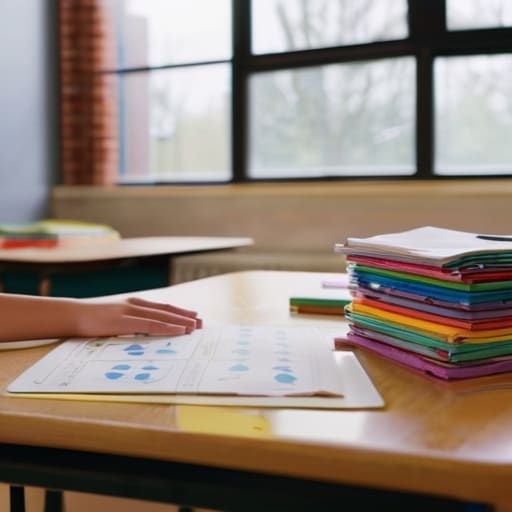
Let’s be honest: most of the glossy brochures on diversity and inclusion frameworks assume you have a dedicated SENCO sitting in your room, ready to differentiate every single worksheet you print. In the real world, you’ve got thirty-two students, a broken photocopier, and a lesson that starts in four minutes. When we talk about inclusive classroom strategies, we need to stop looking for the “magic” resource and start looking at the small, structural shifts that actually work when you’re exhausted.
One of the most effective things you can do isn’t a complex pedagogical shift; it’s simply how you manage the physical and cognitive load of the room. I’m talking about the power of the scaffolded prompt. Instead of redesigning a whole task for one student, keep the core material the same but provide a “cheat sheet” of sentence starters or a visual glossary on their desk. It’s a tiny bit of upfront work that prevents a student from hitting a wall ten minutes in. It’s about equitable resource allocation in its simplest form—giving the student what they need to access the same high-quality content as everyone else, without making them feel like they’re doing a different, “easier” lesson.
Why Diversity and Inclusion Frameworks Often Fail the Reality Test
The problem with most diversity and inclusion frameworks is that they are written by people who haven’t stood in a corridor during a lesson change in a decade. They look brilliant on a glossy PDF produced in a central office, but they tend to crumble the moment they hit the reality of a classroom with thirty-two students, three of whom have complex sensory needs and another who has decided today is the day to test the structural integrity of a chair. These frameworks often treat inclusion as a checklist of administrative boxes to tick, rather than a lived, breathing part of the school day.
When we talk about implementing inclusive policies, we often focus on the macro level—the big, sweeping statements about equity and representation. But for the teacher on the ground, those high-level ideals don’t help when you’re staring at a photocopied worksheet that isn’t accessible to the student in the back row. We focus so much on the theory of social inclusion models that we forget about the practicalities of equitable resource allocation at the departmental level. If you haven’t given a teacher the time or the physical tools to actually adapt their lessons, all the framework-speak in the world is just noise.
Five Ways to Actually Include People Without Losing Your Mind
- Stop chasing the “perfect” scaffold. If you’re trying to design a bespoke worksheet for every single child in a class of thirty, you’re going to burn out by Tuesday. Instead, build one solid, high-quality resource and learn where the natural “tripwires” are—the places where the kids usually stumble—and add a single, clear prompt there. It’s about targeted support, not infinite differentiation.
- The seating plan is your most powerful inclusion tool, and it has nothing to do with “group dynamics” or fancy pedagogy. It’s about proximity. If a student is struggling to focus or feeling overwhelmed, being able to stand near them without making a scene is more effective than any colour-coded inclusion folder sitting on your desk.
- Use “low-stakes” checking. We talk a lot about checking for understanding, but in a real classroom, you don’t have time for a formal plenary every ten minutes. Use the quick stuff: thumbs up/down, mini-whiteboards, or just a look around the room. If you can see the confusion happening in real-time, you can pivot before the lesson descends into chaos.
- Prioritise clarity over complexity. Inclusion fails when the instructions are buried in a wall of text or a long-winded explanation. If a student has processing issues or is just having a bad day, they need one clear task at a time. Give them the “what” and the “how” in simple terms, then let them get on with it.
- Focus on the “hidden” barriers. Sometimes inclusion isn’t about the academic content at all; it’s about the environment. Is the room too loud? Is the lighting making them squint? Is the transition from lunch to lesson too jarring? Addressing these small, practical friction points often does more for a student’s ability to learn than any high-level curriculum adjustment ever could.
The Reality Check: What Actually Sticks
Stop chasing the perfect, bespoke differentiation plan for every single child; instead, focus on building high-quality, accessible core resources that work for the whole room before you try to tweak them for the individual.
Inclusion isn’t a separate lesson or a special folder in your drawer—it’s the way you manage the seating plan, the way you scaffold a task on the fly, and how you handle the friction of a difficult Tuesday afternoon.
If an inclusion strategy requires you to spend three hours of unpaid time on a Sunday just to make one lesson “work,” it isn’t a sustainable teaching practice; it’s a recipe for burnout that won’t survive the term.
The Gap Between Paper and Practice
“We spend far too much time debating the ethics of inclusion in staff meetings, as if a well-worded policy document will suddenly make a child with complex needs sit quietly during a double period on a Friday afternoon. Real inclusion isn’t found in a glossy handbook; it’s found in the small, messy, practical decisions you make when you realise the lesson you planned isn’t reaching the kid in the back row, and you have to pivot right then and there because you don’t have the luxury of a second chance.”
Ellery Mwangi-Selkirk
The Reality of the Room
At the end of the day, implementing inclusion isn’t about mastering a complex new pedagogical framework or filling a folder with differentiated worksheets that you’ll never actually use. It’s about the small, tactical shifts that happen in the heat of the moment: adjusting a seating plan because you noticed a specific pair is struggling, or simplifying a task on the fly because the cognitive load has become too heavy. We have to move away from the idea that inclusion is an additional task layered on top of an already overflowing workload. Instead, it has to be the lens through which we view every single thing we do, from the way we phrase a question to the way we manage the energy in the room when the afternoon slump hits. It is about practicality over perfection.
I know how exhausting it is to feel like you’re constantly chasing a moving target of “best practice” while just trying to keep your head above water. But please, don’t let the weight of the systemic failures make you feel like you aren’t making a difference. The most profound inclusion often happens in the quiet, unglamorous moments—the five minutes you spend checking in with a student who looks lost, or the way you validate a small win. You aren’t failing the framework; you are navigating the reality. Keep showing up for the kids in the room you actually have, because for them, that is what matters most.

Author

Related Posts

Telling a Parent Something They Do Not Want to Hear
I remember sitting in a departmental meeting ten years ago, staring at a glossy, twenty-page slide deck about “holistic stakeholder engagement frameworks.”...
Read out all
Which Parental Involvement Actually Helps
I remember sitting in a staff meeting ten years ago, listening to a consultant in a sharp suit explain how we needed...
Read out all
Educating a Child at Home Legally
I spent two decades in secondary schools watching “revolutionary” policy frameworks arrive in glossy binders, only to see them crumble the moment...
Read out all
Teaching Rshe Confidently
I remember sitting in a windowless training room ten years ago, staring at a glossy PowerPoint presentation that promised a “revolutionary, multi-tiered...
Read out all
Mental Health Support in a School Setting
I remember sitting in a staff briefing three years ago, staring at a glossy, laminated flowchart that promised a “revolutionary new framework”...
Read out all
Making a Referral and Recording It
I remember sitting in a windowless meeting room in 2014, staring at a thirty-page safeguarding manual that felt more like a legal...
Read out all