
I remember standing in the department office at 7:45 AM, staring at a stack of “comprehensive” cover booklets that had been printed by a central team who clearly haven’t stepped foot in a classroom since the nineties. They were filled with complex, multi-step instructions that required a PhD to interpret, and I knew with absolute certainty that they would be completely ignored the moment a restless Year 9 decided to test the boundaries. Most of the advice out there on how to plan cover work assumes you have the luxury of time to craft a bespoke curriculum for a substitute, rather than just trying to prevent a small-scale riot.
I’m not here to give you more paperwork or suggest some high-concept pedagogical framework that falls apart by second period. Instead, I want to talk about what actually works when you’re running on three hours of sleep and need to leave something behind that is actually functional. We’re going to look at the low-stakes, high-impact strategies that keep a class on track without requiring the cover teacher to be a subject specialist, and more importantly, without making your life a misery when you eventually return to the room.
Table of Contents
Operational Continuity Planning for the Chaotic Monday Morning
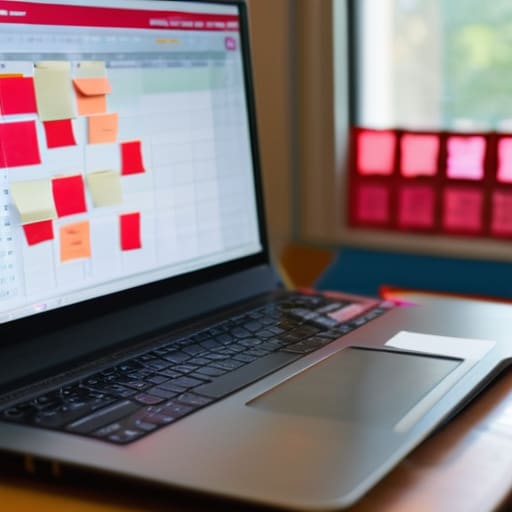
Monday morning usually arrives with a certain level of dread, especially when you’re staring at a spreadsheet of red cells indicating staff absence. Most management-level advice on operational continuity planning reads like it was written by someone who has never had to find a chemistry teacher at 8:15 AM. In reality, it’s not about high-level strategy; it’s about whether the Year 10s have something to do that won’t result in a broken window or a fire drill.
The secret isn’t in some complex manual, but in having decent handover documentation templates that actually work. I’ve seen too many departments crumble because the “emergency” folder is a chaotic mess of half-finished worksheets and outdated photocopies. You need a system where a non-specialist can walk in, look at a single sheet of paper, and know exactly where the class is in the curriculum. It’s about reducing the cognitive load on the person stepping into the breach. If your cover work requires a PhD in the subject matter to deliver, you haven’t planned for coverage; you’ve just planned for a disaster.
Resource Allocation for Coverage When the Photocopier Dies
Then there’s the mechanical betrayal. You’ve spent your Sunday evening meticulously crafting a bespoke lesson, only to arrive on Monday morning and find the photocopier has decided to go on strike. It’s a classic moment of crisis. When you are looking at resource allocation for coverage in this context, you have to stop thinking about “perfect” and start thinking about “functional.” If the tech fails, your high-concept, multi-layered worksheets are useless. You need a “break glass in case of emergency” folder—not a digital one that requires a login you can’t remember, but a physical stash of high-quality, low-tech tasks that don’t rely on a printer or a working projector.
Realistically, effective workload distribution strategies mean you shouldn’t be the only one scrambling. I always tell my trainees: build a relationship with the department secretary and the technicians. If you have a reliable set of handover documentation templates that are simple enough for a non-specialist to follow, you aren’t just saving yourself; you’re saving the person stepping into your shoes. Don’t aim for a masterpiece; aim for something that keeps thirty teenagers occupied without needing a single drop of toner.
Five ways to stop cover work from becoming a disaster
- Stop trying to plan a whole new lesson. If you’re planning a bespoke, high-concept learning journey for a cover teacher, you’re dreaming. Plan for ‘maintenance’ instead—something that keeps the gears turning without requiring the cover teacher to be a subject specialist or a miracle worker.
- The ‘Emergency Folder’ isn’t a luxury, it’s survival. I’m talking about a physical or digital stash of ‘evergreen’ tasks: retrieval booklets, high-quality reading comprehension, or even structured essay prompts that require zero explanation. If the photocopier dies and your Wi-Fi goes down, these are the only things standing between you and a Year 10 riot.
- Write your instructions for the person who is exhausted and slightly overwhelmed. Don’t assume the cover teacher knows your specific ‘low-stakes quiz’ routine or where the spare pens are kept. If a set of instructions requires more than three steps to understand, it’s going to fail the moment a restless student starts tapping their ruler.
- Prioritise the ‘low-friction’ tasks. When I was Head of Dept, I learned that a well-structured, independent task—like a map-work exercise or a source analysis—is infinitely better than a ‘group discussion’ task. Group work without a teacher who knows the subject is just an invitation for chaos.
- Always include a ‘silent finisher.’ There is always that one student who finishes a task in six minutes and then spends the remaining fifty deciding how best to disrupt the room. Give them a specific, low-stakes task—a crossword, a textbook reading, or a retrieval task—so they don’t become the catalyst for the rest of the class’s boredom.
The Bare Essentials for Survival
Prioritise a “low-stakes” task that requires zero teacher input; if a student can’t do it independently without you hovering, it’s too complicated for a cover lesson.
Keep a ’emergency folder’ of high-quality, curriculum-aligned tasks that don’t rely on technology, because the Wi-Fi will inevitably fail when you need it most.
Focus on stability over progress; the goal of cover isn’t to leap ahead in the syllabus, it’s to ensure the class doesn’t descend into a state where you spend all of Tuesday just trying to get them back on track.
The Myth of the Seamless Transition
“We spend hours designing these beautiful, high-concept cover booklets that assume the person stepping into our classroom has our curriculum map memorised and a saint’s level of patience. Real cover planning isn’t about continuity of learning; it’s about providing enough structure to prevent a vacuum, because if you don’t give a restless Year 9 something solid to grip, they will find something else to do—and it won’t be educational.”
Ellery Mwangi-Selkirk
The Reality of the Long Game
Look, we’ve covered a lot here, from the logistical nightmare of a broken photocopier to the sheer necessity of having a plan that doesn’t require a PhD to execute. The goal isn’t to create a masterpiece of pedagogical design for a sub who might not even know where the stationery cupboard is. It’s about building a safety net. It’s about ensuring that when the inevitable chaos of a Monday morning hits, you have enough operational scaffolding in place that the learning doesn’t just grind to a halt. You want something that survives the first ten minutes of a restless Year 9 class, not something that requires a three-page instruction manual. Keep it simple, accessible, and robust.
At the end of the day, cover work isn’t about preventing a gap in the curriculum; it’s about protecting the classroom environment. We spend so much energy worrying about the “lost learning” that we forget that a bad cover lesson can set a whole term’s worth of behaviour management back by weeks. Don’t aim for perfection; aim for stability. If you can provide a lesson that is meaningful enough to keep them occupied and structured enough to keep them calm, you’ve done more than enough. You’re doing the hard work of keeping the ship steady, and that is more than enough.

Author

Related Posts

Front-loading Planning Before Term Starts
I remember sitting in a windowless departmental meeting three years ago, staring at a colour-coded, multi-layered spreadsheet that promised to revolutionize our...
Read out all
Cutting Workload Without Cutting Quality
I remember sitting in a departmental meeting ten years ago, staring at a glossy, twenty-page handout on “holistic feedback loops” that promised...
Read out all
Supporting a Teacher in Their First Year
I remember sitting in a windowless meeting room during my second year, staring at a glossy, laminated “Induction Roadmap” that promised a...
Read out all
Cpd That Changes Practice Six Weeks Later
I remember sitting in a windowless staff room in 2014, staring at a glossy, thirty-slide presentation about “transformative pedagogical shifts” while my...
Read out all
Instructional Coaching in Fifteen Minute Cycles
I’ve sat through enough “professional development” sessions in drafty school halls to know the drill: a consultant with a polished PowerPoint tells...
Read out all
Observation for Development, Not Grading
I remember sitting in the staffroom during my third year as Head of Department, staring at a thirty-page observation rubric that felt...
Read out all