
I remember sitting in a windowless training room ten years ago, staring at a glossy PowerPoint presentation that promised a “revolutionary, multi-tiered framework” for student wellbeing. The consultant was talking about systemic integration and holistic developmental outcomes, but all I could think about was the Year 9 class I had in twenty minutes—the ones who would likely spend the entire hour trying to find ways to make me blush or testing exactly how much they could get away with. It’s the same old story: people try to tell you how relationships and health education works using expensive, theoretical models that assume every student is a calm, polite participant in a controlled experiment. In reality, most of those high-level strategies fall apart the moment they hit a classroom full of teenagers who have more access to unfiltered internet content than any textbook could ever hope to cover.
I’m not here to sell you on another polished, top-down initiative that will be obsolete by the next inspection cycle. Instead, I want to talk about what actually sticks when you’re standing in front of thirty restless kids on a rainy Thursday afternoon. I’m going to share the bits of practical, lived experience that actually help you navigate the awkwardness and the genuine, heavy questions that come with this subject. We’re going to look at how to deliver this content without losing your dignity or your lesson plan, focusing on the small, human moments that actually make a difference in a real school.
Table of Contents
Ditching the Complex Comprehensive Sexuality Education Frameworks
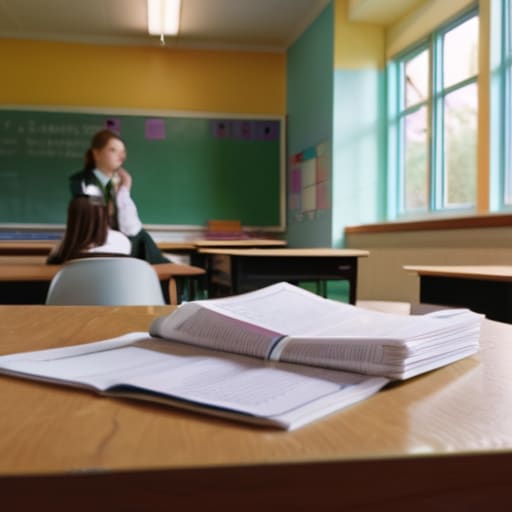
I’ve sat through enough CPD sessions to know the drill. They wheel in a consultant, spread out some glossy handouts about comprehensive sexuality education frameworks, and speak in a dialect of “holistic development” that sounds lovely until you actually have to stand in front of thirty Year 9s. These frameworks are often designed by people who haven’t stepped foot in a secondary corridor since the nineties. They assume a level of classroom stability that simply doesn’t exist, treating a sensitive lesson like a choreographed dance rather than the unpredictable, sometimes awkward reality it is.
The problem with these top-down models is that they focus on the theory of navigating adolescent development rather than the practicalities of the classroom. You don’t need a twenty-page manual to tell you how to handle a joke gone wrong or a student who suddenly goes silent because a topic hit too close to home. You need something that works when the bell has just rung and the energy in the room is already fraying at the edges. We need to stop chasing the perfect, academic model and start focusing on what actually helps a student feel safe enough to listen.
Evidence Based Health Instruction That Survives a Chaotic Lesson
The problem with most “evidence-based health instruction” is that it’s designed for a seminar room, not a classroom where the heating is broken and three students are currently arguing about a TikTok trend. When you’re actually standing there, you don’t need a thirty-page manual on social-emotional learning in schools; you need a way to talk about consent or puberty that doesn’t result in a room full of hysterical giggling or, worse, dead silence.
The real work happens in the small, manageable chunks. Instead of trying to overhaul your entire approach to navigating adolescent development in one go, focus on the micro-skills. It’s about the ten-minute window where you can actually pivot a conversation toward student wellbeing and relationship skills without losing the rest of the lesson to chaos. If the strategy requires you to sit in a circle and “share your feelings” while you’ve got twenty-eight teenagers staring at you like you’ve lost your mind, it isn’t going to work. You need tools that are robust enough to withstand the distractions of a real school day.
Five ways to actually teach this without losing your mind
- Stop trying to be a specialist. You aren’t a doctor or a therapist, and trying to act like one in a thirty-minute period is a recipe for disaster. Stick to the curriculum, keep your boundaries clear, and if a student asks something that makes your skin crawl or feels out of your depth, learn the art of the “I’ll find out and get back to you.” It’s better to be honest than to wing it with sensitive information.
- Use the “low-stakes” approach. If you walk in and announce, “Today we are talking about intimacy,” you’ll see every kid in the room suddenly find their shoelaces incredibly fascinating. Embed the harder topics into normal, existing discussions where possible. It lowers the temperature in the room and stops the “cringe factor” from shutting down the actual learning.
- Prioritise the “boring” stuff first. Everyone wants to jump to the big, dramatic topics, but if you haven’t spent time on the basics of consent, boundaries, and how to spot a red flag in a friendship, the rest of the lesson will just be noise. The foundational stuff is what actually keeps them safe when they leave your classroom.
- Prepare for the “silent treatment” or the “chaos.” In a class of thirty, you will either get a room so quiet it feels like a library—which is usually a sign they are uncomfortable—or a room where every joke is a deflection. Have a plan for both. If it’s too quiet, use anonymous question slips. If it’s too loud, stop talking and wait. Don’t try to out-shout a teenager discussing puberty.
- Forget the glossy slide decks. You don’t need a twenty-minute choreographed presentation with stock photos of smiling teenagers to teach a meaningful lesson. A single, well-chosen case study or a provocative question on the whiteboard is worth more than a high-production PowerPoint that you’ll spend forty minutes trying to fix because the school Wi-Fi has decided to die.
The reality check: What actually sticks
Stop trying to build a cathedral of theory; focus on the small, consistent conversations that happen when the lesson is actually running.
If a health education strategy requires forty minutes of calm, uninterrupted focus, it isn’t a strategy—it’s a fantasy that won’t survive a Friday afternoon.
Prioritise teaching students how to navigate real-world social pressures over memorising the glossy, jargon-heavy frameworks handed down from the department office.
The Reality of the RSE Lesson
“We spend far too much time worrying about whether our curriculum meets some abstract, gold-standard framework, and not nearly enough time asking if a fifteen-year-old will actually listen to us when they’re sitting in a classroom that feels more like a battlefield than a place of learning. Real health education isn’t found in a glossy consultant’s handbook; it’s found in the five minutes of genuine, quiet trust you build when you stop teaching at them and start actually talking to them.”
Ellery Mwangi-Selkirk
The reality of the classroom
At the end of the day, we have to stop pretending that a thirty-page policy document from the Department or a glossy consultant’s slide deck is going to solve the complexities of how young people navigate their lives. We’ve seen it all before: the new frameworks that arrive with great fanfare only to be abandoned when the reality of a Year 9 lesson hits. If we strip away the jargon, what we are left with is the need for practical, manageable instruction that doesn’t require a PhD to implement. It’s about ditching the impossible ideals and focusing on what actually works—the small, consistent moments of honest, evidence-based teaching that can survive the chaos of a Friday afternoon.
I know how exhausting it is to be handed another “essential” curriculum to deliver when you’re already struggling to keep your head above water. But remember that despite the shifting goalposts and the endless initiatives, the most important part of this work isn’t the framework; it’s the human connection you build in that room. You are the one who translates these complex topics into something a teenager can actually understand and use. Don’t let the weight of the bureaucracy dim your interest in the work. You are doing the hard, messy, and vital job of preparing them for a world that doesn’t care about lesson plans, but cares very much about the truth.

Author

Related Posts
Mental Health Support in a School Setting
I remember sitting in a staff briefing three years ago, staring at a glossy, laminated flowchart that promised a “revolutionary new framework”...
Read out all
Making a Referral and Recording It
I remember sitting in a windowless meeting room in 2014, staring at a thirty-page safeguarding manual that felt more like a legal...
Read out all
Safeguarding Duties Every Adult Holds
If you ask the consultants or the people who write the glossy, hundred-page compliance handbooks, they’ll tell you that safeguarding is a...
Read out all
Attendance Problems Are Usually Symptoms
I remember sitting in a windowless meeting room during a Tuesday afternoon CPD session, staring at a glossy PowerPoint presentation that promised...
Read out all
Alternative Provision and Getting Pupils Back
I remember sitting in a sterile, windowless meeting room during a Tuesday afternoon briefing, listening to a consultant in a sharp suit...
Read out all
Exclusion Process and Its Alternatives
I remember standing in the corridor outside my Year 9 classroom, the smell of damp coats and floor polish heavy in the...
Read out all