I spent most of my Tuesday afternoon watching a trainee try to explain “metacognitive scaffolding” to a Year 9 class that was more interested in a smuggled bag of salt and vinegar crisps than their upcoming assessments. It’s the same old story: some expensive consultant hands us a beautifully designed, twenty-slide deck on cognitive load theory, and suddenly we’re expected to know how to teach revision skills as if we have an extra hour in the day and a room full of zen monks. We don’t. We have thirty students, a broken photocopier, and a curriculum that’s moving faster than we can breathe.
I’m not here to give you another glossy brochure of educational buzzwords that fall apart the moment a student refuses to pick up a pen. Instead, I want to talk about the gritty reality of what actually sticks when the pressure is on. I’m going to share the low-tech, high-impact methods that survived my nineteen years in the classroom—the stuff that works when you’re exhausted, when the marking is piling up, and when you need to know that your students are actually learning, not just looking like they are.
Table of Contents
Scaffolding Revision Skills in Classroom Chaos
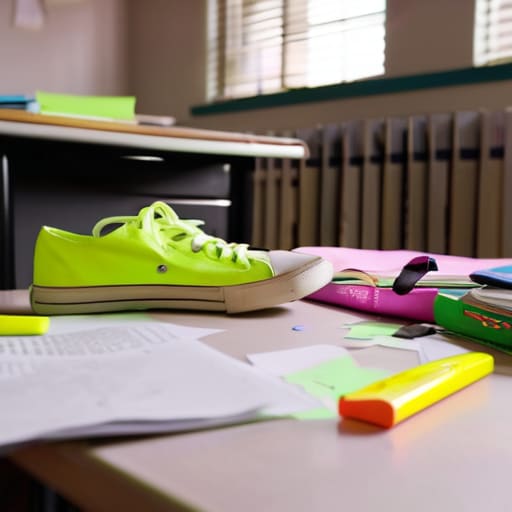
The problem with most advice on scaffolding revision skills in classroom settings is that it assumes you have the luxury of a quiet study hall. In reality, you’re often trying to introduce metacognitive strategies in education to a Year 10 group that is currently more interested in the state of their footwear than their upcoming mocks. You can’t just hand them a list of “effective study habits for exam preparation” and hope for the best; they’ll lose the sheet, or worse, they’ll just highlight every single line in a textbook until the page is neon yellow.
Instead, you have to build the scaffold while the wind is blowing. I’ve found that the most resilient way to do this is by embedding active recall techniques for students directly into the first ten minutes of your lesson. Don’t ask them to “revise” at home; ask them to reconstruct a concept on a mini-whiteboard right there in front of you. It’s messy, and yes, it’s loud, but it’s actual learning rather than the polite illusion of it. If they can’t do it with your help while the clock is ticking, they certainly won’t do it alone in their bedroom.
Active Recall Techniques for Students Who Cant Focus
Let’s be honest: if you try to introduce complex, multi-step spaced repetition learning methods to a Year 10 class that is currently more interested in the state of their footwear than the causes of the Industrial Revolution, you will fail. You’ll end up with thirty blank stares and a pile of half-finished flashcards that will eventually live in the bottom of a blazer pocket. When focus is a luxury you can’t afford, you have to strip active recall techniques for students down to their barest, most immediate bones.
Instead of asking them to “review their notes,” which is just a polite way of saying “stare at a page until your eyes glaze over,” try something that forces a quick, low-stakes decision. I’m talking about the one-question blitz. You throw a single, sharp question at them—something they should know—and they have to jot the answer on a mini-whiteboard or even just a scrap of paper. It’s not about deep, reflective metacognitive strategies in education at that moment; it’s about breaking the paralysis of choice. If they can’t focus for forty minutes, make them focus for forty seconds. That is how you build a habit without losing the room.
Five Ways to Teach Revision Without Losing Your Mind
- Stop the ‘color-coded everything’ nonsense. If a student spends forty minutes highlighting a textbook with pastel pens, they haven’t revised; they’ve just engaged in a very expensive art project. Tell them to put the pens down and pick up a scrap of paper. If they can’t write the three key facts from memory, the highlighting was a waste of time.
- Use the ‘low-stakes’ approach to bypass the panic. Revision often feels like a looming execution to a teenager. Instead of a formal test, use the first five minutes of a lesson for a quick-fire verbal quiz. It builds the muscle of retrieval without the paralyzing fear of a red pen appearing on a formal worksheet.
- Teach them to audit their own ignorance. Most kids revise what they already know because it feels good to be right. Force them to rank topics: Green (I’ve got this), Amber (I’m shaky), and Red (I have no idea). Tell them to spend 80% of their time in the Red zone. It’s uncomfortable, but it’s the only way it actually works.
- Give them ‘closed-book’ constraints. I see too many students ‘revising’ by reading notes while the notes are sitting right in front of them. That’s not retrieval; that’s just reading. Teach them to read a page, close the book, and then try to explain it to an imaginary person. If they can’t explain it, they don’t know it.
- Embrace the ‘messy’ revision note. We spend far too much time telling kids their notes need to look like a Pinterest board. They don’t. A revision note should be a tool, not a trophy. If it’s a series of scrawled diagrams, bullet points, and half-finished sentences that help them recall the information during an exam, then it’s a successful note.
The Survival Guide: What Actually Sticks
Stop chasing the “perfect” revision booklet; if a student can’t explain a concept to you without looking at their notes, the most expensive scaffold in the world won’t save them.
Prioritise low-stakes, high-frequency retrieval that fits into the first five minutes of a lesson, because once the chaos of the period sets in, your window for meaningful memory work is gone.
Focus on teaching them how to organise their own thoughts rather than just how to organise their pens; a student who knows how to categorise information will survive a curriculum change, a bad exam paper, and a Friday afternoon slump.
The Myth of the Perfect Revision Plan
“We spend far too much time designing these elegant, colour-coded revision schedules that look lovely in a training seminar, but they fall apart the moment a student loses their textbook or a Tuesday afternoon turns into a battle for basic attention. Real revision isn’t about the perfect planner; it’s about giving them one small, reliable way to prove to themselves they actually know something before the bell rings.”
Ellery Mwangi-Selkirk
The Reality of the Final Bell
Look, we’ve covered a lot of ground, from the messy necessity of scaffolding to finding ways to spark active recall in a room that feels like it’s spinning out of control. If you try to implement every single “best practice” strategy we’ve discussed by Monday morning, you’ll burn out before the first bell rings. The point isn’t to achieve pedagogical perfection; it’s about picking the one or two things that actually stick when the lesson is falling apart. Whether it’s a simple low-stakes quiz or a seating plan that actually manages the energy in the room, focus on the tools that survive the chaos of a Tuesday afternoon. Forget the polished, textbook versions of revision; aim for the version that works when you’re tired and the marking is piling up.
At the end of the day, teaching revision isn’t about following a fancy new framework handed down from some office in Whitehall. It’s about giving your students the small, manageable wins they need to feel capable when they face a blank exam paper. You don’t need to be a superhero, and you certainly don’t need a classroom that looks like a Pinterest board. Just be the teacher who shows up, offers a bit of structure, and believes in the process even when the weather is rubbish and the kids are restless. You’re doing the real work, and that’s what matters.

Author

Related Posts

Curating Rather Than Creating
I remember sitting in a departmental meeting ten years ago, staring at a spreadsheet that promised a “seamless, integrated digital repository” for...
Read out all
A Good Textbook Saves a Hundred Hours
I remember sitting in a department meeting ten years ago, watching a consultant in a crisp suit explain how we needed to...
Read out all
Planning Once for a Whole Department
I remember sitting in a windowless meeting room in 2014, staring at a laminated flowchart that promised a “transformative paradigm shift” in...
Read out all
Front-loading Planning Before Term Starts
I remember sitting in a windowless departmental meeting three years ago, staring at a colour-coded, multi-layered spreadsheet that promised to revolutionize our...
Read out all
Cutting Workload Without Cutting Quality
I remember sitting in a departmental meeting ten years ago, staring at a glossy, twenty-page handout on “holistic feedback loops” that promised...
Read out all
Supporting a Teacher in Their First Year
I remember sitting in a windowless meeting room during my second year, staring at a glossy, laminated “Induction Roadmap” that promised a...
Read out all